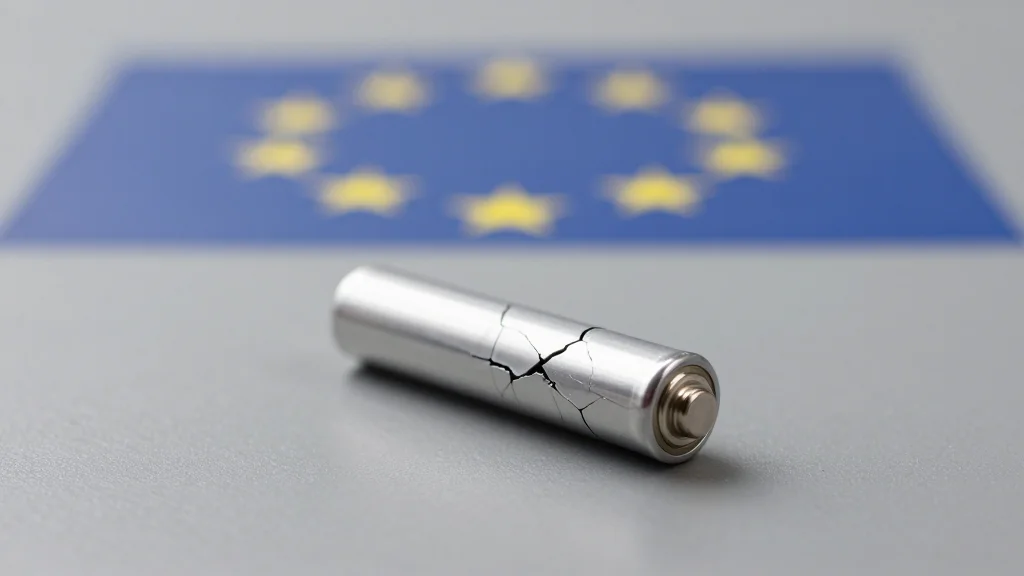
Morrow Batteries Declares Bankruptcy as EU Scrambles with Industrial Accelerator Act

Companies Mentioned
Why It Matters
The bankruptcy of Morrow Batteries highlights the fragility of Europe’s emerging battery ecosystem, where insufficient financing and policy uncertainty can quickly derail ambitious projects. A robust domestic supply chain is critical for the EU’s climate goals and for reducing reliance on Chinese imports, especially for high‑value components like cathode active material. If the Industrial Accelerator Act fails to provide clear, enforceable incentives, the EU risks a continued exodus of battery firms, undermining its strategic autonomy and potentially slowing the rollout of BEVs across the continent. Conversely, a well‑implemented act, coupled with dedicated financing, could attract the private capital needed to bring pending projects to fruition, securing jobs and supply‑chain resilience.
Key Takeaways
- •Morrow Batteries filed for bankruptcy after failing to secure additional capital
- •EU’s Industrial Accelerator Act ties Made‑in‑EU rules to BEV subsidies but includes broad exemptions
- •Cathode active material projects could meet >66% of EU demand by 2030, but many face high cancellation risk
- •Battery Booster financing facility remains in consultation, leaving a funding gap
- •Policy shift reflects EU’s move from open‑market stance to local‑content requirements
Pulse Analysis
The Morrow Batteries collapse underscores a systemic funding gap that has plagued European battery start‑ups since the sector’s rapid expansion in 2023. While the EU’s Industrial Accelerator Act is a step toward addressing supply‑chain vulnerabilities, its design reveals a tension between trade‑policy constraints and the need for decisive industrial support. The act’s exemption framework—allowing private‑market BEVs to qualify for incentives with components from any free‑trade partner—dilutes the intended domestic content boost and could create a loophole that manufacturers exploit to avoid higher‑cost European inputs.
Historically, successful battery ecosystems, such as those in South Korea and the United States, have combined clear policy mandates with substantial, predictable financing. The EU’s reliance on a yet‑to‑be‑implemented Battery Booster facility leaves a critical financing void that private investors are reluctant to fill, especially given the high capital intensity and long payback periods of battery plants. Without a firm financial backstop, the IAA’s Made‑in‑EU clauses risk becoming symbolic rather than substantive.
Looking ahead, the EU must decide whether to tighten the act’s exemptions and accelerate the rollout of dedicated financing mechanisms. A more stringent definition of "Made‑in‑EU"—excluding countries outside the bloc even if they have free‑trade agreements—could force manufacturers to invest in local supply chains, thereby unlocking the strategic autonomy the EU seeks. Simultaneously, a rapid launch of the Battery Booster fund, with clear eligibility criteria tied to the IAA, would provide the capital certainty needed to move pending CAM projects from the planning stage to construction. The next six months will be pivotal: policy refinements and financing commitments will determine whether Europe can stem the tide of battery start‑up failures or continue to watch promising ventures go bust.
Morrow Batteries Declares Bankruptcy as EU Scrambles with Industrial Accelerator Act
Comments
Want to join the conversation?
Loading comments...