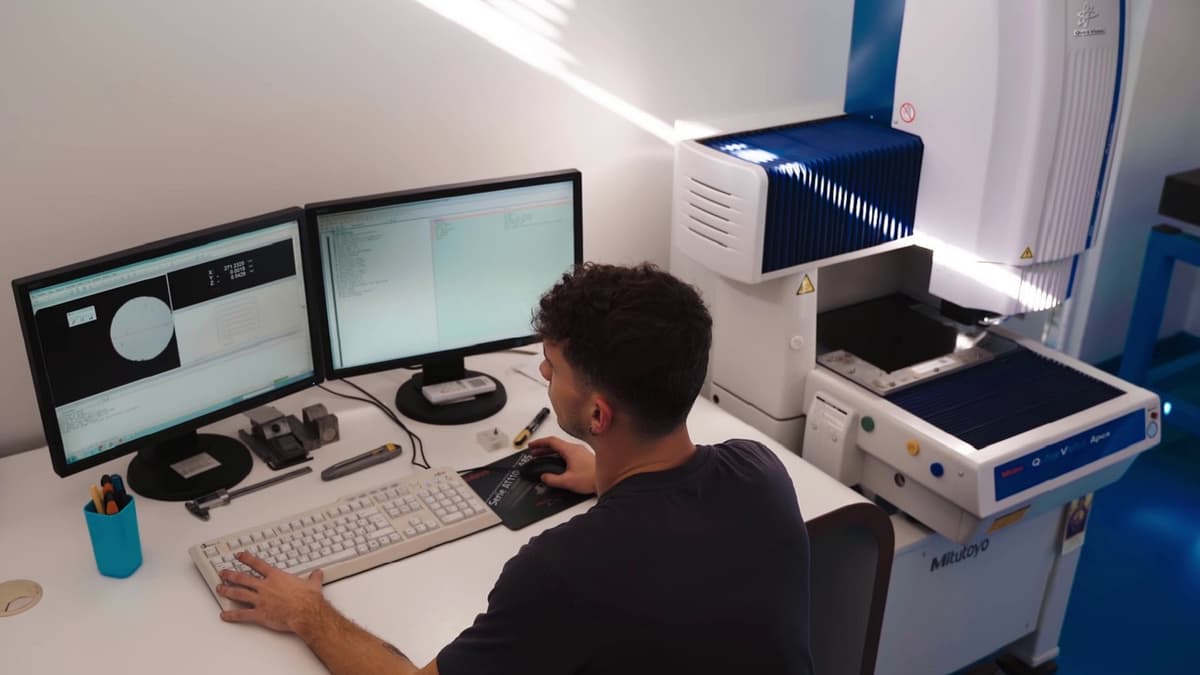
Multisensor Metrology Automating Micron-Level Inspection in Micro Waterjet Cutting
•March 2, 2026
0
Why It Matters
By turning metrology into a production‑line function, WatAJet can meet stringent tolerance requirements while reducing labor‑intensive checks, giving it a competitive edge in regulated high‑precision markets.
Key Takeaways
- •Quick Vision Apex integrates vision, probe, laser measurement.
- •Enables fully automated micron-level inspection for micro waterjet parts.
- •Reduces measurement time, eliminates need for multiple instruments.
- •Supports 100% dimensional checks on complex, high‑value components.
- •Boosts production scalability while maintaining aerospace/biomedical quality standards.
Pulse Analysis
Micro waterjet cutting has emerged as a niche yet vital manufacturing method for components that cannot tolerate thermal distortion. By propelling a 0.2 mm jet of high‑pressure water mixed with abrasive particles, the process can slice hardened steels, titanium, ceramics and delicate composites without altering material properties. Industries such as aerospace, biomedical devices and scientific research rely on these capabilities to produce parts with tolerances tighter than two microns on sub‑millimetre sections. As product miniaturisation accelerates, the demand for repeatable, non‑thermal machining continues to rise, putting pressure on suppliers to deliver flawless quality.
Mitutoyo’s Quick Vision Apex addresses that pressure by merging three metrology technologies—high‑resolution optical imaging, a contact probe and a precision laser—into a single, CNC‑controlled unit. The platform can be programmed once to execute full inspection cycles, automatically capturing 2‑D profiles, 3‑D geometry and surface height data without human intervention. This multi‑sensor approach eliminates the need for separate calipers, microscopes and laser scanners, slashing inspection time from hours to minutes while preserving micron‑level accuracy. Real‑time data logging and auto‑generated reports also satisfy traceability requirements for regulated sectors.
The operational shift from manual checks to an integrated, autonomous metrology system gives WatAJet a clear competitive advantage. Faster turnaround and 100 % dimensional verification enable the company to accept larger batch orders and expand into new high‑value markets without compromising quality. Moreover, the reliability of Mitutoyo’s tools reduces downtime and maintenance costs, reinforcing the business case for scaling precision manufacturing. As more manufacturers adopt similar sensor‑fusion solutions, the industry is likely to see a broader move toward fully automated quality control, reshaping supply chains that depend on ultra‑precise components.
Multisensor Metrology Automating Micron-Level Inspection in Micro Waterjet Cutting
0
Comments
Want to join the conversation?
Loading comments...