Near-Stabilisation of Business Conditions in Turkish Manufacturing Recorded by May PMI
Companies Mentioned

Why It Matters
The near‑stabilisation signals a potential turning point for Turkey’s manufacturing sector, yet lingering cost pressures and regional conflict risk derailing momentum, affecting investors and policy makers monitoring emerging‑market growth.
Key Takeaways
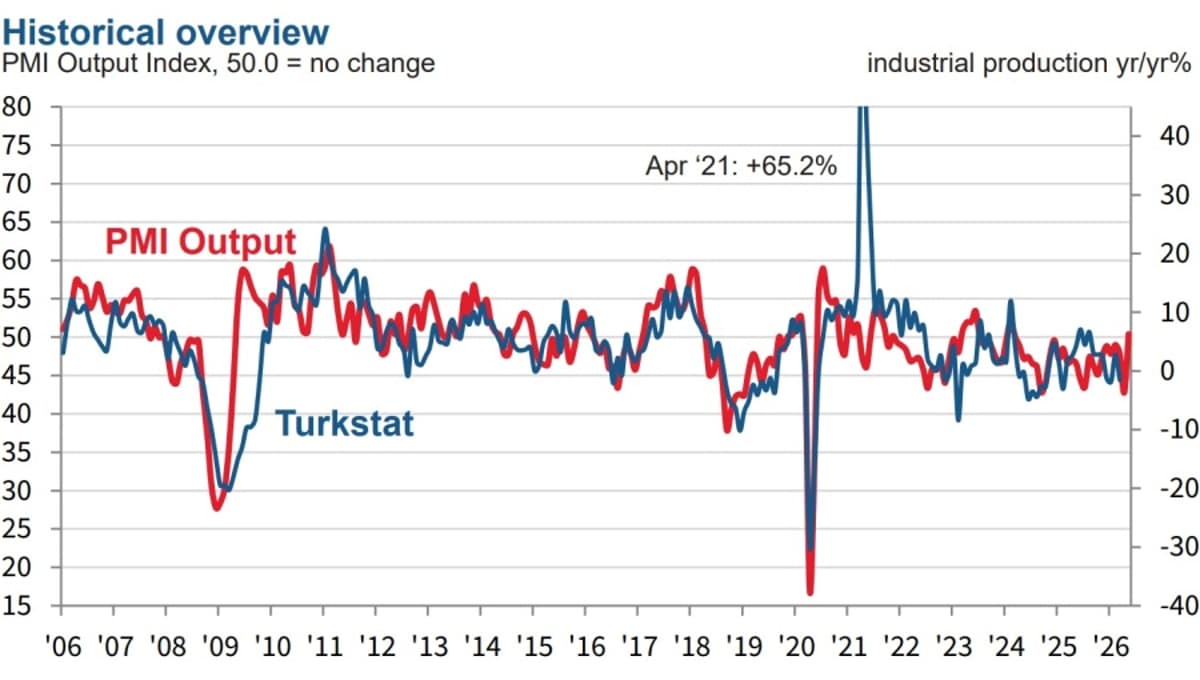
- •PMI rose to 49.8 in May, highest since March 2024.
- •Reading remains below 50, indicating contraction despite improvement.
- •Export orders rebounded, ending 20‑month slowdown.
- •Input costs and delivery delays continued to rise sharply.
- •Growth sustainability uncertain amid high costs and Middle East conflict.
Pulse Analysis
Turkey’s manufacturing landscape is showing tentative signs of recovery, as the May PMI climbed to 49.8, the highest reading in two years. While the index remains just shy of the 50.0 mark that signals expansion, the upward tick reflects modest gains in output and a notable lift in export demand. This shift arrives amid a broader macroeconomic backdrop of high inflation, a depreciating lira, and a central bank navigating tight monetary policy to curb price pressures.
The export rebound is a key driver behind the improved sentiment. After 20 consecutive months of waning foreign orders, Turkish manufacturers reported a resurgence in overseas demand, buoyed by competitive pricing and strategic positioning in markets less affected by the ongoing war in the Middle East. Nonetheless, the conflict continues to disrupt logistics, prompting firms to build safety stocks and report lengthened delivery windows. Simultaneously, input costs—particularly for energy and raw materials—have surged, eroding profit margins and forcing companies to reassess pricing strategies.
Looking ahead, the sustainability of this modest upswing hinges on several variables. Continued export growth could offset domestic demand weakness, but persistent cost inflation and supply‑chain bottlenecks may constrain production. Policymakers face a delicate balance: supporting manufacturing through targeted incentives while maintaining fiscal discipline. For investors, the PMI’s near‑stabilisation offers a cautious optimism signal, suggesting that Turkey’s industrial sector may be edging toward a more resilient trajectory, provided external shocks are managed effectively.
Near-stabilisation of business conditions in Turkish manufacturing recorded by May PMI
Comments
Want to join the conversation?
Loading comments...