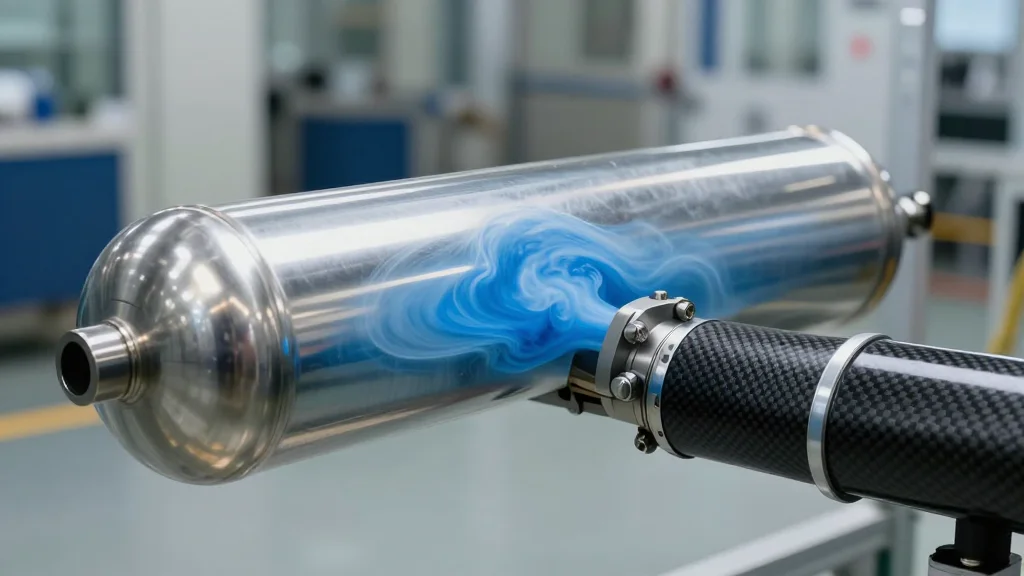
NeMo.bil Project Integrates Type 4 Tanks Into Mobility System Storage Rack
Why It Matters
The modular rack validates a scalable hydrogen‑storage architecture essential for electric‑autonomous swarm transport, accelerating clean‑mobility deployment in rural logistics.
Key Takeaways
- •Five Type 4 TPC hydrogen tanks integrated into a single rack
- •Rack includes HPRU, PCU, and valve control in one unit
- •High‑pressure lines meet strict leakage standards for safety
- •Leak and tightness tests completed using gaseous medium
- •Supports NeMo.bil’s swarm‑like, electric‑autonomous rural transport concept
Pulse Analysis
bil consortium has reached a critical milestone by installing five Type 4 thermoplastic‑composite (TPC) hydrogen tanks into a purpose‑built storage rack. Supplied by Avanco Composites and engineered with Poppe + Potthoff, the rack consolidates the tanks, valves, a high‑pressure regulation unit (HPRU) and a parallel charging unit (PCU) into a single, compact module. This modular approach reduces the footprint of hydrogen infrastructure and aligns with the project’s vision of lightweight, electrically autonomous vehicles that can be quickly refueled in the field.
The integration showcases how German industry partners can combine advanced composites with precision engineering to create ready‑to‑deploy hydrogen solutions. Safety and reliability were built into the design through high‑pressure hydrogen lines that satisfy the strictest leakage criteria, and by embedding all control components within a central tank control unit that acts as the system’s brain. Comprehensive leak and tightness tests, performed with a gaseous medium, confirmed the integrity of the sealed network before any liquid hydrogen is introduced. By co‑locating the HPRU and PCU, the rack can regulate pressure and manage fast‑charge cycles without external equipment, a feature that simplifies deployment for mobile fleets and reduces overall system cost.
Pro towing unit—closer to commercial reality. Rural passenger and freight services stand to benefit from a clean‑energy supply chain that is both modular and scalable, addressing the range anxiety that has limited hydrogen adoption. Backed by the Federal Ministry for Economic Affairs and Energy, the project illustrates Germany’s strategic push toward hydrogen mobility, and it provides a replicable template for other regions seeking to decarbonize transport networks.
NeMo.bil project integrates Type 4 tanks into mobility system storage rack
Comments
Want to join the conversation?
Loading comments...