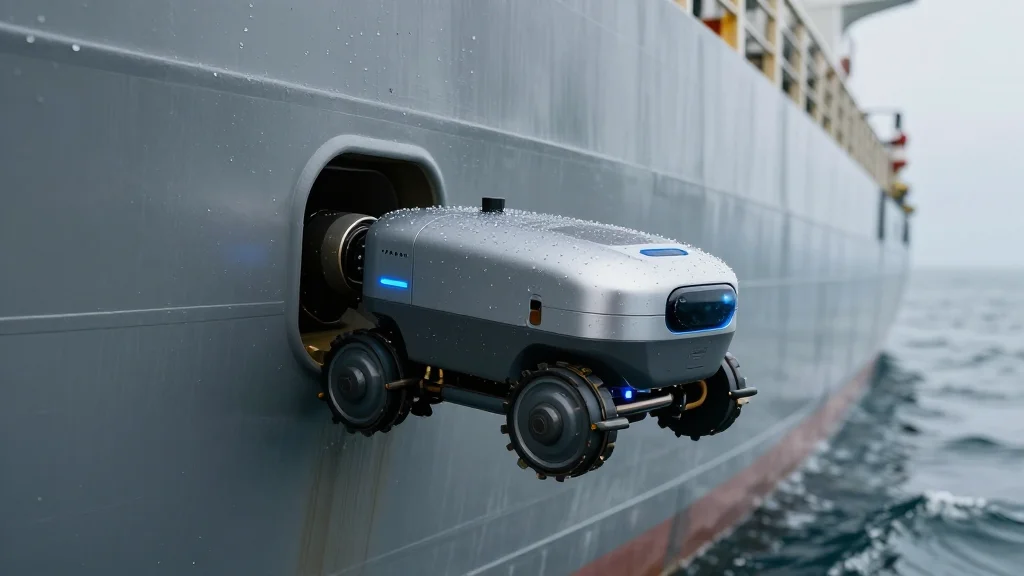
Neptune Robotics Invests $12M USD in New Singapore Factory to Expand Robotic Hull Cleaning Capabilities

Companies Mentioned
Why It Matters
By dramatically increasing cleaning throughput, Neptune helps ship operators cut fuel consumption and meet tightening environmental standards, reshaping cost structures across global shipping fleets.
Key Takeaways
- •New Singapore plant adds $12M to boost hull‑cleaning production
- •Capacity to rise 400% by 2026, enabling 60 daily cleanings
- •AI‑driven robots cut biofouling fuel loss up to 30%
- •Series B $52M funding fuels R&D in computer vision and ML
Pulse Analysis
Biofouling—marine growth on hulls—remains a hidden cost driver for the shipping industry, inflating fuel burn by as much as 30% and raising greenhouse‑gas emissions. Operators are under mounting pressure from regulators and fuel‑price volatility to adopt greener practices. Autonomous hull‑cleaning robots, equipped with AI‑based vision systems, promise continuous, low‑maintenance mitigation, turning a traditionally manual, dock‑side task into a data‑rich, predictive service. Neptune Robotics' latest investment directly addresses this pain point, offering a scalable solution that aligns operational efficiency with sustainability goals.
Singapore’s strategic location and robust maritime ecosystem make it an ideal hub for Neptune’s expansion. The $12 million facility will house advanced manufacturing lines and a dedicated R&D lab focused on refining computer‑vision algorithms and machine‑learning models that enable robots to navigate complex hull geometries autonomously. By localizing production, Neptune reduces lead times, cuts logistics costs, and positions itself closer to a network of 61 ports across Singapore and China, accelerating deployment cycles and fostering tighter customer relationships in the Asia‑Pacific corridor.
The capital infusion follows a $52 million Series B round, underscoring investor confidence in autonomous maritime services. As the sector witnesses a surge of venture funding, Neptune’s five‑fold capacity increase could set a new benchmark for service frequency, potentially reshaping competitive dynamics. Larger operators may increasingly outsource hull maintenance to specialized tech firms, freeing crew resources for higher‑value tasks. In the longer term, the data harvested from thousands of cleanings could feed predictive analytics platforms, further optimizing fuel consumption and informing next‑generation ship design. Neptune’s Singapore plant thus serves as both a production engine and a data hub, positioning the company at the forefront of a greener, more automated shipping future.
Neptune Robotics Invests $12M USD in New Singapore Factory to Expand Robotic Hull Cleaning Capabilities
Comments
Want to join the conversation?
Loading comments...