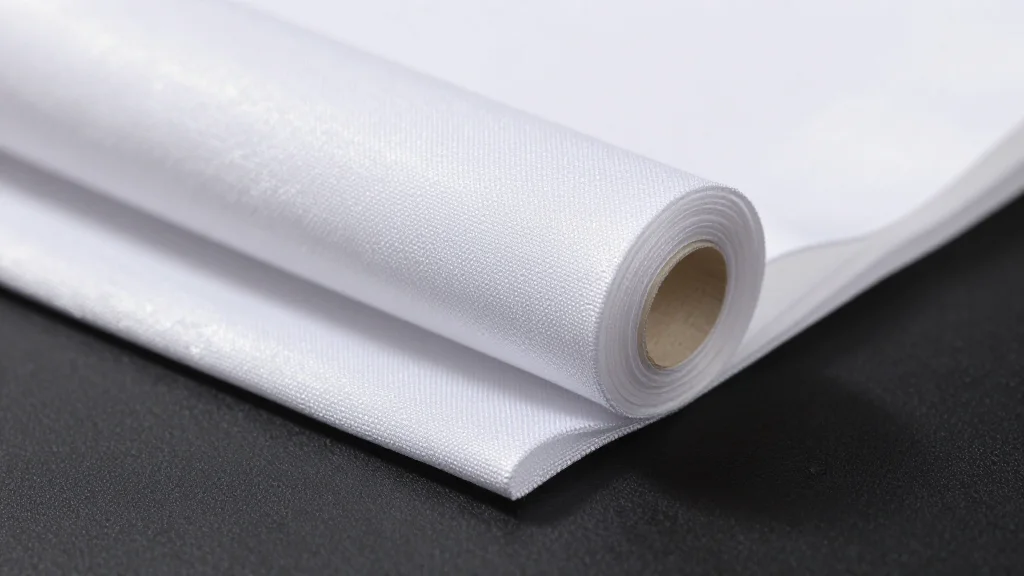
New Method Enables Conformal Graphene Coatings on Ordinary Fabrics for Wearable Electronic Devices
Why It Matters
This breakthrough could unlock mass‑production of affordable, high‑performance textile electronics, accelerating adoption in consumer wearables and industrial IoT. The low cost and scalability lower barriers for manufacturers to integrate smart functions into everyday clothing.
Key Takeaways
- •Conductivity reaches 283 S m⁻¹ on 200‑meter fabric roll
- •Production cost drops to $0.40 per square meter
- •Method works on diverse ordinary fabrics via temporal decoupling
- •Maintains washability, breathability, antibacterial and biocompatible traits
- •Enables large‑scale EMI shielding and Joule heating applications
Pulse Analysis
The rapid growth of wearable technology has pushed researchers to embed electronic functionality directly into textiles. Conventional approaches—such as sputtering metal films or weaving conductive fibers—often struggle with high material costs, limited flexibility, and complex manufacturing steps. Graphene, with its exceptional electrical conductivity and mechanical strength, is an ideal candidate, yet achieving uniform, durable coatings on tangled fabrics has remained a bottleneck. Overcoming the trade‑off between penetration depth and adhesion strength is essential for turning smart clothing from prototype to mass market.
The team from Wuhan University of Technology, Westlake University and Cranfield University introduced a temporal decoupling strategy that separates the coating process into two distinct interaction phases. By first employing the non‑ionic surfactant Triton X‑100 to create a weak, evenly distributed graphene‑oxide layer, and then triggering a reduction step that forms strong bonds with reduced graphene oxide, the researchers produced a continuous 200‑meter roll of fabric with 283 S m⁻¹ conductivity. At roughly $0.40 per square meter, the cost is ten times lower than competing graphene‑based textile methods, delivering performance gains reported to exceed existing solutions by more than a factor of 100.
Beyond the impressive electrical figures, the coated textiles retain essential wearability attributes: they remain hydrophilic, breathable, washable, antibacterial and biocompatible. These qualities open immediate pathways for applications such as electromagnetic interference (EMI) shielding in industrial workwear and Joule‑heated garments for temperature control. For manufacturers, the universal applicability to ordinary fabrics means existing supply chains can be leveraged without major retooling. As the IoT ecosystem expands, scalable, low‑cost graphene textiles could become a cornerstone of next‑generation smart apparel, health monitoring, and flexible circuitry.
New method enables conformal graphene coatings on ordinary fabrics for wearable electronic devices
Comments
Want to join the conversation?
Loading comments...