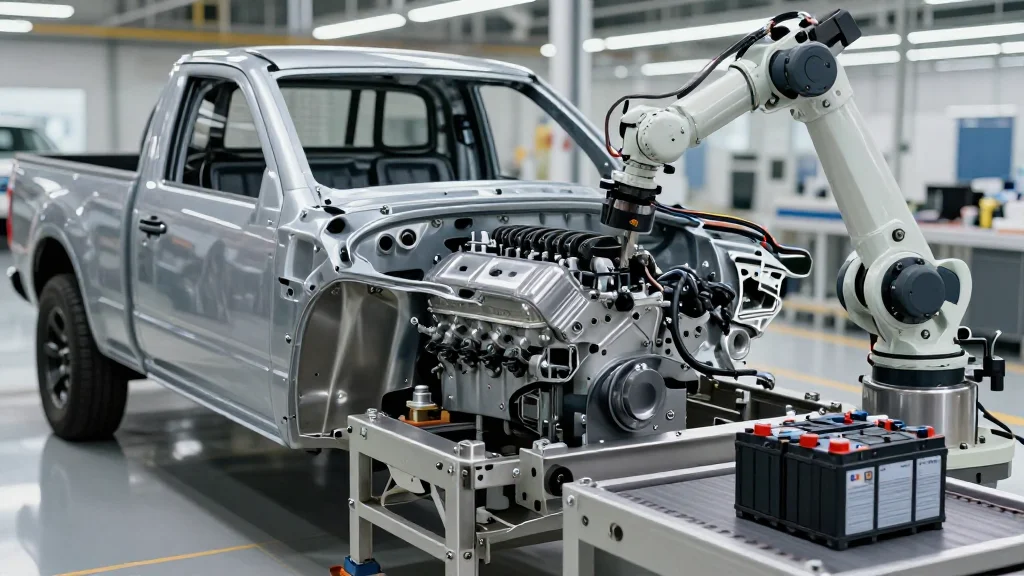
Nissan Redirects $500 M Mississippi Plant to ICE Trucks and SUVs, Scrapping US EV Build

Companies Mentioned
Why It Matters
Nissan’s pivot underscores the fragility of the U.S. electric‑vehicle market when policy incentives disappear, highlighting how automakers calibrate investment risk against consumer demand. By retaining a large manufacturing footprint for gasoline and hybrid vehicles, Nissan preserves jobs but also postpones the domestic buildup of battery and EV component ecosystems, which are critical for meeting climate targets and reducing reliance on overseas supply chains. The move may influence other manufacturers weighing the cost‑benefit of U.S. EV plants, potentially slowing the overall transition to zero‑emission vehicles in the United States. For suppliers, the shift reshapes order books, prompting a reallocation of capital toward traditional powertrain parts. Regions that had anticipated growth in battery‑related jobs may need to adjust workforce development plans. Policymakers will see a concrete example of how tax‑credit policy directly impacts corporate strategy, informing future legislative debates on how to sustain EV momentum.
Key Takeaways
- •Nissan cancels $500 million EV investment at its Canton, Mississippi plant
- •Facility will now produce gasoline and hybrid Xterra SUV and Frontier pickup
- •Only one EV (Ariya) has been built in the U.S. by Nissan to date
- •Decision cites weak U.S. EV sales and loss of the $7,500 federal tax credit
- •Shift affects supplier mix, favoring traditional powertrain over battery makers
Pulse Analysis
Nissan’s retreat from a dedicated U.S. EV assembly line reflects a broader recalibration across the auto industry, where manufacturers are weighing short‑term market realities against long‑term electrification goals. The company’s original "Ambition 2030" plan hinged on a policy environment that rewarded EV purchases; the removal of the federal tax credit removed a critical price lever, making ICE models comparatively more affordable for price‑sensitive buyers. This illustrates how volatile policy can quickly alter capital allocation decisions for capital‑intensive manufacturers.
From a competitive standpoint, Nissan’s move may give rivals like Tesla, which continues to expand its U.S. production capacity, a relative advantage in market share growth. However, it also signals to the supply chain that demand for battery packs and related components may be more regionally uneven than previously assumed. Companies that have invested heavily in U.S. battery gigafactories could see a slowdown in order flow, while traditional engine and transmission suppliers may experience a short‑term uplift.
Looking ahead, Nissan’s strategy is likely to remain fluid. If federal incentives are reinstated or if consumer sentiment shifts sharply toward electrification—driven perhaps by tighter emissions standards or a resurgence in fuel prices—the automaker could revisit its U.S. EV roadmap. Until then, the Canton plant’s retooling to ICE and hybrid production serves as a hedge against market uncertainty, preserving employment while keeping the door open for future electrification when conditions improve.
Nissan redirects $500 M Mississippi plant to ICE trucks and SUVs, scrapping US EV build
Comments
Want to join the conversation?
Loading comments...