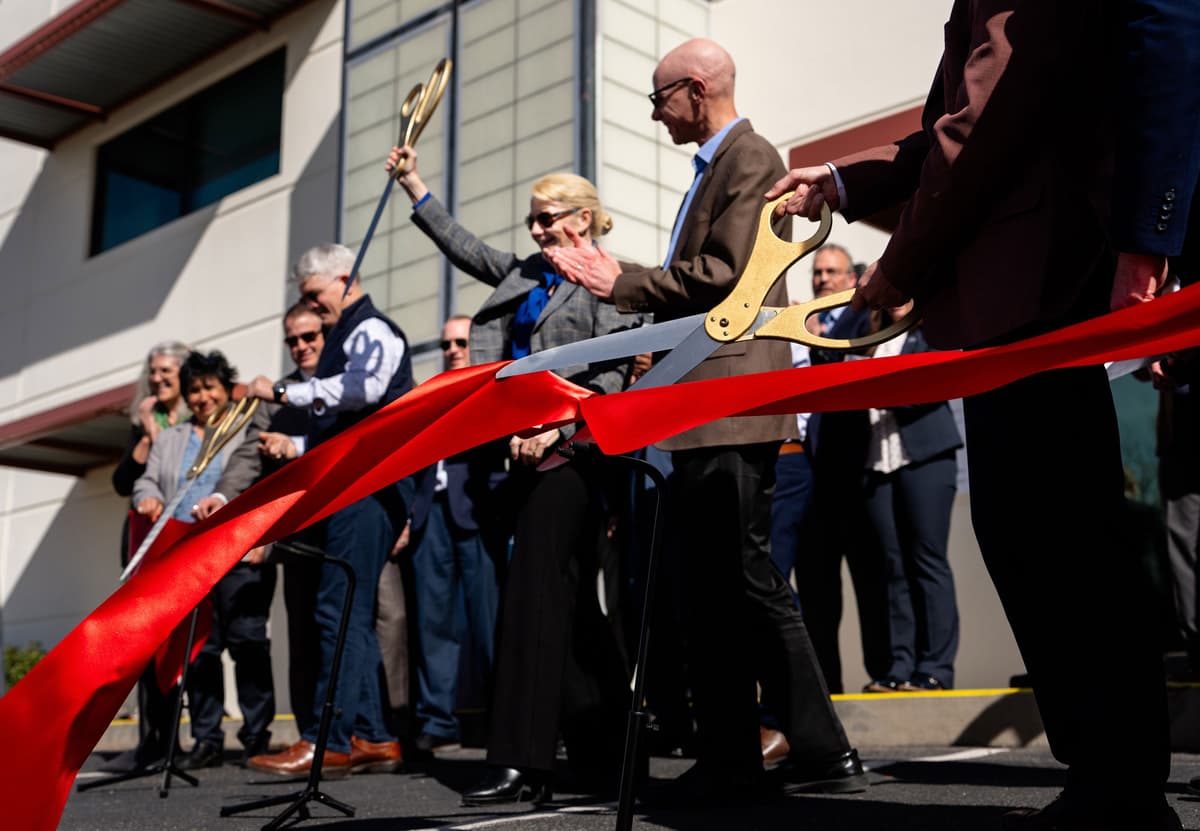
NNSA, Sandia and Kansas City National Security Campus Open CAMINO Facility
•February 24, 2026
0
Why It Matters
By compressing the prototype‑to‑production timeline, CAMINO boosts the United States’ ability to modernize its nuclear deterrent and respond swiftly to emerging threats, setting a benchmark for defense‑focused additive manufacturing.
Key Takeaways
- •CAMINO links research, design, production for nuclear components
- •Facility enables rapid prototyping, reduces development cycles
- •120 attendees at ribbon‑cutting showcase inter‑agency collaboration
- •Demonstrated 3D‑printed paperweight separated using wire EDM
- •Reflects industry shift to co‑located additive manufacturing campuses
Pulse Analysis
The opening of CAMINO marks a strategic pivot for America’s nuclear enterprise, embedding a digital‑first, end‑to‑end manufacturing pipeline within the national security ecosystem. By co‑locating design engineers, additive‑manufacturing experts, and post‑process capabilities such as wire EDM, the center eliminates traditional hand‑off delays that have long hampered weapon component modernization. This integrated model not only shortens the time from concept to test‑ready hardware but also embeds data continuity, enabling real‑time performance analytics that inform iterative design improvements.
CAMINO’s architecture mirrors a broader industrial movement toward consolidated additive‑manufacturing campuses, as seen in Oerlikon’s Campus Reichhold in Switzerland and BMW’s Munich AM hub. Those commercial ventures combine R&D, engineering, and serial production under one roof to accelerate technology maturation and reduce supply‑chain friction. By adopting a similar co‑location strategy, the defense sector leverages proven efficiencies while tailoring processes to the stringent security and material requirements of nuclear components, thereby narrowing the gap between civilian innovation and classified applications.
Looking ahead, the facility’s capability to bring production agencies into the early design phase promises heightened resilience and scalability for the nuclear deterrent. Faster iteration cycles can translate into more frequent updates to non‑nuclear components, improving reliability and extending service life. Moreover, the digital thread established at CAMINO could serve as a template for other high‑stakes government programs, fostering cross‑agency collaboration and potentially spurring public‑private partnerships that expand the nation’s advanced manufacturing base.
NNSA, Sandia and Kansas City National Security Campus open CAMINO facility
0
Comments
Want to join the conversation?
Loading comments...