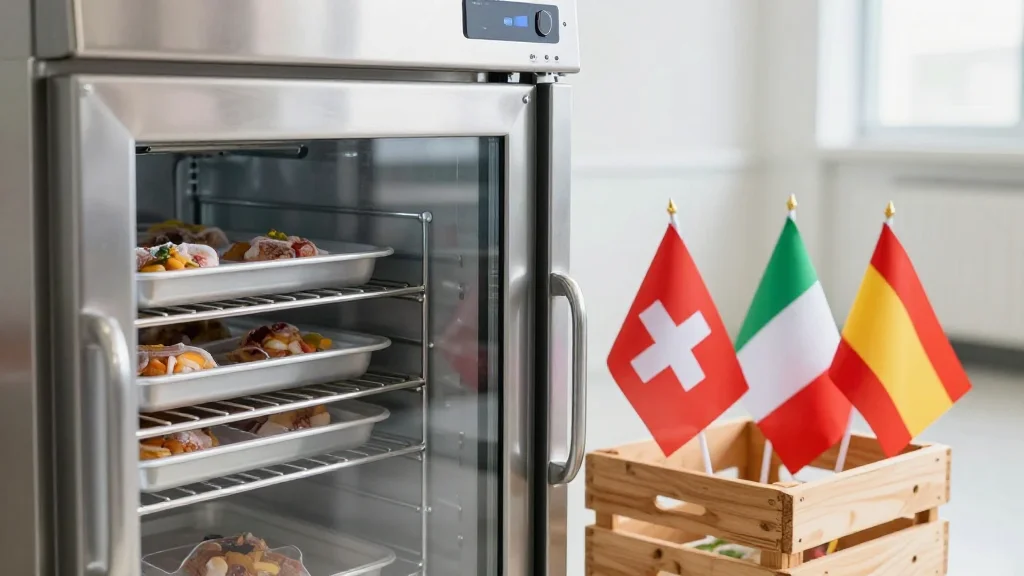
Nomad Foods to Close Factory in Switzerland
Why It Matters
The plant closure advances Nomad’s cost‑reduction agenda, preserving margins as the frozen‑food business faces shrinking sales and inflation. Successful savings will enable the group to reinvest strategically while protecting its European market presence.
Key Takeaways
- •Nomad will shut Rorschach plant, affecting 45 employees.
- •Targeting €200 m ($233 m) operational savings through 2028.
- •Production moved to Italy and Spain manufacturing sites.
- •Savings will fund targeted reinvestments and cushion inflation pressure.
- •Adjusted EBITDA projected to decline 5‑10% despite cost cuts.
Pulse Analysis
Nomad Foods, the UK‑based owner of Birds Eye, Iglo and Findus, has become one of Europe’s largest frozen‑food producers. Over the past year the group has grappled with a “transition year” marked by modest sales declines, rising input costs and a broader slowdown in consumer spending on convenience meals. In response, senior management has turned to operational restructuring to protect profitability. The decision to shutter the Rorschach plant in Switzerland reflects a strategic shift toward a more centralized manufacturing footprint, a move that mirrors similar consolidation trends across the European food sector.
The closure is a cornerstone of Nomad’s €200 m ($233 m) savings programme slated for 2026‑2028. By streamlining procurement, optimizing logistics routes and trimming overhead, the company expects to free cash that can be redeployed into growth initiatives such as new product development and digital supply‑chain tools. Shifting production of Findus frozen meals to higher‑capacity sites in Italy and Spain should improve plant utilisation rates and lower per‑unit costs. Analysts note that while the plan targets a 5‑10% EBITDA dip, the net effect could be a more resilient balance sheet in an inflation‑squeezed market.
For Swiss consumers, the transition promises uninterrupted access to familiar Findus products, as the company has pledged to maintain supply continuity. However, the 45‑person workforce will face redeployment or severance, underscoring the human cost of efficiency drives. Industry observers see Nomad’s actions as a bellwether for other frozen‑food manufacturers confronting similar margin pressure. If the savings targets are met, the group could emerge with a leaner cost structure, positioning it to capture market share as competitors wrestle with the same inflationary headwinds.
Nomad Foods to close factory in Switzerland
Comments
Want to join the conversation?
Loading comments...