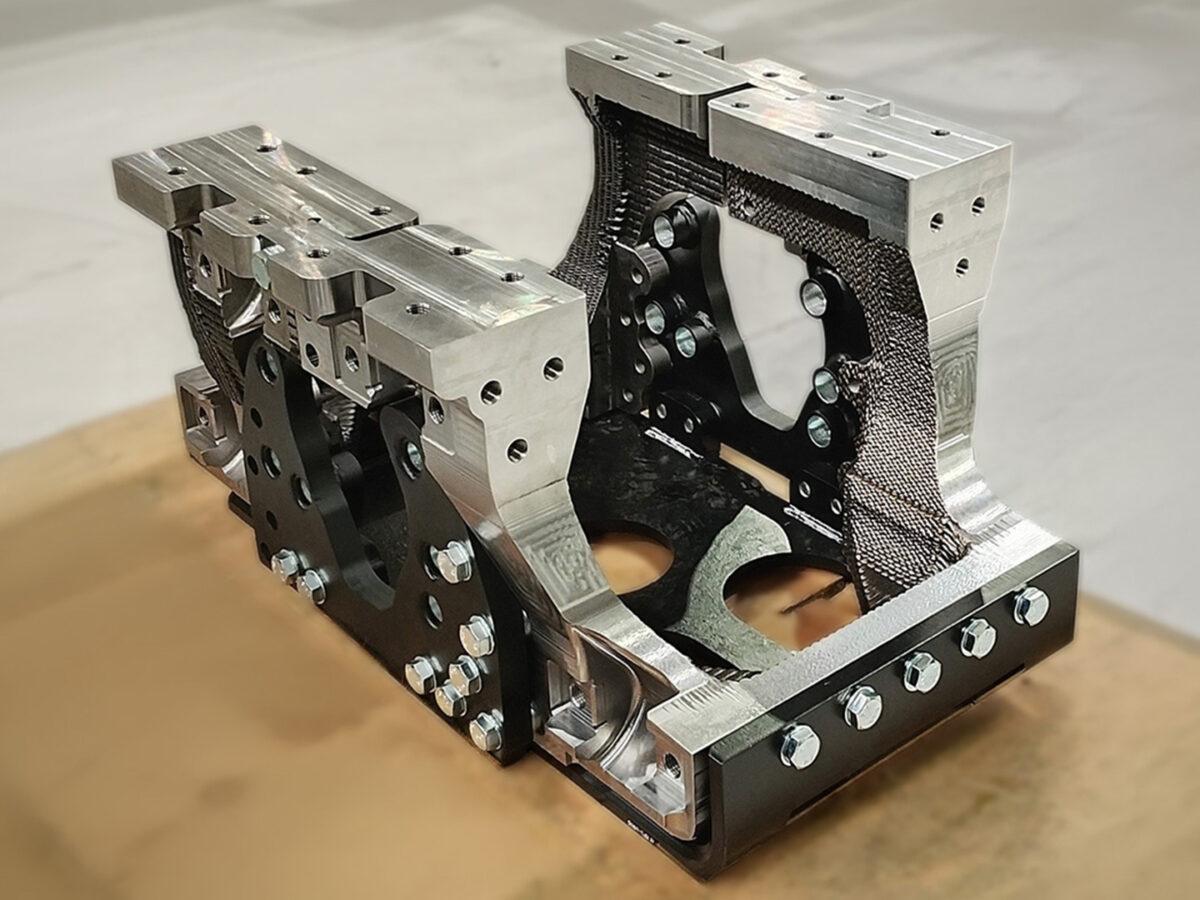
NP Aerospace Produces Mastiff Suspension Carrier via WAAM, Cutting Lead Times by 50%
Why It Matters
Eliminating tooling cuts costs and halves production lead times, giving defense manufacturers the agility needed for rapid, low‑volume development cycles. This breakthrough positions additive manufacturing as a viable alternative for high‑performance structural parts.
Key Takeaways
- •WAAM printed 110 kg carrier in 60 hours, no tooling
- •Lead time cut by 50% versus traditional casting
- •Complex overhangs built without redesign using multi‑axis robot
- •Low‑volume defense programs gain economic viability
- •Industry sees shift toward additive manufacturing for structural parts
Pulse Analysis
Wire‑arc additive manufacturing (WAAM) is emerging as a disruptive alternative to traditional casting and forging for large, load‑bearing metal components. NP Aerospace’s recent collaboration with the Digital Manufacturing Centre demonstrates the technology’s maturity: using Caracol’s Vipra AM platform, the company printed a 110‑kilogram Mastiff suspension and differential carrier in a single 60‑hour run, eliminating all tooling. The multi‑axis robot‑and‑part positioning system handled extreme overhangs and organic geometry that would be prohibitive on fixed‑axis machines, while post‑process heat treatment and machining ensured compliance with defense specifications.
The most compelling advantage for defense programs is speed. Conventional production requires costly tooling qualification and long lead times, which are untenable for low‑volume, rapidly evolving platforms such as protected vehicles. By cutting lead time by roughly 50 % and removing upfront tooling expenses, WAAM makes rapid design iteration financially viable. Recent field trials by Nurol Makina and MetalWorm, which installed WAAM‑fabricated armored components in operational vehicles for eight months without failure, reinforce confidence in the technology’s reliability. This agility addresses a long‑standing bottleneck in defense procurement, enabling faster spiral development cycles.
Beyond the military sector, the NP Aerospace success signals a broader shift toward additive manufacturing for structural parts across energy, maritime, and aerospace markets. Companies like DEEP Manufacturing are leveraging DNV‑approved WAAM processes for pressure vessels and hulls, expanding large‑format capabilities near key customers. As supply chains seek to reduce inventory and improve responsiveness, the ability to produce one‑off or low‑run steel components on demand will drive further adoption. Challenges remain—material certification, surface finish, and integration with existing workflows—but the demonstrated cost and time savings suggest WAAM will become a standard option for high‑performance, low‑volume metal parts.
NP Aerospace Produces Mastiff Suspension Carrier via WAAM, Cutting Lead Times by 50%
Comments
Want to join the conversation?
Loading comments...