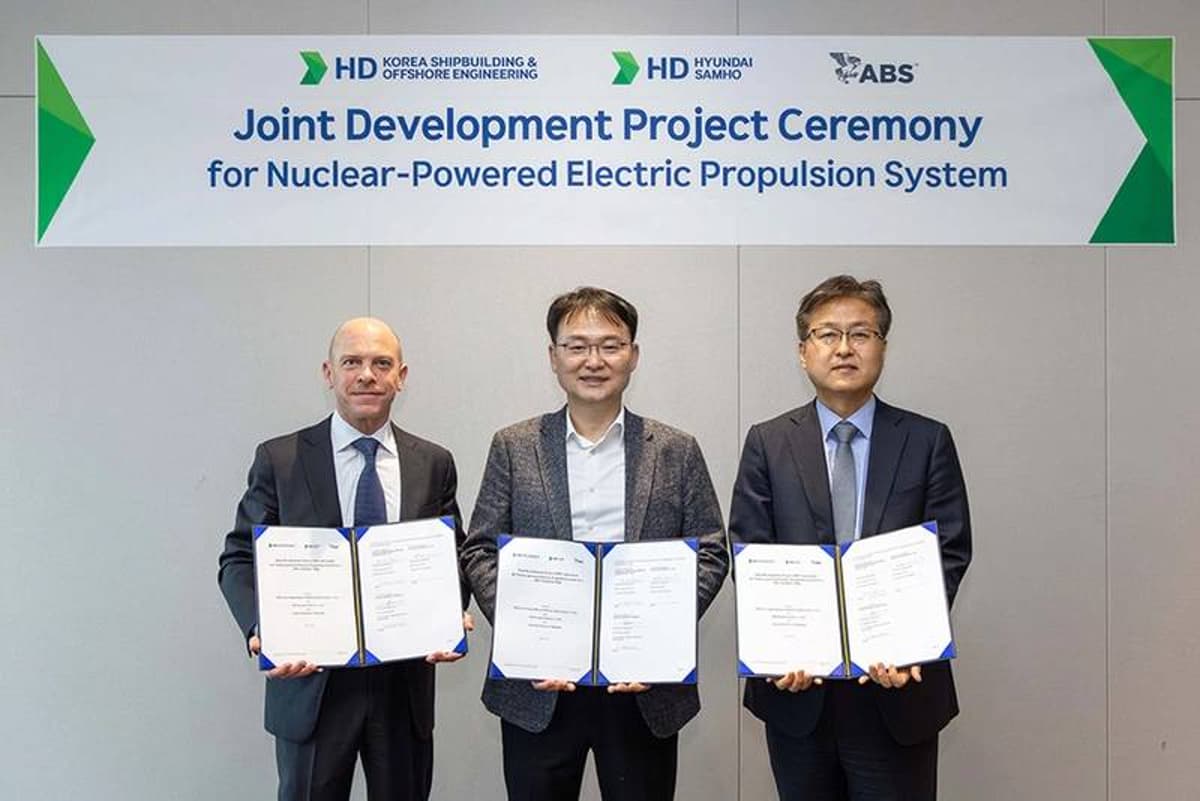
Nuclear Power for Commercial Vessels Central to ABS, HD Hyundai JDP
•March 9, 2026
0
Why It Matters
If viable, nuclear‑electric propulsion could dramatically lower shipping emissions while reducing fuel costs, reshaping the maritime industry's decarbonization pathway.
Key Takeaways
- •ABS, HD Hyundai launch nuclear propulsion joint project
- •Target design for 16,000 TEU container vessel
- •Focus on electric drive integration with nuclear reactor
- •Aim to cut emissions, improve operational safety
- •Project strengthens HD Hyundai’s competitive edge in green shipping
Pulse Analysis
The maritime sector faces mounting pressure to meet the International Maritime Organization’s 2050 carbon‑neutral target, prompting shipowners to explore alternatives beyond conventional fossil fuels. Nuclear energy, long trusted for submarines and icebreakers, offers a carbon‑free power source capable of delivering the high energy density required for large vessels. Recent advances in small modular reactors and electric propulsion architectures have revived interest in adapting this technology for commercial shipping, positioning nuclear‑electric hybrids as a potential game‑changer for long‑haul routes.
In the newly announced joint development project, ABS brings its rigorous safety classification expertise, while HD Korea Shipbuilding & Offshore Engineering and HD Hyundai Samho Heavy Industries contribute deep shipbuilding know‑how. The teams will produce a conceptual design for a 16,000‑TEU container ship, detailing reactor integration, electric motor sizing, power distribution and redundancy schemes. By focusing on a modular, electric‑drive layout, the partnership seeks to demonstrate that nuclear power can be safely coupled with modern propulsion control systems, delivering reliable performance while meeting stringent maritime safety standards.
Should the feasibility study prove successful, the commercial implications are profound. Nuclear‑electric vessels could slash fuel expenditures, reduce greenhouse‑gas emissions and lessen reliance on volatile oil markets. However, regulatory approval, public perception and waste‑management frameworks remain significant hurdles. Early adopters stand to gain a competitive edge, potentially reshaping fleet strategies and influencing future IMO policy. The project therefore marks a pivotal step toward a low‑carbon future for global shipping, with ripple effects across energy, finance and logistics sectors.
Nuclear Power for Commercial Vessels Central to ABS, HD Hyundai JDP
0
Comments
Want to join the conversation?
Loading comments...