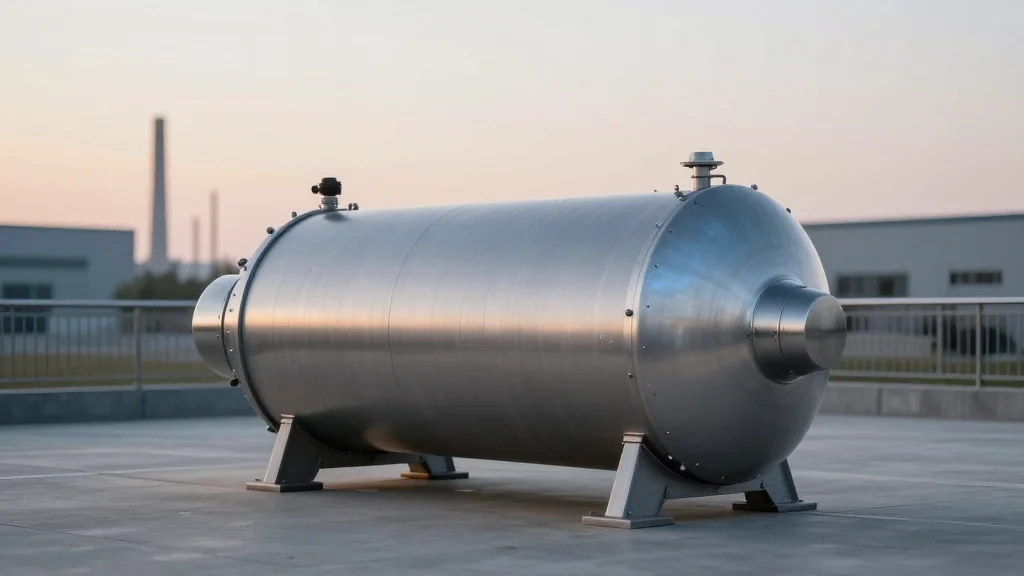
NuScale Advances 426‑MW SMR Project, Europe’s First Operational Small Modular Reactor

Why It Matters
The advancement of NuScale’s 426‑MW SMR highlights a pivotal shift in how large‑scale power infrastructure may be manufactured and deployed. By moving nuclear reactor construction from on‑site, labor‑intensive builds to factory‑based production, the industry could achieve faster roll‑outs and potentially lower capital expenditures, reshaping supply chains for heavy‑industry components. Moreover, the SMR’s cost profile directly challenges the economics of renewable plus storage solutions that have become the benchmark for new capacity. If NuScale can narrow the LCOE gap, it may unlock a new market segment for baseload power that supports grid reliability while meeting decarbonization targets, influencing policy, investment, and manufacturing strategies across Europe and beyond.
Key Takeaways
- •NuScale’s 426‑MW SMR aims for commercial operation in Europe within seven years.
- •Projected electricity cost: $89‑$102 per MWh, versus $66‑$92 per MWh for solar‑plus‑battery.
- •2025 revenue: $31.5 million; net loss: $664 million; operating cash outflow: $460 million.
- •SMR construction timeline is roughly half that of traditional nuclear plants.
- •Success depends on securing regulatory approval, financing, and achieving cost reductions.
Pulse Analysis
NuScale’s push into the European market arrives at a moment when the continent is aggressively pursuing net‑zero goals. Traditional nuclear has faced political headwinds, but the modular approach sidesteps many of the logistical and safety concerns that have stalled larger reactors. By standardizing components and leveraging mass‑production techniques, NuScale could create a new manufacturing niche that blends high‑tech engineering with the scalability of consumer‑grade production lines.
Historically, nuclear projects have suffered from cost overruns and schedule delays, eroding public and investor confidence. The SMR model promises to reverse that trend, but the financial data from 2025 underscores the steep climb ahead. A $664 million loss and substantial cash burn signal that the market is still in a speculative phase, reliant on deep‑pocketed investors such as sovereign wealth funds or tech giants with long‑term horizons. The comparison to solar‑plus‑battery costs is stark; unless NuScale can drive down its LCOE, it risks being priced out of new capacity auctions.
Looking forward, the SMR’s fate will likely hinge on policy incentives and the ability to demonstrate a clear cost advantage over renewables with storage. If European regulators grant a streamlined licensing pathway and if NuScale secures a multi‑billion‑dollar financing package, the project could catalyze a wave of modular nuclear factories, reshaping the manufacturing supply chain for power generation. Conversely, continued financial strain and competitive pressure from cheaper renewables could stall the technology, relegating SMRs to a niche role for specialized industrial customers rather than a mainstream energy solution.
NuScale Advances 426‑MW SMR Project, Europe’s First Operational Small Modular Reactor
Comments
Want to join the conversation?
Loading comments...