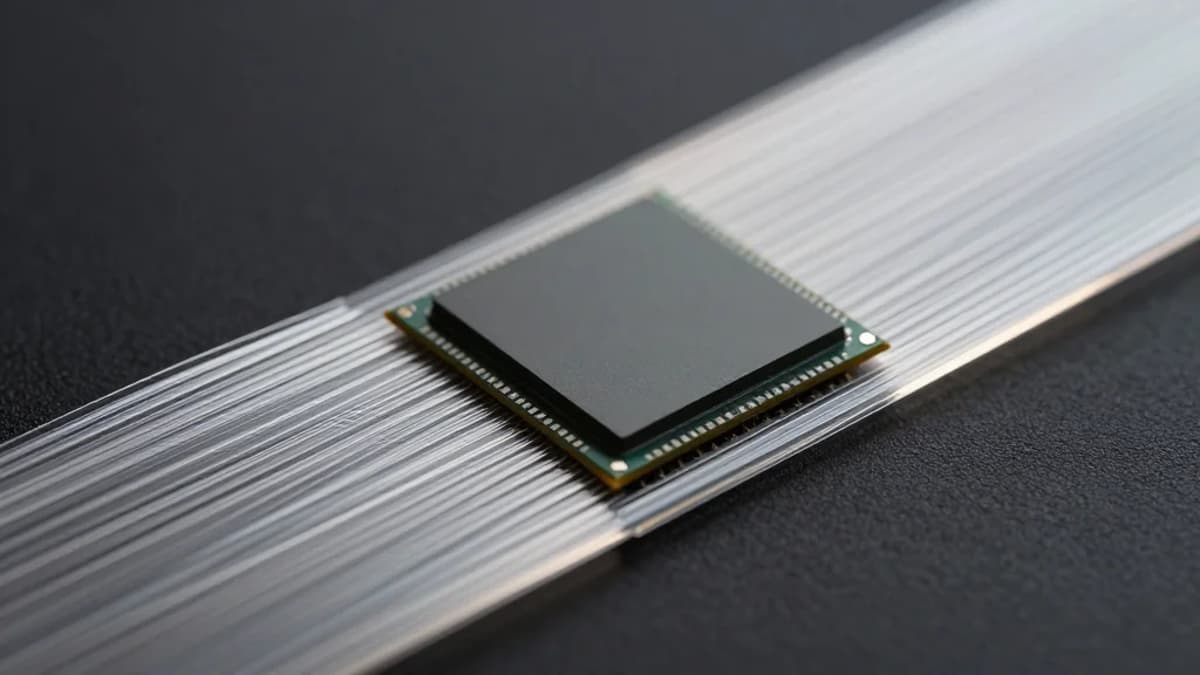
On the Radar: The Role of T-Glass in AI
•February 20, 2026
0
Why It Matters
Supply constraints on T‑glass directly affect the rollout speed and cost of next‑generation AI chips, a critical component of the expanding AI ecosystem.
Key Takeaways
- •T‑glass provides thermal stability for high‑power AI chips.
- •Nitto Boseki leads T‑glass production, plans capacity tripling.
- •Shortages risk AI chip rollout in smartphones and data centers.
- •New suppliers like Taiwan Glass expand market competition.
- •Vlex development aims to become AI substrate standard.
Pulse Analysis
The surge in AI workloads has forced semiconductor designers to rethink thermal management. Traditional substrate materials struggle with the heat generated by densely packed, high‑performance AI processors, leading to warpage and reliability issues. T‑glass, with its low coefficient of thermal expansion and superior tensile strength, offers a lightweight, ultra‑thin solution that dissipates heat more efficiently, enabling manufacturers to push chip dimensions and power envelopes without sacrificing yield. This material advantage is now a decisive factor in the competitive race to deliver faster, more capable AI accelerators.
Japan’s Nitto Boseki, the market’s primary T‑glass supplier, has responded to soaring demand by announcing a new plant that will triple output by 2028. The company also projects a 10‑20% capacity lift in FY2026 and a doubling in FY2027, signaling confidence in sustained growth. Meanwhile, Taiwan Glass and other regional players are scaling operations, diversifying the supply chain and reducing reliance on a single source. These expansions aim to alleviate the material bottleneck that has already begun to inflate AI chip prices and delay product launches across both data‑center and mobile segments.
Looking ahead, Nitto’s next‑generation Vlex glass promises even lower thermal expansion, positioning it as a potential industry standard for AI substrates. If successfully mass‑produced, Vlex could further enhance chip reliability while trimming system‑level cooling costs. For investors and OEMs, monitoring T‑glass capacity and pricing trends will be as crucial as tracking silicon advancements, because the material’s availability will increasingly dictate the pace of AI hardware innovation and the economics of large‑scale AI deployments.
On the radar: The role of T-glass in AI
0
Comments
Want to join the conversation?
Loading comments...