Opinion: Why Industrial AI Must Be Trained on Physics, Not Prompts
Why It Matters
Physics‑based AI turns speculative automation into a dependable operational asset, protecting equipment, reducing downtime, and mitigating safety and liability risks for manufacturers.
Key Takeaways
- •Prompt‑based AI lacks physical understanding, risking costly downtime.
- •Physics‑AI reasons about force, torque, wear, enabling real‑time adaptation.
- •Xaba’s xCognition discovers governing equations from multimodal sensor data.
- •Deterministic behavior reduces safety hazards and liability in factories.
- •Scalable physics‑AI transfers knowledge across machines, cells, and plants.
Pulse Analysis
The surge of conversational AI tools has sparked excitement in manufacturing, yet their reliance on language prompts exposes a critical blind spot. While a chatbot can correct a typo, a robot acting on a mis‑interpreted prompt can damage a $200,000 machine or endanger workers. This mismatch between digital reasoning and physical reality makes prompt‑driven systems unsuitable for high‑stakes production lines, where errors translate directly into lost output, repair costs, and regulatory scrutiny.
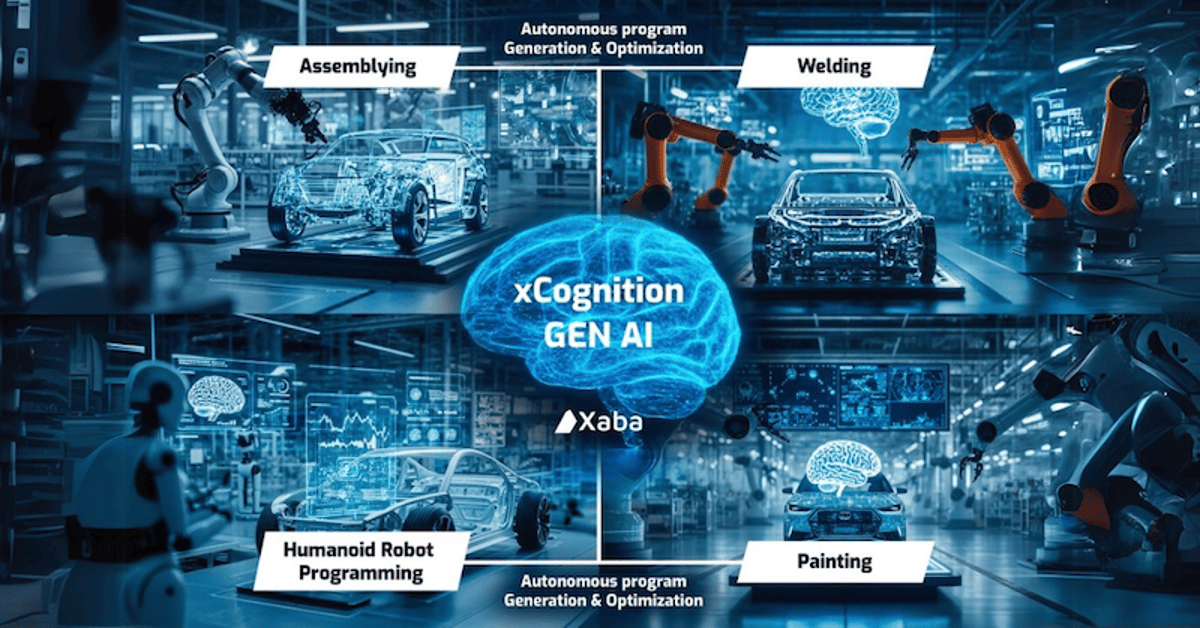
Physics‑AI bridges that gap by embedding the laws of mechanics into the decision engine. Instead of matching patterns from historical data, the system ingests streams of forces, temperatures, voltages, and accelerations, then derives the underlying equations that govern each process. Xaba.ai’s xCognition Synthetic Brain exemplifies this paradigm, turning raw sensor data into a mathematical model that predicts wear, compensates for tolerance drift, and optimizes trajectories on the fly. The result is deterministic behavior—machines that consistently meet quality targets despite raw material variations or tool degradation.
For decision‑makers, the implication is clear: AI investments must be evaluated on operational resilience, not demo sparkle. Physics‑based platforms promise lower total‑cost‑of‑ownership by cutting scrap, reducing unplanned downtime, and minimizing safety liabilities. Moreover, because the learned models capture fundamental dynamics, they can be transferred across cells, factories, or even industry segments, accelerating ROI. As manufacturers grapple with tighter margins and ever‑greater product complexity, embracing physics‑AI will likely become a competitive differentiator rather than a niche experiment.
Opinion: Why industrial AI must be trained on physics, not prompts
Comments
Want to join the conversation?
Loading comments...