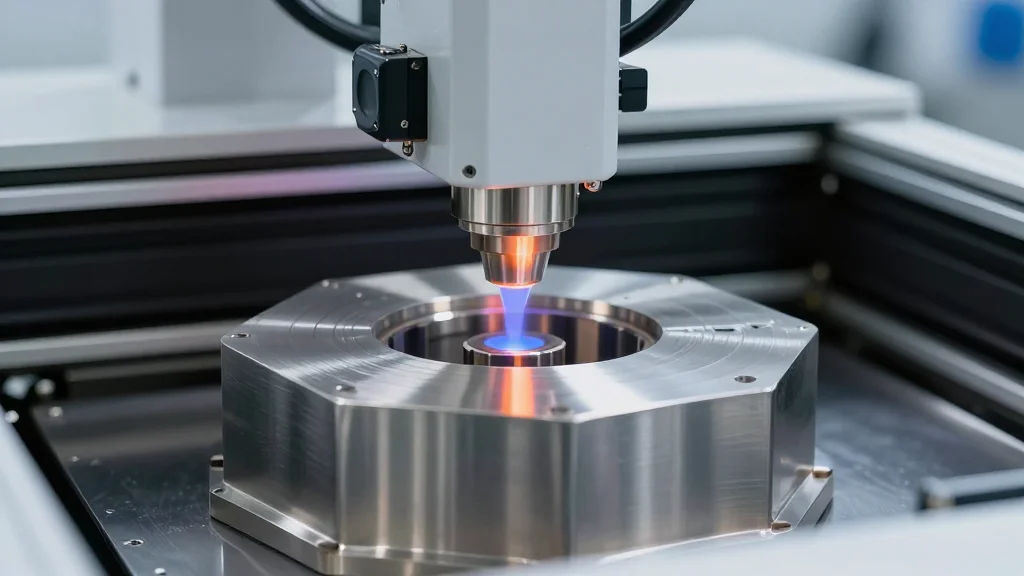
ORNL AI Sensors Slash Errors in Large‑Scale 3D Printing, Boosting Part Accuracy

Why It Matters
The ORNL AI sensor suite tackles a fundamental bottleneck in additive manufacturing: maintaining consistent thermal conditions across large, complex builds. By automating temperature regulation, manufacturers can dramatically cut scrap rates, lower energy consumption, and improve the mechanical performance of printed parts. This advancement is especially critical for high‑mix, low‑volume production, where each part’s design may differ and traditional statistical process control is less effective. The technology also lowers the barrier for smaller firms to adopt large‑scale 3D printing, potentially democratizing access to advanced composite manufacturing. Beyond immediate cost savings, the system’s ability to operate without retraining for new designs could reshape supply‑chain dynamics. Companies could shift from centralized, batch‑oriented production to distributed, on‑demand manufacturing hubs, reducing inventory holdings and transportation emissions. In sectors such as aerospace and construction, where weight‑critical, custom‑shaped components are prized, the AI‑driven controller could enable faster iteration cycles and more rapid certification of new parts.
Key Takeaways
- •ORNL’s AI controller uses six low‑cost thermal cameras and computer vision to monitor temperature in real time.
- •System automatically adjusts print speed, correcting a 30% temperature drop within seconds.
- •Detects temperature variations of only a few degrees, preventing weak layer bonds.
- •No retraining required for new part designs, reducing setup time and computing load.
- •Pilot programs with aerospace suppliers planned for later 2026 to assess cost and lead‑time impacts.
Pulse Analysis
The ORNL breakthrough arrives at a pivotal moment for additive manufacturing, where the industry is transitioning from prototyping to production‑grade parts. Historically, temperature control has been a manual, trial‑and‑error process, limiting the scalability of large‑format printers. By embedding AI directly into the sensor loop, ORNL not only improves part fidelity but also creates a data‑rich environment that can feed downstream analytics for predictive maintenance and quality assurance.
From a competitive standpoint, the technology narrows the advantage held by a handful of printer manufacturers that have proprietary monitoring solutions. Because the ORNL system relies on inexpensive thermal imaging and open‑source computer‑vision frameworks, it can be retrofitted onto existing machines, democratizing access and potentially spurring a wave of third‑party integrations. This could pressure incumbent vendors to open their ecosystems or risk losing market share to agile startups that can offer plug‑and‑play AI upgrades.
Looking forward, the real test will be the system’s performance across diverse material families—especially high‑performance thermoplastics and metal‑filled composites that exhibit more complex thermal behavior. If the controller proves adaptable, it could become a de‑facto standard for large‑scale additive manufacturing, driving down costs enough to make on‑site production of aerospace and construction components economically viable. The ripple effects would extend to supply‑chain resilience, allowing manufacturers to respond to demand spikes without the long lead times associated with traditional tooling.
ORNL AI Sensors Slash Errors in Large‑Scale 3D Printing, Boosting Part Accuracy
Comments
Want to join the conversation?
Loading comments...