ORNL Combines 3D Printing and High-Pressure Processing to Reshape Large-Scale Metal Part Production
Why It Matters
Eliminating traditional canister bottlenecks reduces cost and lead time while expanding design freedom for critical defense and energy parts, bolstering U.S. manufacturing resilience.
Key Takeaways
- •3D‑printed PM‑HIP canisters replace welding, machining, forming steps
- •Lead time dropped to two days for a 2,000‑lb canister
- •Computational models cut trial‑and‑error, ensuring material performance
- •Enables large, dense parts for nuclear, turbine, aerospace applications
- •Provides a domestic alternative to constrained casting and forging supply chains
Pulse Analysis
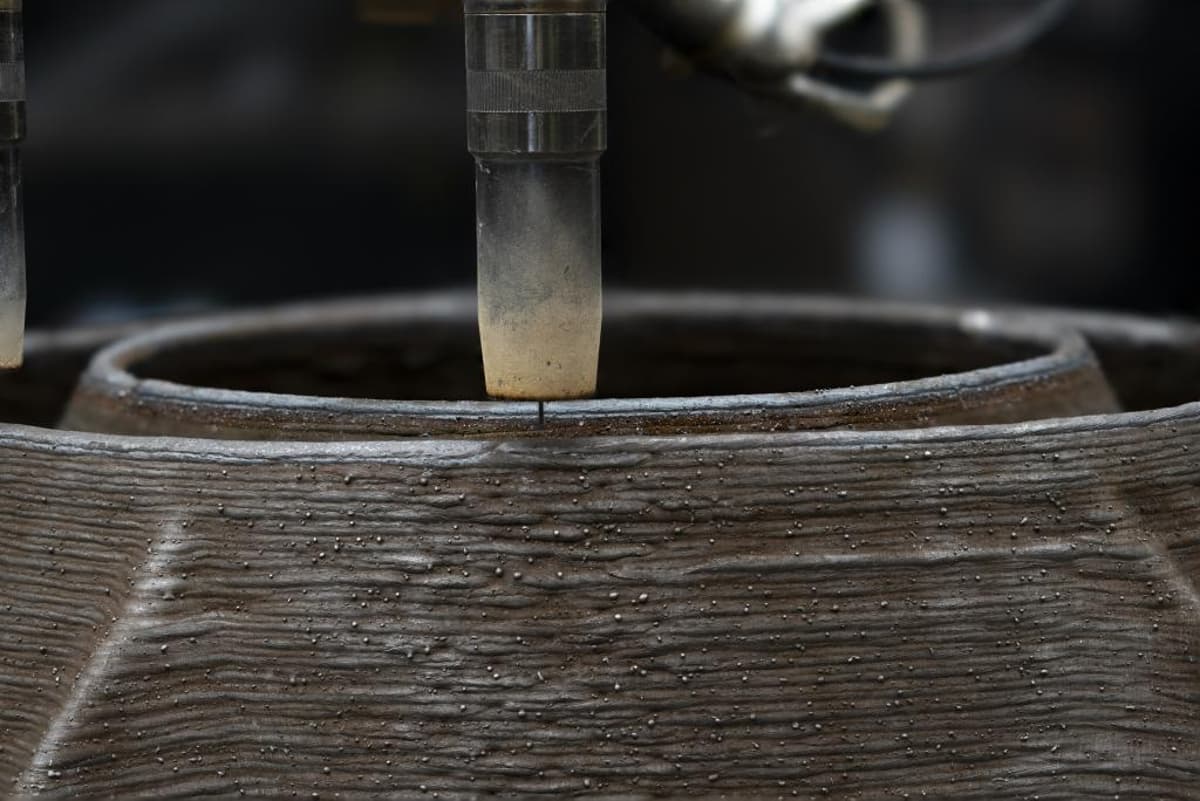
Oak Ridge National Laboratory’s latest achievement merges additive manufacturing with powder metallurgical hot isostatic pressing (PM‑HIP) to fabricate the canisters that house metal powders during consolidation. By laser‑ and wire‑based 3‑D printing the canisters, ORNL eliminates the traditional sequence of forming, machining and welding, which have long been sources of cost, waste and geometric limitation. The printed canisters can be produced near their final shape, slashing material scrap and compressing lead times—from a two‑day, 2,000‑lb prototype to potential on‑demand production. The approach also integrates mechanics‑based simulation to predict distortion, ensuring structural integrity without costly trial‑and‑error.
The breakthrough arrives at a critical juncture for U.S. manufacturing, where casting and forging capacity has been strained by defense and clean‑energy programs. Large, dense components for nuclear reactors, turbine generators and aerospace engines traditionally rely on a dwindling domestic foundry base, creating supply‑chain vulnerabilities. By offering a faster, domestically controlled pathway to produce these parts, the AM‑PM‑HIP hybrid directly addresses the bottleneck that has forced the Department of Energy and the Department of Defense to seek foreign sources. Early adoption by the Naval Nuclear Propulsion Program and Army foundries signals rapid uptake across high‑stakes sectors.
Looking ahead, the DOE’s Manufacturing Demonstration Facility plans to scale the technology to multi‑tonne components and to certify a broader alloy portfolio, including radiation‑tolerant steels for next‑generation reactors. Commercialization could unlock new business models where customers order near‑net‑shape metal parts on demand, reducing inventory and logistics costs. As additive manufacturing continues to mature, the integration with PM‑HIP may become a standard for high‑performance, large‑format metal production, reshaping the competitive landscape for aerospace, energy and defense manufacturers worldwide.
ORNL Combines 3D Printing and High-Pressure Processing to Reshape Large-Scale Metal Part Production
Comments
Want to join the conversation?
Loading comments...