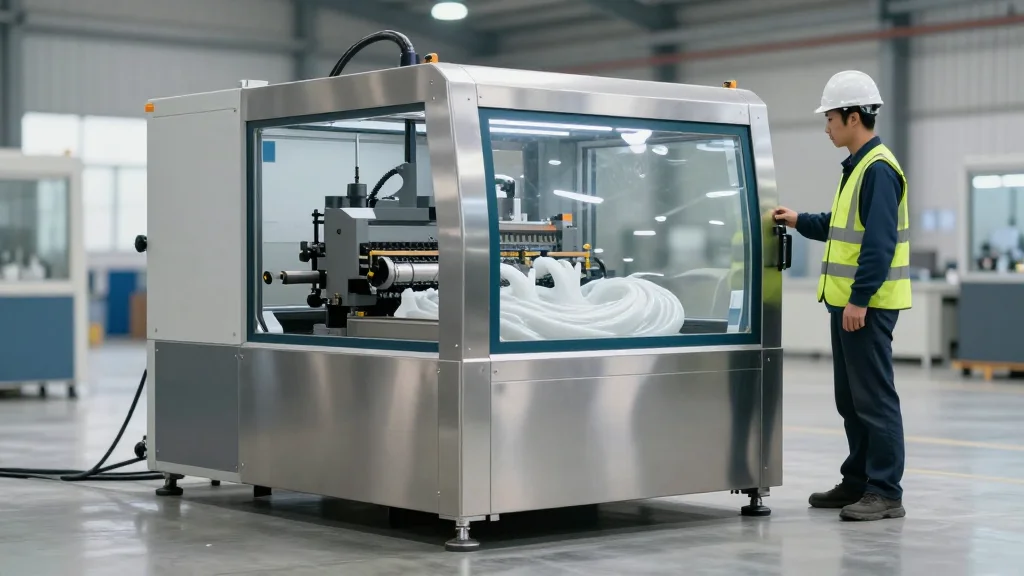
PELI Boosts European Capacity with 70% Rotomoulding Expansion in Crottendorf

Why It Matters
The Crottendorf expansion illustrates how a global component maker can mitigate supply‑chain volatility by deepening its European footprint. By increasing rotomoulding capacity and aligning with ISO standards, PELI not only improves service levels for existing customers but also creates a platform to attract new business that values local sourcing and sustainability. The move also reinforces Europe’s broader industrial policy goals of reshoring high‑value manufacturing and reducing carbon footprints associated with long‑haul logistics. Furthermore, the investment sends a clear message to competitors that scale, certification, and ESG integration are now intertwined prerequisites for winning contracts in demanding sectors. As other manufacturers evaluate similar regional upgrades, the competitive dynamics of the European protective‑case market could shift toward a more localized, standards‑driven ecosystem.
Key Takeaways
- •Rotomoulding capacity at Crottendorf increased by 70%
- •Assembly and production space expanded by 40%
- •Workforce grew by 80% with new leadership and training
- •Site achieved ISO 9001 and ISO 14001 certifications
- •PELI aims to certify external moulding partners across Europe by end‑2026
Pulse Analysis
PELI's strategic push into Crottendorf reflects a broader trend of manufacturers rebalancing global footprints toward regional hubs. The 70% boost in rotomoulding capacity is especially noteworthy because that process underpins the durability of PELI's flagship protective cases. By localising this capability, the company reduces lead times and buffers against geopolitical or pandemic‑related disruptions that have plagued trans‑Atlantic supply lines.
Historically, European manufacturers have struggled to compete with lower‑cost Asian producers on volume. PELI sidesteps that dilemma by leveraging high‑margin, high‑specification products where proximity and rapid iteration are valued over pure cost. The ISO 9001/14001 credentials further differentiate the plant, assuring customers of consistent quality and environmental stewardship—attributes increasingly demanded in public‑sector procurement.
Looking forward, the success of Crottendorf could inspire a cascade of similar investments across the continent, especially as the EU tightens sustainability regulations. Companies that pair capacity growth with robust ESG frameworks will likely capture the next wave of contracts, while those that remain dependent on distant factories may find themselves at a competitive disadvantage. PELI’s next milestone—certifying external moulding partners—will test its ability to extend the same standards beyond its walls, potentially creating a de‑facto European network of compliant, high‑performance manufacturers.
PELI Boosts European Capacity with 70% Rotomoulding Expansion in Crottendorf
Comments
Want to join the conversation?
Loading comments...