Penn State Uses iVABS Framework to Advance Real-World Composite Rotorcraft Blades
Why It Matters
By embedding manufacturing constraints early in the design loop, iVABS shortens the path from virtual optimization to physical production, lowering development costs and accelerating the rollout of next‑generation vertical‑lift platforms.
Key Takeaways
- •Penn State leverages free AnalySwift licenses for VABS and SwiftComp.
- •iVABS integrates manufacturing constraints directly into rotor blade design.
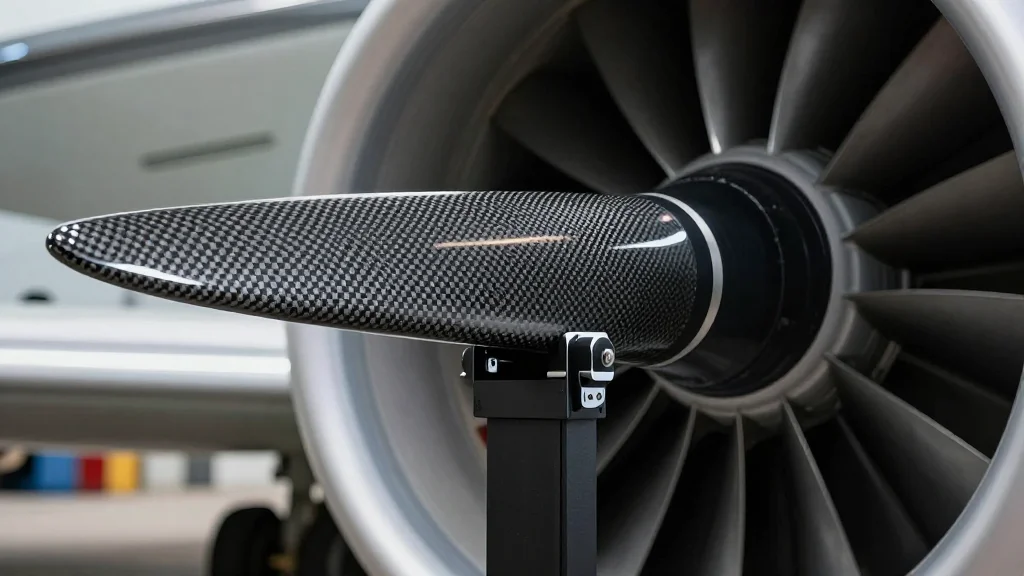
- •Prototype carbon‑fiber spar fabricated from iVABS‑derived stacking sequence.
- •Experimental tests validate iVABS predictions of stiffness and failure loads.
- •Project aims to produce full‑scale composite blade for helicopters.
Pulse Analysis
Composite rotor blades are a linchpin of modern vertical‑lift aircraft, yet their design has traditionally been hampered by a disconnect between high‑fidelity analysis and practical manufacturability. Tools such as VABS provide detailed cross‑sectional stiffness and mass properties, while the iVABS workflow extends this capability by embedding manufacturing rules—like spar geometry, skin layup continuity, and variable thickness—directly into the optimization loop. This integration reduces the need for costly redesign cycles and enables rapid exploration of large design spaces, a critical advantage as the industry pushes toward lighter, more efficient helicopters and emerging VTOL platforms.
At Penn State, the iVABS framework is being applied through the AnalySwift Academic Partner Program, which supplies the university with no‑cost licenses for VABS and SwiftComp. The research team has already produced a carbon‑fiber spar using a stacking sequence generated by iVABS, then subjected it to rigorous experimental testing. The measured stiffness, spanwise properties, and failure loads closely matched the software’s predictions, confirming the optimizer’s reliability. This validation step not only builds confidence in the computational model but also demonstrates how uncertainty quantification can guide experimental planning, saving time and material.
The broader impact extends beyond academia. A validated design‑to‑production pipeline promises aerospace manufacturers a faster route to market for composite rotor blades, cutting development timelines and material waste. As vertical‑lift vehicles become central to urban air mobility and defense missions, the ability to iterate quickly while ensuring manufacturability will be a competitive differentiator. Penn State’s collaboration with AnalySwift exemplifies how university‑industry partnerships can accelerate technology transfer, positioning the U.S. aerospace sector to meet the growing demand for high‑performance, cost‑effective rotorcraft solutions.
Penn State uses iVABS framework to advance real-world composite rotorcraft blades
Comments
Want to join the conversation?
Loading comments...