Pilatus Breaks Ground on PC-12, PC-24 Aircraft Facility in Colorado
Companies Mentioned
Why It Matters
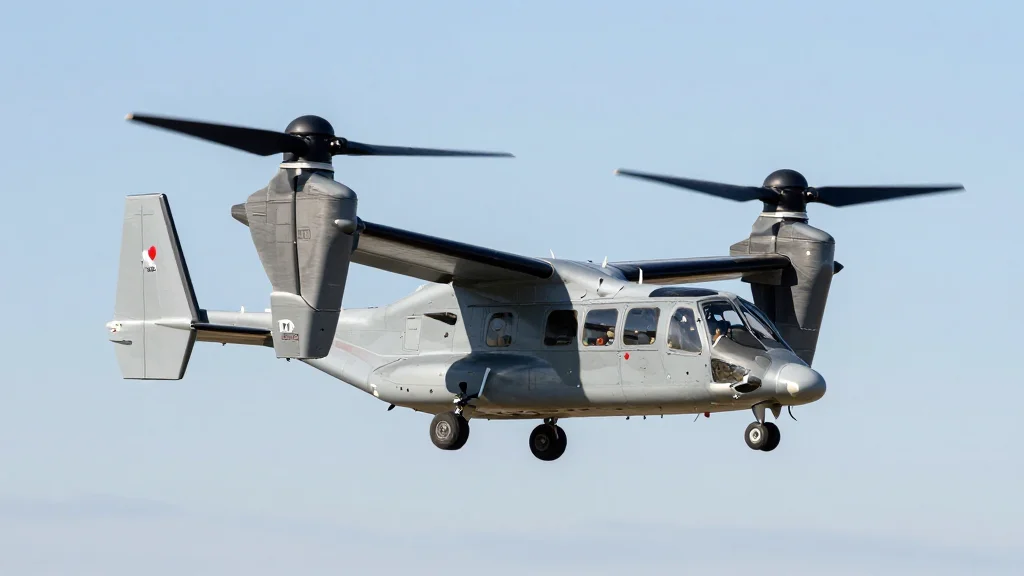
The Cheyenne II marks a pivotal shift from legacy helicopters to high‑speed tilt‑rotor platforms, reshaping Army mobility and creating new demand for advanced composites across the defense supply chain.
Key Takeaways
- •Bell's MV‑75 Cheyenne II designated by U.S. Army
- •MV‑75 will replace UH‑60 Black Hawk by 2030
- •Tilt‑rotor reaches 280 knots speed, 800 nm range
- •Composite partners include GKN, Spirit AeroSystems, Toray
- •FLRAA program uses carbon‑fiber structures for lighter airframe
Pulse Analysis
The U.S. Army’s formal designation of Bell’s MV‑75 as Cheyenne II signals the culmination of a multi‑year development effort under the Future Long‑Range Assault Aircraft (FLRAA) initiative. By targeting a 2030 service entry, the Army aims to retire aging UH‑60 Black Hawk fleets and gain a platform capable of cruising above 280 knots while covering 800 nautical miles without refuel. This performance envelope promises faster troop insertion, extended reach for reconnaissance, and greater survivability in contested environments, positioning the tilt‑rotor as a cornerstone of next‑generation vertical lift.
Beyond speed and range, the Cheyenne II’s design leverages extensive carbon‑fiber‑reinforced polymer (CFRP) components, reducing airframe weight to just over 18,000 lb. Key aerospace firms—GKN Aerospace, Spirit AeroSystems, Unitech Composites, Eagle Aviation Tech, and Toray—provide doors, fuselage sections, fairings, propeller blades, and advanced thermoplastic ruddervators. This distributed supply chain not only accelerates production but also embeds cutting‑edge composite manufacturing capabilities within the U.S. defense industrial base, fostering resilience and innovation.
The program’s broader impact reverberates across the defense and commercial sectors. As the Army transitions to tilt‑rotor technology, competitors in the vertical lift market must accelerate their own high‑speed, composite‑heavy designs to stay relevant. Moreover, the demand for CFRP parts is expected to spur further investment in advanced material facilities, potentially lowering costs for civilian applications such as regional air mobility. In essence, Cheyenne II serves as both a tactical upgrade for the Army and a catalyst for a new era of lightweight, high‑performance aircraft.
Pilatus breaks ground on PC-12, PC-24 aircraft facility in Colorado
Comments
Want to join the conversation?
Loading comments...