Manufacturing News and Headlines
  • All Technology
  • AI
  • Autonomy
  • B2B Growth
  • Big Data
  • BioTech
  • ClimateTech
  • Consumer Tech
  • Crypto
  • Cybersecurity
  • DevOps
  • Digital Marketing
  • Ecommerce
  • EdTech
  • Enterprise
  • FinTech
  • GovTech
  • Hardware
  • HealthTech
  • HRTech
  • LegalTech
  • Nanotech
  • PropTech
  • Quantum
  • Robotics
  • SaaS
  • SpaceTech
AllNewsDealsSocialBlogsVideosPodcastsDigests

Manufacturing Pulse

EMAIL DIGESTS

Daily

Every morning

Weekly

Sunday recap

NewsDealsSocialBlogsVideosPodcasts
ManufacturingNewsPlastometrex Launches MultiScale Capability to Capture High-Resolution Mechanical Property Variation
Plastometrex Launches MultiScale Capability to Capture High-Resolution Mechanical Property Variation
Manufacturing

Plastometrex Launches MultiScale Capability to Capture High-Resolution Mechanical Property Variation

•February 18, 2026
0
TCT Magazine
TCT Magazine•Feb 18, 2026

Why It Matters

By providing accurate, localized mechanical data on previously untestable geometries, MultiScale reduces reliance on conservative safety factors and accelerates material and process validation across aerospace and additive‑manufacturing sectors.

Key Takeaways

  • •Tests parts as thin as 0.75 mm without sectioning
  • •Offers 250 µm and 500 µm indenters for finer resolution
  • •Maps properties every 1.5 mm across complex geometries
  • •NASA used MultiScale to cut safety margins by 15 %
  • •Enables rapid five‑minute, non‑destructive tensile data

Pulse Analysis

Traditional mechanical testing struggles with thin‑walled, welded or intricately shaped components, often requiring destructive sectioning or extrapolation from bulk samples. Engineers face a data gap that hampers accurate material models and process control, especially in high‑performance sectors such as aerospace and additive manufacturing. Plastometrex’s MultiScale capability directly addresses this shortfall by delivering high‑resolution property maps without compromising part integrity, enabling a more granular understanding of local stress‑strain behavior.

The MultiScale upgrade leverages Plastometrex’s Profilometry‑based Indentation Plastometry (PIP) technology, extracting full stress‑strain curves from micro‑indentation data through accelerated inverse finite‑element analysis. By introducing 250 µm and 500 µm indenters alongside the standard 1000 µm tip, the system can probe features as small as 0.75 mm and generate property measurements at 1.5 mm intervals. Integrated into the compact PLX‑Benchtop platform and delivered via the CORSICA+ subscription, the workflow completes a five‑minute, non‑destructive test that yields both yield and ultimate tensile strength, dramatically shortening validation cycles.

Early adopters illustrate the strategic advantage of MultiScale. NASA employed the technology on additively manufactured spaceflight parts, uncovering a 15 % reduction in yield strength as wall thickness decreased—a nuance missed by conventional tensile testing. This insight enabled tighter safety margins, optimized print parameters, and refined weld procedures, translating into weight savings and cost reductions. As industries pursue lighter, more complex designs, the ability to capture localized mechanical data will become a competitive differentiator, positioning MultiScale as a catalyst for faster innovation and more efficient certification pathways.

Plastometrex launches MultiScale capability to capture high-resolution mechanical property variation

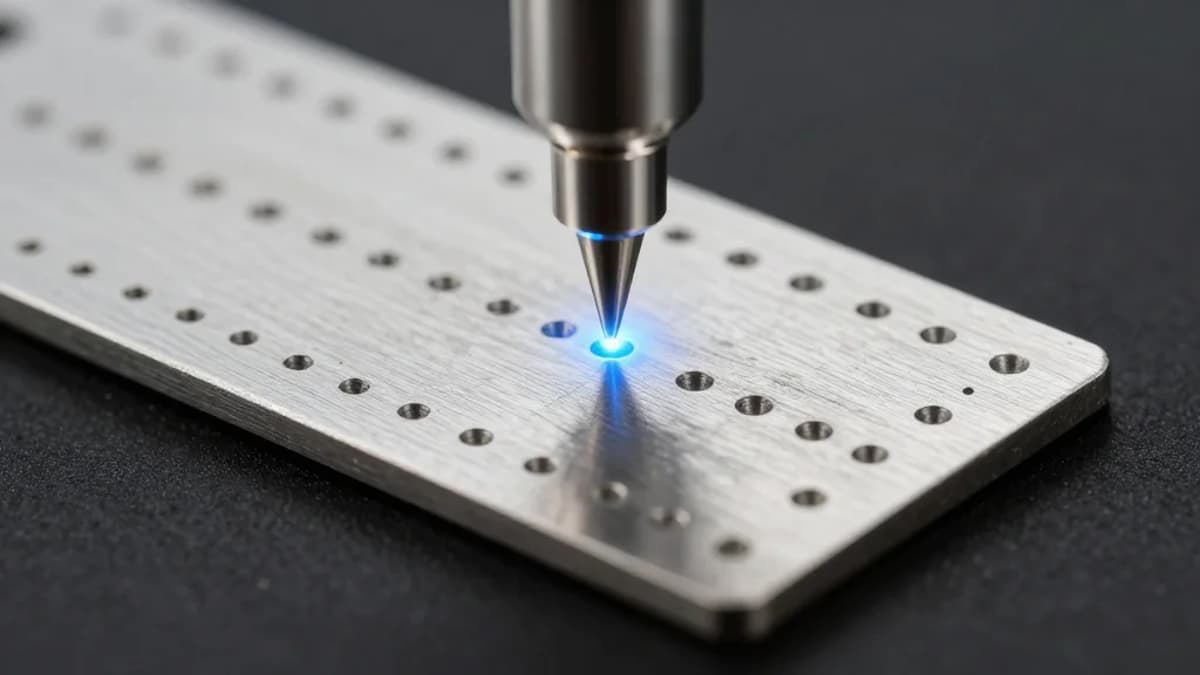
Plastometrex has introduced its new MultiScale capability to help users capture high-resolution mechanical property variation across thin, welded, and complex geometries that are typically inaccessible to conventional mechanical testing. 

It has been developed in a bid to address a 'common gap in mechanical testing.' MultiScale is said to enable direct testing on components and specimens as thin as 0.75 mm, extracting accurate mechanical data without destructive sectioning, while mapping mechanical properties across welds and complex geometries with 1.5 mm indent spacing to provide high-resolution insight into local variations and process performance.

This capability is powered by Plastometrex's Profilometry-based Indentation Plastometry (PIP) Testing technology, which extracts stress-strain curves from indentation test data using accelerated inverse finite element analysis, and is available to all PLX-Benchtop users through their CORSICA+ subscription.

PLX-Benchtop is a fast and compact system that non-destructively gathers yield and ultimate tensile strength (UTS) data from an automated five-minute test. The standard indenter size in every PLX-Benchtop device is 1000 µm; however, with the addition of the MultiScale capability, users are now said to have access to 250 µm and 500 µm indenters, allowing mechanical behaviour to be captured at a variety of scales.

Dr Jimmy Campbell, CTO at Plastometrex, said: “We developed the MultiScale capability to give engineers access to the data they’ve been missing. Many of our users work with parts that are too thin or geometrically complex for conventional mechanical testing. We wanted to change that, to make it possible to test the untestable and capture reliable property data wherever it’s needed.”

According to Plastometrex, MultiScale has already been used by NASA to characterise local variations in mechanical properties within spaceflight components. By mapping stress-strain responses across an additively manufactured part, process-structure-property relationships were revealed, which helped to inform manufacturing optimisation and reduce conservative safety factors. Yield strength is said to have fallen by approximately 15% as wall thickness decreased, an insight which, Plastometrex says, would have been missed by tensile testing

Dr Mike Coto, CCO at Plastometrex, added: “MultiScale gives users the ability to zoom in on the fine details that drive overall performance. That level of resolution supports more efficient design decisions, whether that means adjusting print parameters, refining weld procedures, or reducing unnecessary safety margins while maintaining structural integrity.”

Read Original Article
0

Comments

Want to join the conversation?

Loading comments...