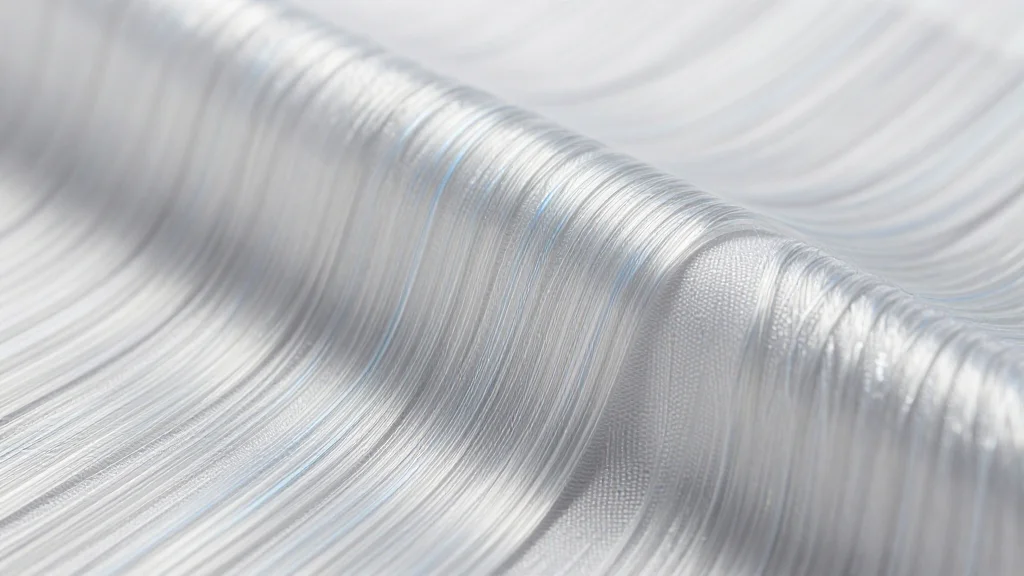
Porcher Industries Launches New Shape-Memory Thermoplastic Hybrid Textiles
Why It Matters
The hybrid textile dramatically speeds thermoplastic composite manufacturing while reducing material waste, giving OEMs a competitive edge in cost and sustainability. Its versatility opens high‑performance composites to broader market segments.
Key Takeaways
- •Hybrid textile combines glass, carbon, aramid fibers
- •Areal weight up to 3 kg/m² reduces plies
- •Shape‑memory enables additive‑free 3D forming
- •Production cycles under 10 minutes with heating
- •Thermoplastic recyclability advances sustainable manufacturing
Pulse Analysis
The composite market has long grappled with the rigidity of traditional thermoplastic prepregs, which struggle to conform to intricate geometries without extensive tooling or adhesives. Porcher industries’ hybrid textile addresses this gap by embedding shape‑memory capabilities directly into the yarn structure, allowing the fabric to self‑align during forming. This innovation not only simplifies the design‑to‑production workflow but also reduces reliance on costly additive processes, making thermoplastic composites more accessible for complex aerospace and automotive components.
Technical advantages stem from the fabric’s high areal weight—up to 3 kg/m²—which slashes the number of required plies and accelerates draping. The integrated low‑temperature preforming function ensures precise placement in consolidation tools, while compatibility with vacuum moulding, RTM, and advanced heating/cooling systems enables part fabrication in under ten minutes. Moreover, the thermoplastic matrix remains fully recyclable, aligning the product with circular‑economy goals and lowering the overall carbon footprint of composite manufacturing.
Industry implications are significant. By democratizing rapid, low‑waste composite production, Porcher’s hybrid textile opens doors for sectors beyond aerospace, such as construction, sports equipment, and defense, where lightweight, durable parts are prized. OEMs can now iterate designs faster, reduce inventory of specialized tooling, and meet stricter sustainability mandates. As the market shifts toward greener, more agile manufacturing, Porcher industries’ solution positions it as a pivotal supplier in the next generation of high‑performance composite technologies.
Porcher industries launches new shape-memory thermoplastic hybrid textiles
Comments
Want to join the conversation?
Loading comments...