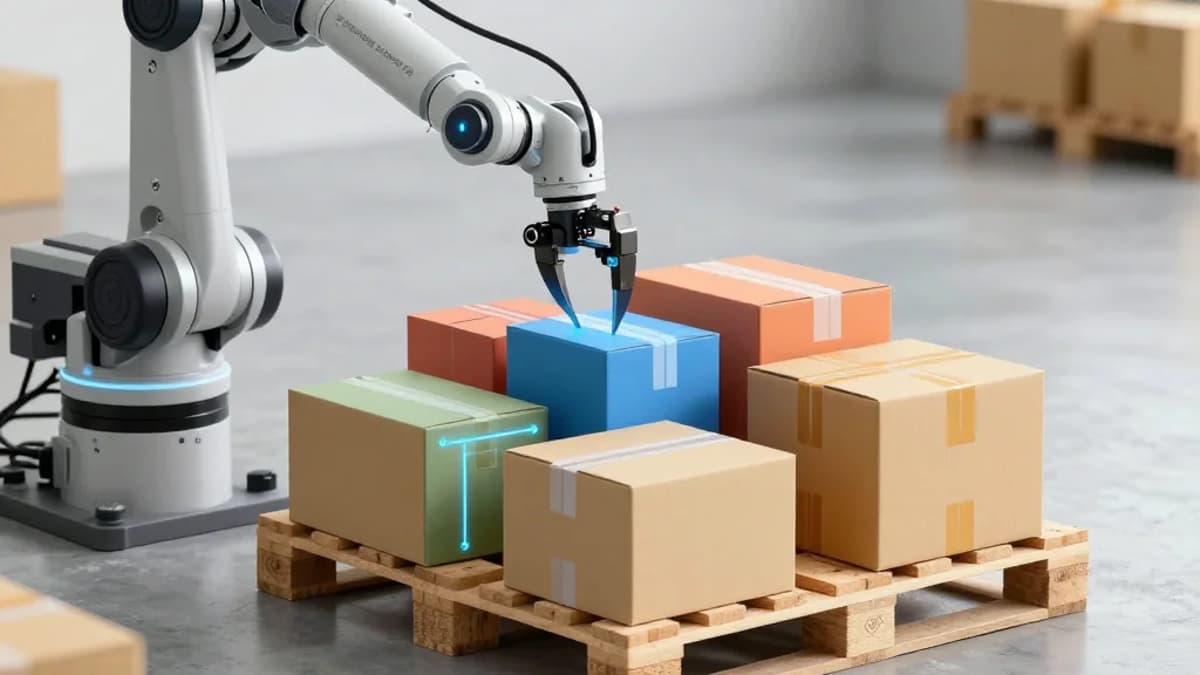
Progressive Robotics Launches AnyStack: A Turnkey Solution for Mixed Palletizing in Modern Logistics
•February 25, 2026
0
Why It Matters
Mixed‑case palletizing is a costly bottleneck; automating it cuts labor constraints and boosts warehouse efficiency, giving operators a competitive edge.
Key Takeaways
- •AnyStack offers fully integrated palletizing cell, single vendor.
- •AI vision identifies cases in real time, optimizes stacking.
- •Supports high‑mix, high‑variability SKU environments.
- •Reduces labor reliance, increases throughput and pallet stability.
- •Enables unattended, autonomous warehouse operations.
Pulse Analysis
Mixed‑case palletizing has long been a pain point for modern distribution centers. Traditional manual methods struggle with the sheer variety of SKUs, fluctuating order profiles, and a tightening labor market, leading to slower line speeds and higher error rates. As e‑commerce volumes surge and supply chains demand greater flexibility, operators are forced to seek automation that can adapt on the fly rather than relying on rigid, single‑SKU solutions.
AnyStack addresses this gap by embedding advanced AI vision and proprietary stacking algorithms into a cohesive robotic cell. The system’s cameras scan each case in milliseconds, feeding data to software that computes the most stable stacking pattern while accounting for weight distribution and pallet geometry. By bundling the robot arm, vacuum gripper, conveyors, safety enclosure, and monitoring sensors, Progressive Robotics eliminates the need for multiple integrators, shortening implementation timelines and reducing integration risk. The result is a plug‑and‑play solution that can scale from midsize fulfillment hubs to large 3PL facilities.
The broader market implications are significant. Companies that adopt AnyStack can expect measurable labor cost reductions, higher pallet throughput, and improved pallet integrity, which translates to fewer damages during transport. Moreover, the system’s capability for unattended operation paves the way for fully autonomous warehouses, aligning with the industry’s shift toward end‑to‑end robotic fulfillment. As logistics firms chase efficiency gains and resilience, turnkey platforms like AnyStack are poised to become a cornerstone of next‑generation supply chain automation.
Progressive Robotics Launches AnyStack: A Turnkey Solution for Mixed Palletizing in Modern Logistics
0
Comments
Want to join the conversation?
Loading comments...