Proving Open Source Is Ready for the Industrial Edge
Companies Mentioned

Why It Matters
The findings prove open‑source Linux can reliably handle real‑time industrial control, opening the door to lower‑cost, more flexible and secure factory‑floor deployments. This challenges the entrenched proprietary model and accelerates convergence of IT and OT ecosystems.
Key Takeaways
- •RHEL and Intel hardware deliver <30 µs jitter under load
- •Containerized PLCs outperform bare‑metal when Intel CAT enabled
- •Software‑defined edge reduces factory‑floor update cycles
- •Unified security policies extend data‑center controls to OT
- •Hannover Messe demo showcases containerized water‑tank simulation
Pulse Analysis
Industrial automation has long relied on closed, proprietary controllers to guarantee the deterministic timing required for mission‑critical machinery. While this approach ensured reliability, it also created silos that hindered integration, scalability, and rapid innovation. Recent advances in real‑time Linux kernels, combined with powerful x86 architectures, are eroding that barrier, offering a cost‑effective, open‑source alternative that can satisfy the same stringent latency requirements.
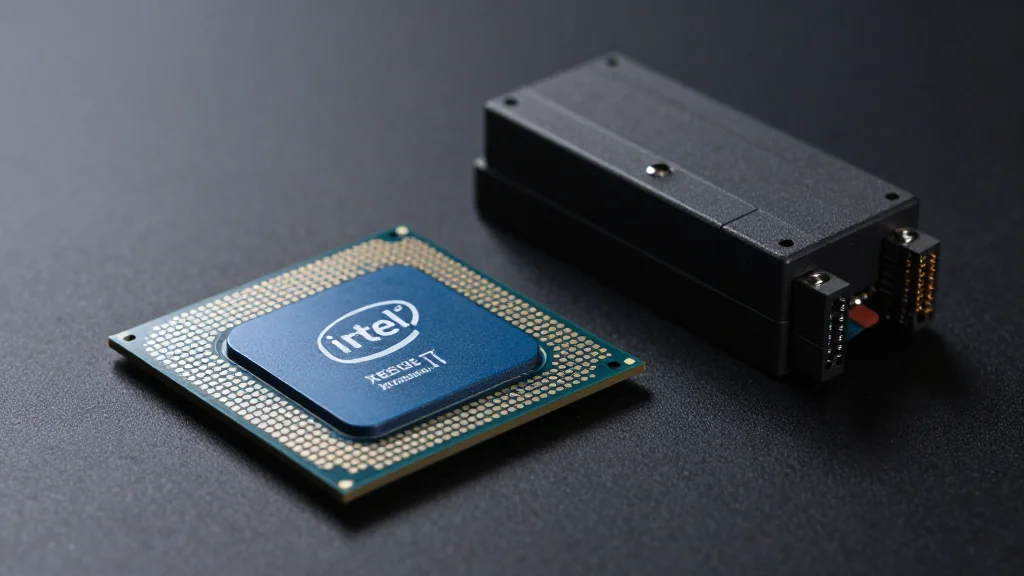
Red Hat’s performance testing, conducted on Intel Atom platforms, demonstrated that a virtual PLC running on Red Hat Enterprise Linux and Red Hat Device Edge maintains jitter under 30 microseconds even when the CPU is 80 % saturated. The addition of Intel Cache Allocation Technology further isolates real‑time workloads, and surprisingly, containerized deployments using Podman showed tighter timing consistency than traditional bare‑metal setups. These results validate that modern container orchestration and edge‑focused hardware can coexist without compromising the precision essential for control loops.
The business implications are profound. A unified, software‑defined platform enables manufacturers to apply the same security patches, monitoring tools, and automation pipelines used in data centers directly to the shop floor, dramatically shortening update cycles and reducing total cost of ownership. Edge analytics can be processed locally, eliminating latency‑inducing data transfers to the cloud. As the industry showcases these capabilities at events like Hannover Messe 2026, adoption of open‑source real‑time Linux is poised to accelerate, reshaping the competitive landscape of industrial IoT and operational technology.
Proving open source is ready for the industrial edge
Comments
Want to join the conversation?
Loading comments...