Proximal Sound Prints Elastomer Microstructures Using Ultrasound
•February 20, 2026
0
Why It Matters
PSP enables true 3‑D printing of PDMS microfluidics without chemical reformulation, lowering barriers for rapid prototyping and small‑scale production in biotech and lab‑on‑a‑chip markets.
Key Takeaways
- •PSP reaches 0.2 mm feature size in PDMS
- •Power consumption drops to ~5 W, four‑fold lower
- •Deposition rate climbs to 250,000 mm³/h
- •Works with native PDMS ratios, preserving optical clarity
- •Multi‑material printing demonstrated, including pigment colloids
Pulse Analysis
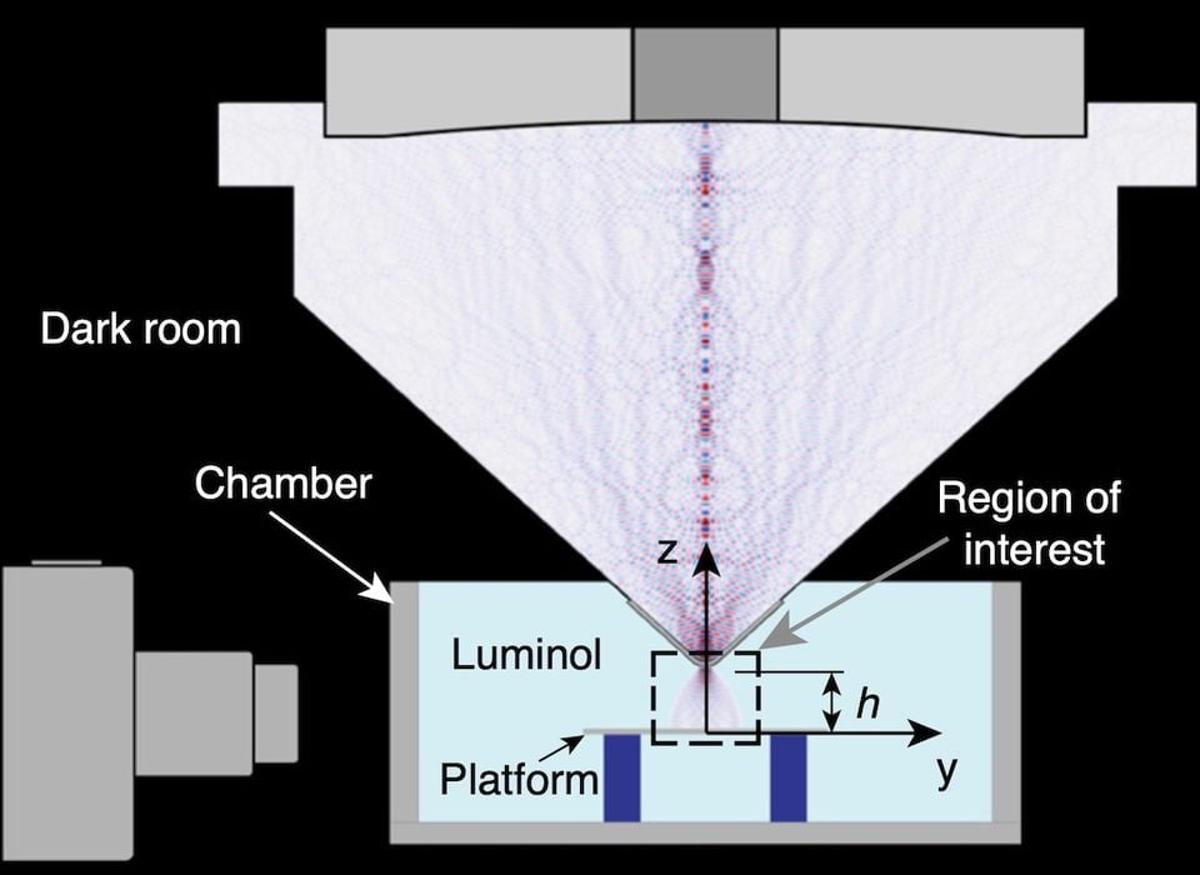
The microfluidics community has long relied on soft‑lithography to shape polydimethylsiloxane (PDMS), a material prized for its biocompatibility and optical transparency. Conventional 3‑D printing methods either require photopolymers that alter PDMS chemistry or demand complex rheological tuning, limiting adoption for researchers who need the native elastomer. Proximal Sound Printing sidesteps these constraints by focusing cavitation at a thin aluminum barrier, creating a sonochemically ultra‑active reactor (SUAR) that polymerizes PDMS precisely where the print head moves. This acoustic confinement delivers micron‑scale control previously unattainable with sound‑based curing.
Beyond resolution, PSP’s energy profile marks a significant step forward. Earlier Direct Sound Printing consumed around 20 W of electrical power, much of which never reached the resin. By routing ultrasound through an acoustic chamber and depositing only about 0.32 W of acoustic power at the barrier, PSP operates on roughly 5 W total—equivalent to a low‑power desktop printer. Simultaneously, the volumetric deposition rate jumps to 250,000 mm³ per hour, rivaling fused filament fabrication and direct ink writing for bulk builds. These metrics position PSP as a competitive alternative for both high‑resolution prototyping and larger‑scale elastomeric part production.
Commercially, the ability to print functional PDMS structures without reformulating the polymer could accelerate time‑to‑market for diagnostic chips, organ‑on‑a‑chip platforms, and soft robotics components. However, practical deployment hinges on stabilizing the aluminum barrier, automating resin delivery to avoid bubble formation, and establishing robust metrology for feature consistency. If these engineering hurdles are resolved, PSP may become the go‑to desktop solution for labs seeking rapid, low‑cost fabrication of true PDMS microdevices, reshaping the supply chain for biomedical research and low‑volume manufacturing.
Proximal Sound Prints Elastomer Microstructures Using Ultrasound
0
Comments
Want to join the conversation?
Loading comments...