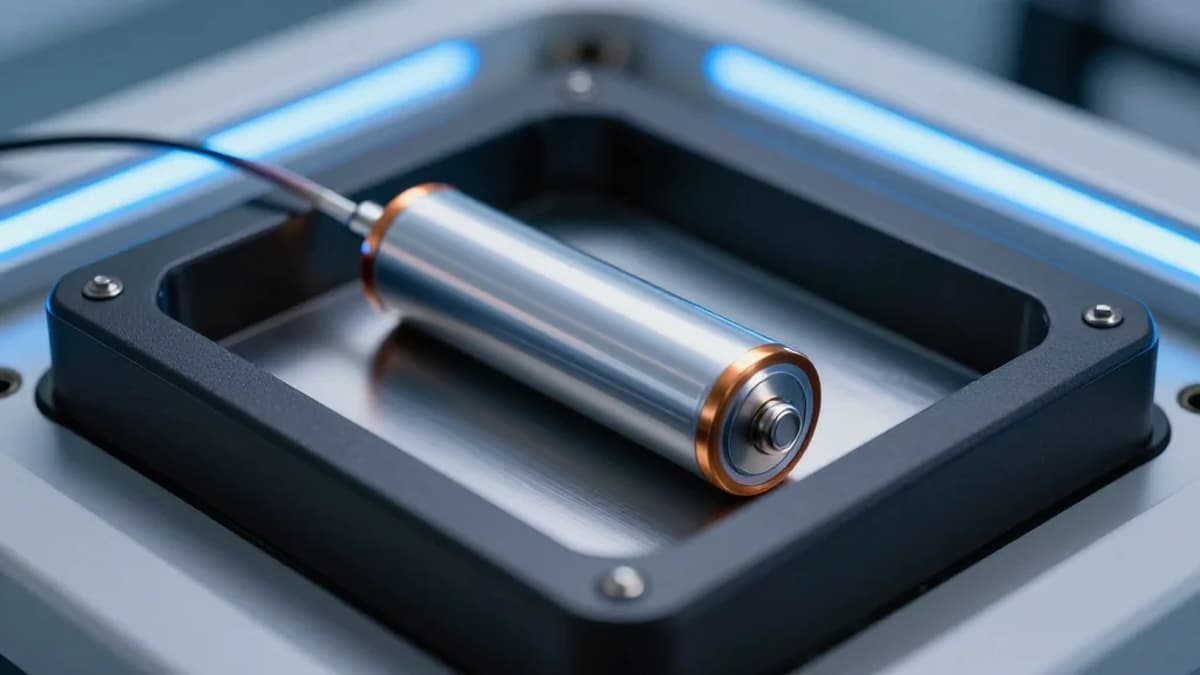
Pulsenics Launches AccelaGrade, Lithium-Ion Battery-Testing Solution
•February 25, 2026
0
Why It Matters
Accelerated, reliable grading removes the primary bottleneck in battery remanufacturing, lowering costs and boosting circular‑economy adoption. Faster quality control enables higher throughput and greater environmental benefit for manufacturers and fleet operators.
Key Takeaways
- •AccelaGrade grades cells in 25 minutes, 19× faster.
- •Uses combined discharge, temperature, and EIS data.
- •Enables scalable, cost‑effective battery remanufacturing.
- •Digital grading adapts to varied customer criteria.
- •Reduces landfill waste by extending battery life.
Pulse Analysis
The battery‑remanufacturing sector is poised to become a cornerstone of the clean‑energy transition, offering a cost‑effective alternative to producing new lithium‑ion packs. Yet, the process has been hampered by labor‑intensive testing, where each cell must be individually evaluated to ensure safety and performance. As fleets and renewable‑energy projects demand ever‑larger storage capacities, the need for a streamlined, high‑throughput quality‑control method has become critical for scaling the circular‑economy model.
AccelaGrade tackles this challenge by fusing three diagnostic techniques—partial‑discharge cycling, precise temperature profiling, and rapid electrochemical impedance spectroscopy—into a single, automated workflow. The integrated dataset feeds sophisticated algorithms that generate an A, B, or C grade within 25 minutes, matching the accuracy of traditional eight‑hour cyclers. This 19‑fold speed gain not only cuts labor costs but also provides manufacturers with real‑time insights, allowing them to adjust grading thresholds on the fly to meet specific application requirements.
The broader business implications are significant. Faster grading translates directly into higher throughput, enabling remanufacturers to meet growing demand without proportional capital investment. Moreover, extending the usable life of existing cells reduces raw‑material consumption and landfill pressure, aligning with ESG goals that investors increasingly prioritize. As regulatory frameworks tighten around battery waste and sustainability, solutions like AccelaGrade position firms to capture market share while delivering measurable environmental benefits.
Pulsenics Launches AccelaGrade, Lithium-Ion Battery-Testing Solution
0
Comments
Want to join the conversation?
Loading comments...