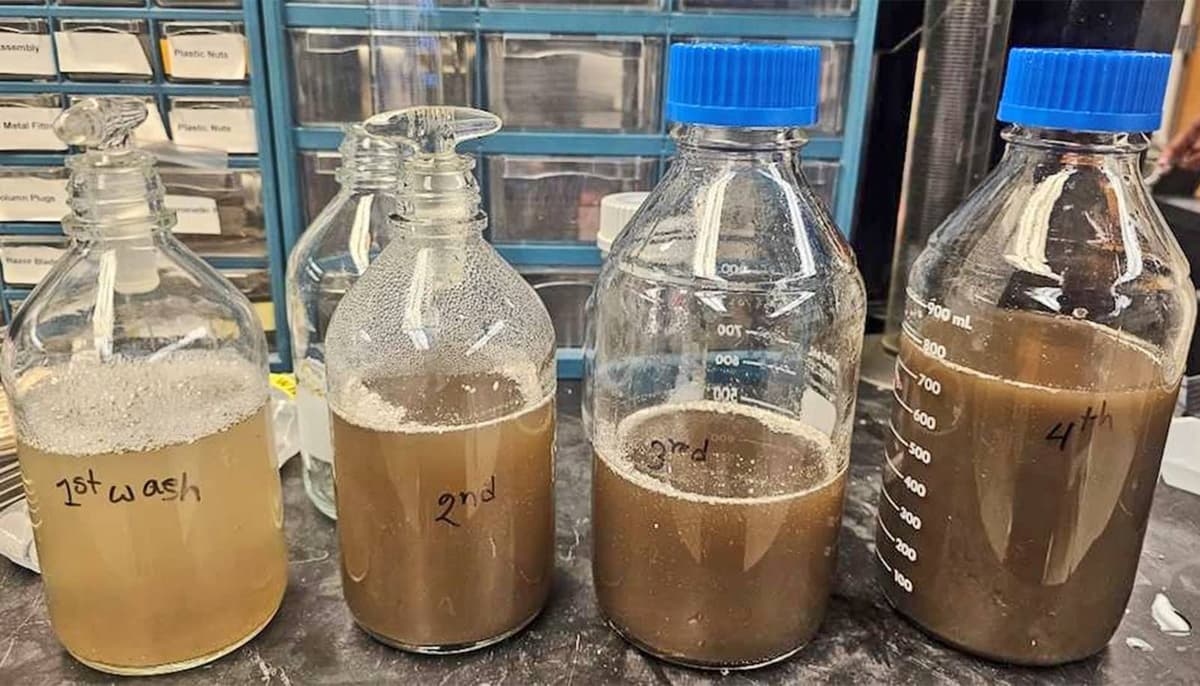
Recycling Plants May Pose Water Contamination Risks
Why It Matters
Contaminated wash water threatens public‑health standards and could stall the EPA’s 2030 recycling goal, forcing the industry to balance cost‑effective processing with stricter environmental compliance.
Key Takeaways
- •Ultrasonic or detergent washes leach phthalates into wash water.
- •DEHP levels exceed drinking‑water limits up to 25× after reuse.
- •Physical agitation or NaOH alone leaves water phthalide‑free.
- •Foam fractionation and electro‑oxidation proposed for contaminant removal.
- •Recycling margins stay thin while meeting EPA 2030 target.
Pulse Analysis
The latest research from Iowa State University reveals that the water used to clean polypropylene—commonly found in dairy tubs—can become a hidden source of endocrine‑disrupting chemicals. When plants rely on ultrasonic vibration or a sodium‑hydroxide detergent blend, the wash water accumulates di(2‑ethylhexyl) phthalate (DEHP) and di‑cyclohexyl phthalate (DCHP). After fifteen reuse cycles, DEHP concentrations reach 25 times the EPA’s drinking‑water limit. By contrast, simple physical agitation or sodium hydroxide without detergent leaves the water essentially free of detectable phthalates or bisphenols.
These findings matter because most U.S. recycling facilities operate on razor‑thin margins and often reuse wash water to cut costs. The EPA’s goal of a 50 % national plastic‑recycling rate by 2030 could be undermined if contaminated water escapes into local waterways or re‑enters the food chain. Industry players now face a trade‑off between cost‑effective cleaning and compliance with emerging health standards. Technologies such as foam fractionation, electro‑oxidation, and carbon nano‑onion treatments offer promising pathways to strip phthalates without sacrificing throughput.
Beyond immediate mitigation, the study underscores a broader need for standardized water‑management protocols in the recycling sector. As consumer demand for recycled packaging rises, investors and regulators will likely scrutinize the environmental footprint of each processing step. Companies that adopt low‑water or water‑free cleaning methods could gain a competitive edge and reduce liability risk. Continued academic‑industry collaboration will be essential to scale bio‑based or electrochemical solutions, ensuring that the push for higher recycling rates does not create a new class of water‑borne pollutants.
Recycling plants may pose water contamination risks
Comments
Want to join the conversation?
Loading comments...