Reengineering the Future of Process Industries with Automation
Companies Mentioned
Why It Matters
AI‑driven automation directly addresses the labor gap and legacy constraints, delivering competitive advantage and higher ROI for process industries. The transformation reshapes plant economics, positioning adopters at the forefront of the next manufacturing wave.
Key Takeaways
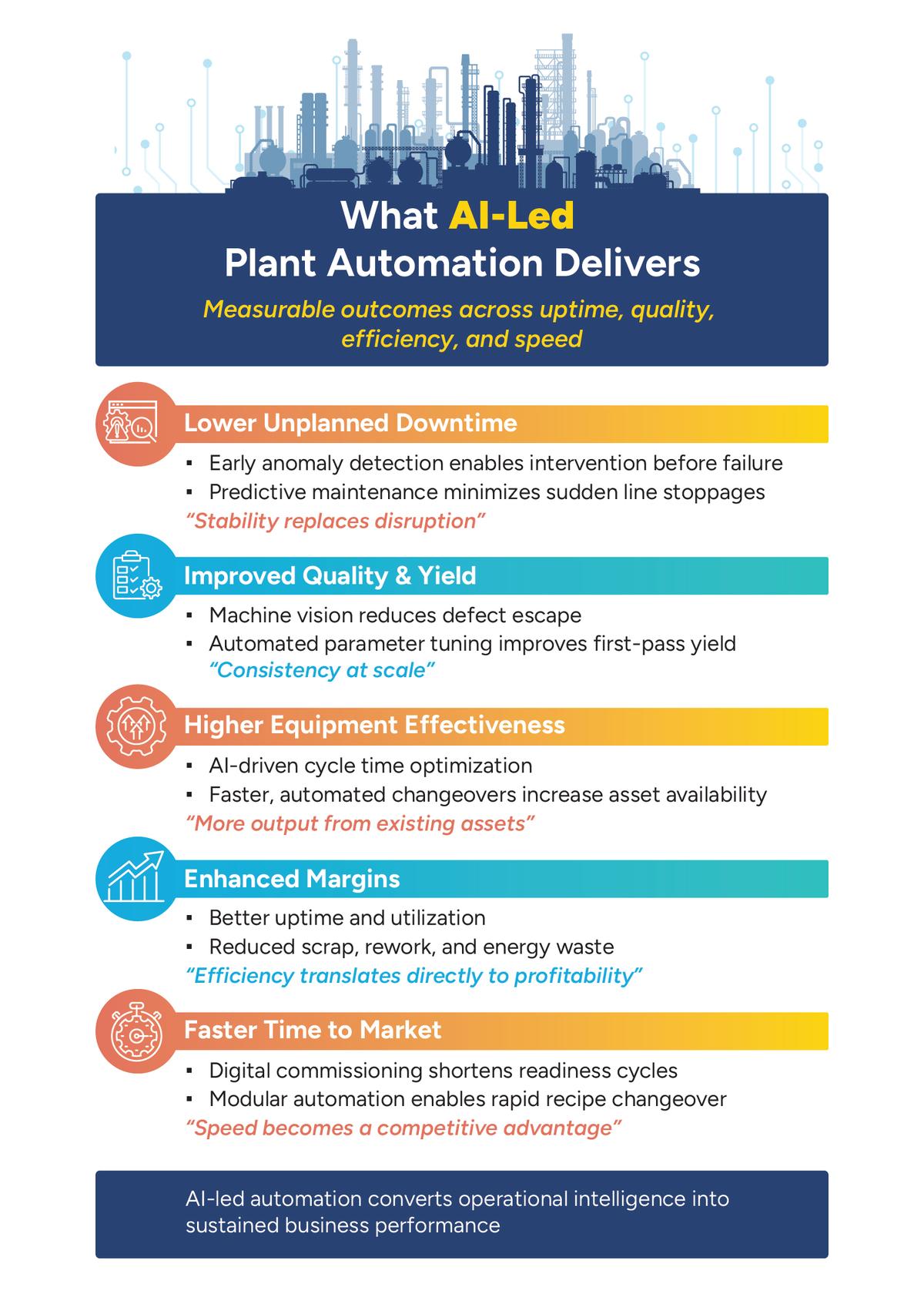
- •AI-driven automation cuts unplanned downtime, boosting equipment effectiveness.
- •Predictive maintenance and digital twins improve quality and reduce time‑to‑market.
- •Integrated one‑stop engineering accelerates multi‑site plant rollouts.
- •AI helps close the projected 1.9 million manufacturing skill gap.
- •Scalable platforms unify PLC, SCADA, MES, ERP data pipelines.
Pulse Analysis
Volatility in global demand and the erosion of legacy control systems are forcing process manufacturers to rethink plant architecture. Traditional incremental upgrades no longer suffice; instead, firms are embracing AI‑enabled automation to bridge the widening skills gap—an estimated 1.9 million unfilled roles by 2033. By embedding machine‑learning models into PLCs, SCADA, and MES layers, plants gain real‑time visibility and predictive insights that transform reactive maintenance into proactive asset stewardship, directly improving equipment effectiveness and reducing costly unplanned stoppages.
Key technology pillars—predictive maintenance, digital twins, and digital workflows—are converging to create a unified, data‑driven operating layer. Predictive algorithms forecast failures minutes before they occur, while digital twins simulate process changes, accelerating commissioning and optimizing energy use. Digital workflows orchestrate demand signals, scheduling, quality, and energy consumption into a single autonomous loop, eliminating siloed decision‑making. These capabilities collectively lift first‑pass yields, compress cycle times, and enable manufacturers to launch new SKUs faster, directly impacting margins and market responsiveness.
The business model is evolving toward an integrated, one‑stop engineering approach that bundles mechanical, electrical, controls, and digital services under a single delivery framework. This model leverages pre‑engineered templates and cross‑functional expertise to replicate scalable automation architectures across dozens of sites, dramatically shortening deployment timelines. As AI‑driven automation is projected to add up to $15 trillion to global GDP by 2030, early adopters in the process sector stand to capture disproportionate gains, positioning themselves as leaders in a rapidly digitizing industrial landscape.
Reengineering the future of process industries with automation
Comments
Want to join the conversation?
Loading comments...