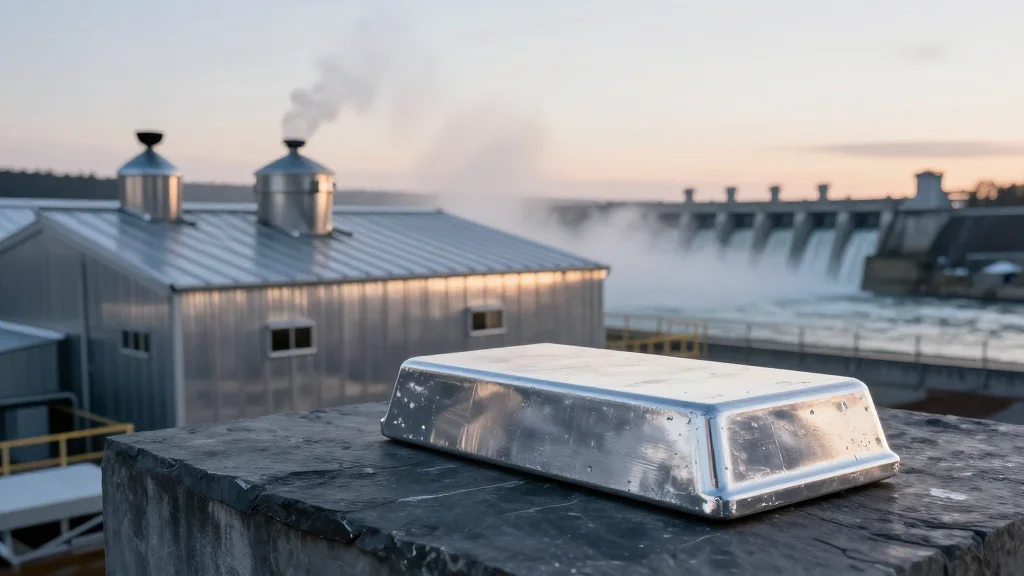
Rio Tinto Commissions $1.5 B Low‑carbon Aluminum Smelter in Quebec, Adding 160,000 T/Yr Capacity

Companies Mentioned
Why It Matters
The Quebec AP60 expansion marks a turning point for heavy‑industry manufacturing, demonstrating that large‑scale primary aluminium production can be decarbonised without sacrificing output. By delivering a low‑carbon product at scale, Rio Tinto helps automotive, aerospace and construction firms meet stricter carbon‑reporting standards, potentially reshaping supply‑chain decisions across North America. The project also signals to other miners that substantial capital can be justified for green technology, accelerating industry‑wide investment in renewable‑powered smelting and inert‑anode research. Beyond emissions, the investment injects more than $1 billion into the Quebec economy, stabilising jobs in a region historically dependent on metal manufacturing. The synergy between government support, corporate R&D, and local labour creates a model for how climate policy can be aligned with industrial policy, offering a template for other jurisdictions seeking to retain manufacturing capacity while meeting net‑zero goals.
Key Takeaways
- •Rio Tinto starts commissioning a $1.5 billion AP60 smelter expansion in Quebec.
- •The project adds 160,000 t/yr of primary aluminium capacity, reaching 220,000 t/yr total.
- •AP60 technology cuts CO₂e emissions to 1.6 t per tonne, about one‑sixth of the industry average.
- •Estimated carbon reduction of 290,000 t per year and up to 90% reduction in fine particulates.
- •Creates ~100 permanent jobs and generated >$1 billion in economic benefits for Quebec.
Pulse Analysis
Rio Tinto’s Quebec expansion is more than a capital project; it is a strategic hedge against the tightening carbon‑regulation regime that is reshaping heavy industry. Historically, primary aluminium has been one of the most carbon‑intensive metals, with the sector facing mounting pressure from both investors and downstream customers to lower its footprint. By committing $1.5 billion to AP60, Rio Tinto is betting that low‑carbon aluminium will command a price premium and secure long‑term contracts, especially in sectors like automotive where manufacturers are pledging to achieve carbon‑neutral vehicle fleets.
The timing aligns with a broader shift in the global metals market. While battery‑metal spending is contracting, copper and aluminium are seeing renewed interest as the backbone of electrification and renewable‑energy infrastructure. Rio Tinto’s dual focus on AP60 and the ELYSIS inert‑anode demonstration positions it at the forefront of the next wave of aluminium innovation. If ELYSIS can deliver carbon‑free smelting at commercial scale, the AP60 plant will serve as a transitional bridge, allowing the company to capture market share now while preparing for a fully decarbonised future.
From a competitive standpoint, the Quebec project also raises the bar for peers. Competitors such as Alcoa and Rusal will need to accelerate their own low‑carbon initiatives or risk losing market access in regions with strict ESG procurement rules. Moreover, the provincial and federal subsidies underscore how policy can de‑risk large‑scale green investments, suggesting that future projects may increasingly rely on public‑private partnerships. In sum, Rio Tinto’s move could catalyse a cascade of similar investments, reshaping the aluminium supply chain toward a lower‑carbon equilibrium.
Rio Tinto commissions $1.5 B low‑carbon aluminum smelter in Quebec, adding 160,000 t/yr capacity
Comments
Want to join the conversation?
Loading comments...