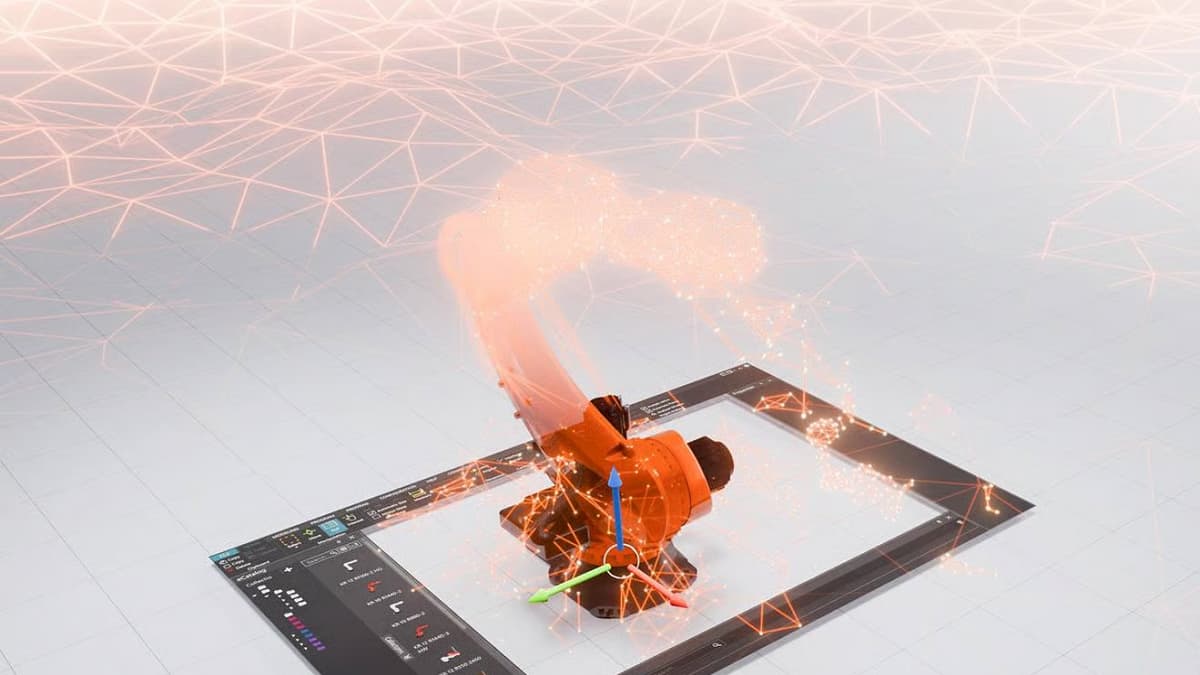
Rise of Physical AI – KUKA and NVIDIA Partner to Launch Automation 2.0
Companies Mentioned
Why It Matters
The partnership accelerates the shift from deterministic automation to AI‑driven, end‑to‑end solutions, reshaping manufacturing competitiveness and opening new revenue streams for industrial robotics providers.
Key Takeaways
- •KUKA and NVIDIA unveiled the KUKA AMP platform at GTC
- •KUKA recorded 4% revenue growth and record $232 million R&D spend in 2025
- •China revenue surpassed $1.09 billion, placing KUKA among top two market players
- •Automation 2.0 adds intent‑based AI while preserving Automation 1.0 stability
- •KUKA opened a Silicon Valley AI center and a Vietnam training hub
Pulse Analysis
Physical AI is rapidly redefining the industrial automation landscape, moving robots beyond pre‑programmed motions to perception‑driven decision making. By integrating NVIDIA's GPU‑accelerated AI stack with KUKA's extensive robotics portfolio, the new KUKA AMP platform offers an open software layer that translates high‑level intent into real‑world actions. This convergence of edge compute, simulation‑driven design, and large‑scale models equips manufacturers with the flexibility to adapt production lines on the fly, a capability increasingly demanded by volatile supply chains and customized product trends.
KUKA's strategic investments underscore its commitment to leading this transformation. A record $232 million R&D spend in 2025 funded advancements in intent‑based control, AI‑defined infrastructure, and modular production platforms. The company’s revenue growth, bolstered by a $1.09 billion haul from China, reflects both a balanced geographic mix and a strong foothold in the world’s largest robotics market. Meanwhile, the establishment of a Silicon Valley AI centre and regional hubs in Vietnam and India positions KUKA to tap local talent, accelerate customer co‑development, and deliver end‑to‑end solutions ranging from factory floor robots to Robots‑as‑a‑Service offerings.
For the broader ecosystem, the KUKA‑NVIDIA alliance signals a maturation of Automation 2.0, where legacy rule‑based systems coexist with AI‑enhanced capabilities. Companies that adopt this hybrid approach can achieve higher productivity, reduced downtime, and safer human‑robot collaboration. As competitors race to embed similar Physical AI stacks, the partnership sets a benchmark for open, scalable automation platforms, likely driving a wave of new software‑centric business models and reshaping the competitive dynamics of the global industrial robotics market.
Rise of Physical AI – KUKA and NVIDIA Partner to Launch Automation 2.0
Comments
Want to join the conversation?
Loading comments...