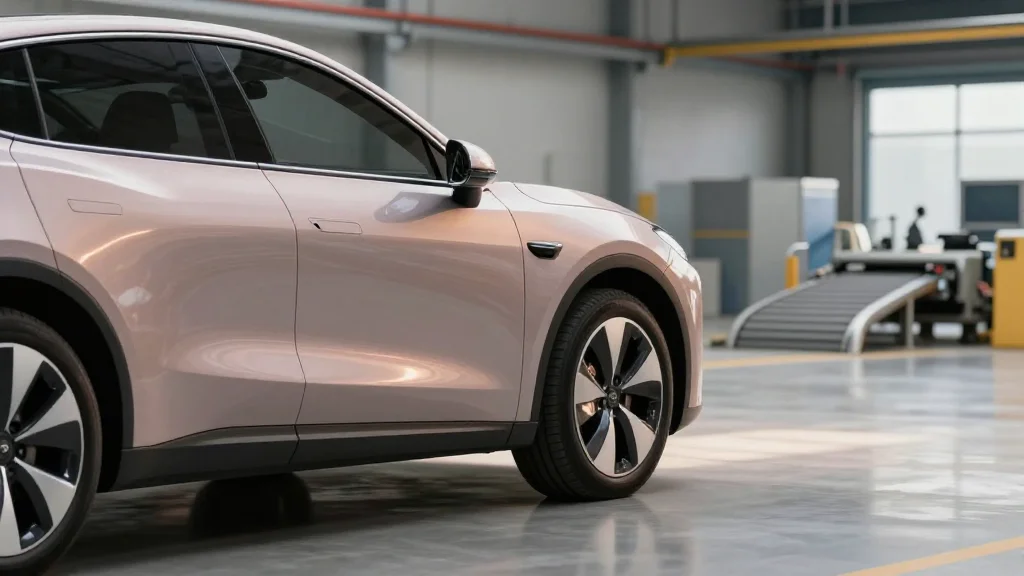
Rivian Launches R2 SUV Production at Normal, Illinois Plant After Tornado

Companies Mentioned
Why It Matters
The start of R2 production signals Rivian’s transition from niche, high‑priced EVs to a volume‑oriented model that could unlock sustainable profitability. By keeping its rollout schedule intact despite natural‑disaster setbacks, Rivian demonstrates operational resilience that may reassure investors wary of supply‑chain volatility in the EV sector. The R2’s pricing trajectory also highlights the tension between ambitious cost targets and the realities of manufacturing at scale, a dynamic that will shape competitive dynamics with Tesla and other emerging manufacturers. If Rivian can deliver on its 20,000‑25,000 unit target by year‑end 2026, it will not only validate its new platform but also provide a blueprint for how U.S. EV makers can scale quickly while navigating external shocks. Success could accelerate broader adoption of electric SUVs, pressure legacy automakers to accelerate their own EV rollouts, and influence policy discussions around domestic EV manufacturing incentives.
Key Takeaways
- •Rivian began R2 SUV production at Normal, Illinois on Wednesday, despite tornado damage.
- •CEO RJ Scaringe said the plant damage won’t alter the production roadmap.
- •Launch Package starts at $57,990; Premium trim at $53,990 expected late 2026.
- •Rivian aims to deliver 20,000‑25,000 R2 SUVs by end‑2026, targeting profitability.
- •Customer configuration opens in June; first units go to employees.
Pulse Analysis
Rivian’s decision to press forward with R2 production after a tornado underscores a strategic shift toward operational robustness that many EV startups lack. The company’s ability to re‑route material flows and keep the assembly line moving suggests a maturing supply‑chain ecosystem in the Midwest, bolstered by regional parts suppliers and logistics firms that have adapted to pandemic‑era disruptions. This resilience could become a competitive moat, especially as rivals like Tesla rely heavily on a single Gigafactory model for the Model Y.
However, the pricing gap between the advertised $45,000 base and the actual $57,990 launch price raises questions about market positioning. Rivian appears to be betting on brand loyalty and the appeal of a premium, adventure‑oriented SUV to bridge the price differential while it scales volume. If the company can achieve its 2026 delivery targets, the revenue uplift may offset the higher per‑unit margin, but a prolonged wait for the sub‑$50,000 variant could erode price‑sensitive demand, pushing buyers toward more affordable alternatives from legacy automakers entering the EV space.
In the broader context, Rivian’s production kickoff may catalyze a regional manufacturing renaissance, encouraging ancillary businesses to invest in the Normal area. The move also puts pressure on policymakers to consider incentives that support rapid recovery from natural disasters, ensuring that critical EV supply chains remain uninterrupted. As Rivian navigates the next 12‑18 months, its success will hinge on balancing aggressive scaling with realistic pricing, a formula that could define the next wave of American EV manufacturing.
Rivian Launches R2 SUV Production at Normal, Illinois Plant After Tornado
Comments
Want to join the conversation?
Loading comments...