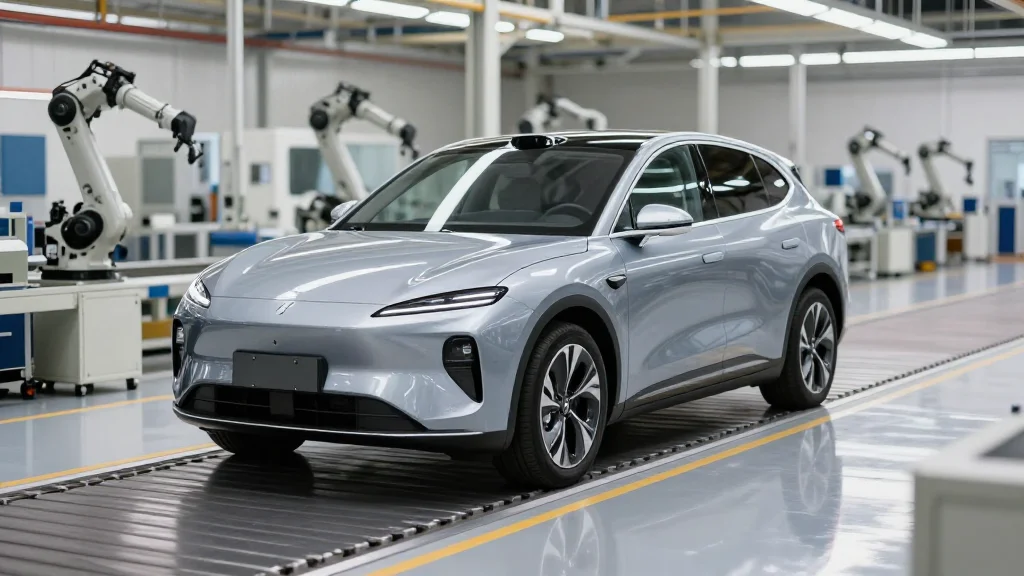
Rivian Secures $4.5 B DOE Loan as Trump Tariffs Falter, Boosting U.S. EV Manufacturing

Companies Mentioned
Why It Matters
The DOE loan not only injects capital into a high‑growth sector but also signals federal confidence in domestic EV manufacturing at a time when trade policy uncertainty could have derailed expansion plans. By removing the tariff threat, the move clears a path for U.S. automakers to scale without facing punitive import duties, potentially reshaping the competitive landscape for electric vehicles worldwide. For the manufacturing ecosystem in the Southeast, the Rivian plant represents a catalyst for ancillary suppliers, from battery pack assemblers to advanced robotics firms. The job creation figures and training initiatives could also serve as a template for other states seeking to attract clean‑tech investment, reinforcing the United States’ broader climate and industrial strategy.
Key Takeaways
- •DOE approves up to $4.5 billion in loan guarantees for Rivian’s Georgia plant
- •Rivian aims to produce 300,000 EVs annually, creating 7,500 direct jobs
- •Trump’s proposed tariffs on European cars have stalled, removing a policy headwind
- •Governor Brian Kemp highlighted the investment as the largest in state history
- •The loan is conditional on meeting production and workforce‑training milestones
Pulse Analysis
Rivian’s financing breakthrough underscores how federal credit programs can offset policy volatility. While the stalled tariff proposal removed a potential cost barrier, the DOE loan provides the liquidity needed to meet aggressive production targets. Historically, large-scale loan guarantees—such as those for Tesla’s early Gigafactory—have accelerated capital deployment, but they also tie companies to strict performance metrics. Rivian’s ability to meet those benchmarks will be a litmus test for future clean‑energy credit initiatives.
From a competitive standpoint, the Georgia plant gives Rivian a geographic advantage over rivals clustered in California and the Midwest. Proximity to a growing network of battery suppliers in the Southeast, combined with a supportive state policy environment, could lower logistics costs and improve supply‑chain resilience. However, the plant’s success will hinge on securing a stable supply of battery cells, an area where the U.S. still lags behind China and Europe.
Looking ahead, the convergence of federal financing, state‑level economic development, and a de‑escalated trade dispute creates a favorable backdrop for domestic EV scaling. If Rivian can hit its production milestones, the model may encourage other manufacturers to pursue similar loan‑backed expansions, potentially reshaping the U.S. automotive manufacturing map over the next decade.
Rivian Secures $4.5 B DOE Loan as Trump Tariffs Falter, Boosting U.S. EV Manufacturing
Comments
Want to join the conversation?
Loading comments...