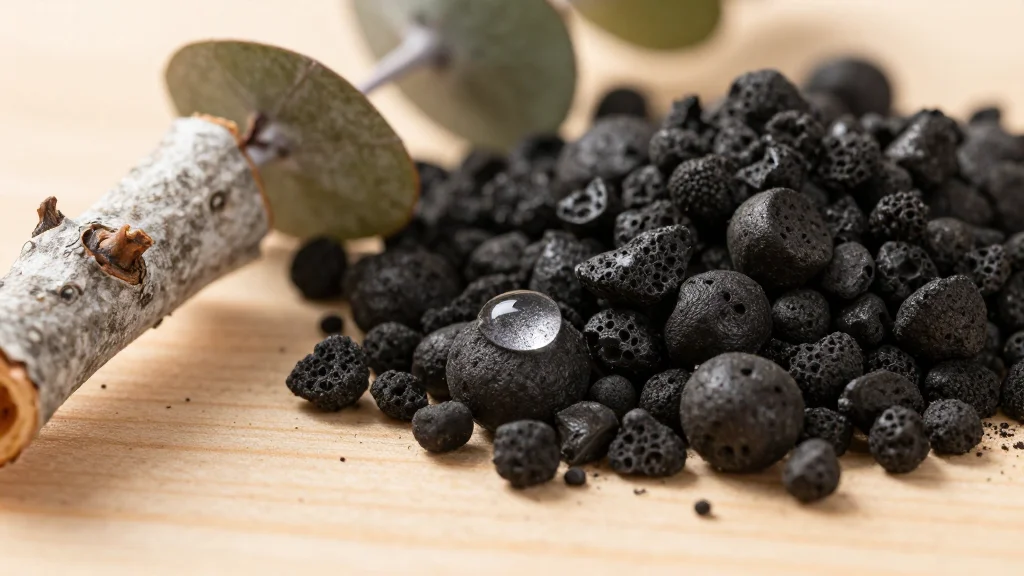
RMIT Turns Waste Eucalyptus Bark Into Low‑Cost Pollution‑Fighting Carbon

Why It Matters
The bark‑derived carbon directly addresses two pressing challenges for manufacturers: the need for cheaper, high‑performance filtration media and the imperative to reduce the carbon intensity of production processes. By turning a widely available forestry waste into a value‑added material, the technology supports a circular supply chain, lowers raw‑material costs, and diminishes reliance on energy‑heavy activation methods. In sectors ranging from municipal water treatment to industrial gas purification, the material could enable faster adoption of stricter environmental standards without inflating operating expenses. Furthermore, the approach aligns with national and global policy goals to decarbonize manufacturing. If the process can be replicated at commercial scale, it offers a template for other waste‑to‑material conversions, encouraging industries to re‑evaluate low‑value by‑products as potential feedstocks. This could accelerate the transition to more resilient, low‑emission manufacturing ecosystems.
Key Takeaways
- •RMIT researchers convert waste eucalyptus bark into highly porous carbon adsorbent
- •Process is low‑energy and avoids hazardous chemicals, cutting production costs
- •Material can filter polluted water, clean dirty air and capture CO₂
- •Australia's diverse eucalyptus species provide a sustainable, domestic feedstock
- •Pilot trials with water‑treatment and air‑purification firms planned for late 2026
Pulse Analysis
The bark‑derived carbon enters a market traditionally dominated by activated charcoal produced from coconut shells, coal or synthetic polymers. Those legacy feedstocks carry high energy demands and, in the case of coal, significant carbon emissions. By offering a locally sourced, low‑energy alternative, RMIT’s technology could erode the cost advantage of imported carbon media, especially in regions with abundant eucalyptus forests. Early adopters are likely to be municipal utilities and niche air‑purification firms that value supply‑chain resilience as much as price.
Historically, the shift to bio‑based filtration media has been incremental because performance parity is hard to achieve. The RMIT study reports strong adsorption performance, but real‑world validation will be critical. If pilot projects confirm durability and regulatory compliance, the material could trigger a wave of retrofits in existing filtration equipment, similar to how bio‑based plastics have begun to replace petrochemical polymers in packaging.
Looking ahead, the technology’s success hinges on scaling the carbonization process while maintaining uniform pore structure—a classic manufacturing challenge. Partnerships with equipment manufacturers that specialize in pyrolysis and activation will be essential. Moreover, the involvement of Indigenous communities in feedstock selection could set a new standard for socially responsible sourcing, adding a reputational premium for companies that adopt the material. In sum, the bark‑derived carbon has the potential to become a cornerstone of sustainable manufacturing, provided that scale‑up, certification and market acceptance proceed smoothly.
RMIT Turns Waste Eucalyptus Bark into Low‑Cost Pollution‑Fighting Carbon
Comments
Want to join the conversation?
Loading comments...