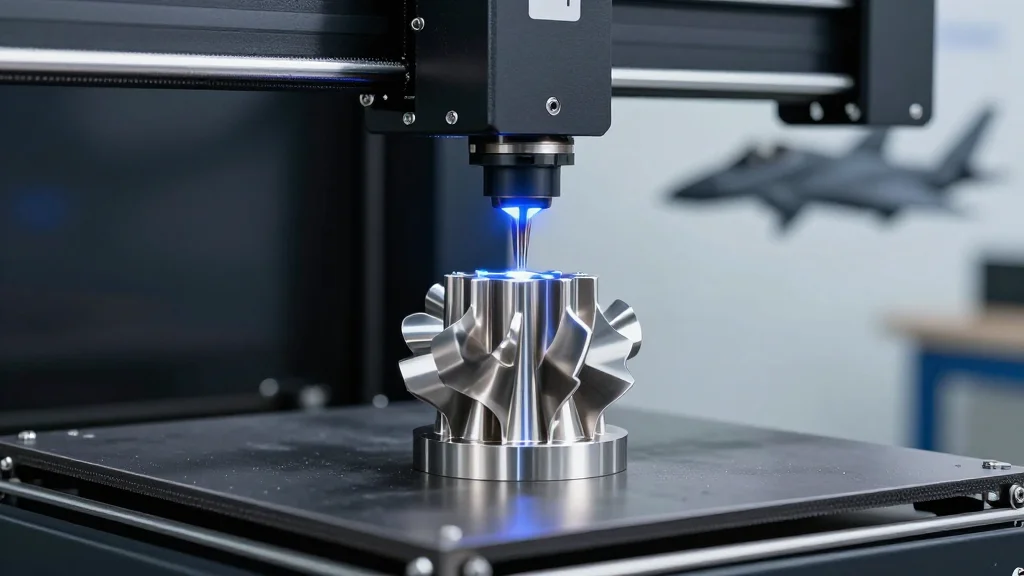
Rolls‑Royce Launches MOD‑Backed Additive‑Manufacturing Cell in Bristol

Companies Mentioned
Why It Matters
The rollout of a MOD‑backed additive‑manufacturing cell at Rolls‑Royce signals a strategic shift toward domestic, high‑tech production of aerospace components, reducing reliance on overseas suppliers and shortening development cycles. For the broader manufacturing sector, it demonstrates how government funding can de‑risk advanced‑technology adoption, encouraging other firms to pursue similar collaborations. By embedding metal AM within a leading engine manufacturer, the UK strengthens its position in the high‑value aerospace supply chain, potentially attracting further investment, talent, and research partnerships. The initiative also offers a template for other defence ministries seeking to harness rapid‑prototype capabilities for mission‑critical hardware.
Key Takeaways
- •Rolls‑Royce opened a MOD‑backed additive‑manufacturing development cell in Bristol.
- •The cell focuses on metal 3D‑printing for aerospace and defence engine components.
- •Partnership aligns Rolls‑Royce’s R&D with UK Ministry of Defence strategic goals.
- •Facility will host powder‑bed fusion and directed energy deposition equipment.
- •Analysts see the move as a catalyst for further public‑private AM investment in the UK.
Pulse Analysis
Rolls‑Royce’s decision to embed a MOD‑funded AM cell within its Bristol complex reflects a broader trend of defence agencies leveraging additive manufacturing to secure critical supply chains. Historically, aerospace manufacturers have relied on long, multi‑tiered procurement networks that expose programs to geopolitical risk and lead‑time volatility. By co‑funding a dedicated lab, the MOD not only accelerates technology maturation but also ensures that key design data remains within national borders.
From a competitive standpoint, the cell gives Rolls‑Royce a tangible advantage over rivals that still depend on external AM service bureaus. The ability to iterate designs in‑house shortens the feedback loop between simulation and physical testing, a crucial factor as engine efficiency targets become increasingly aggressive. Moreover, the partnership may act as a magnet for skilled AM engineers, a talent pool that is currently scarce across Europe.
Looking forward, the success of this initiative will likely be measured by the volume of flight‑qualified parts that transition from prototype to production. If Rolls‑Royce can demonstrate cost‑effective, repeatable metal AM processes for high‑temperature turbine components, it could unlock a new business model where low‑volume, high‑performance parts are manufactured on demand, reducing inventory costs and enhancing fleet readiness for both commercial and military operators.
Rolls‑Royce Launches MOD‑Backed Additive‑Manufacturing Cell in Bristol
Comments
Want to join the conversation?
Loading comments...