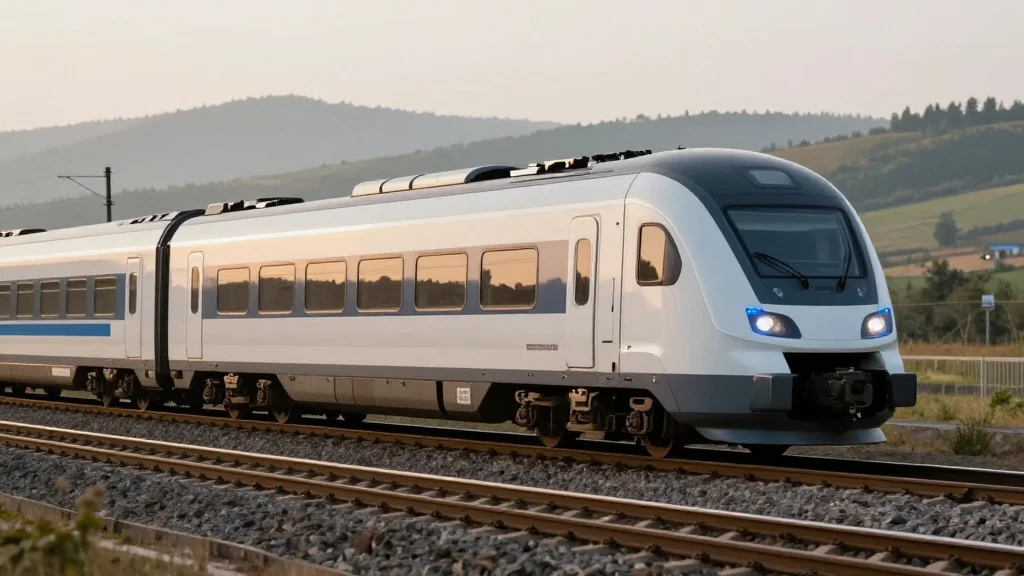
Romania Awards Siemens Mobility $340‑$530 M Contract for 12 Hydrogen Trains Amid Procurement Turmoil

Companies Mentioned
Why It Matters
The contract marks one of the few large‑scale hydrogen‑train procurements in Europe, highlighting both the appetite for low‑carbon rail solutions and the systemic challenges of financing them. If Romania can overcome its funding gap, the project could validate hydrogen as a viable alternative to electrification on low‑traffic, non‑electrified corridors, encouraging other governments to consider similar rollouts. Conversely, persistent financing woes could reinforce skepticism about hydrogen’s readiness, nudging policymakers toward more proven electrification or battery‑electric options. Beyond Romania, the deal signals to manufacturers that market entry in the hydrogen‑rail segment may require flexible financing structures and robust risk‑sharing arrangements. Siemens’ willingness to proceed despite the funding uncertainty suggests confidence in its technology, but the broader industry will need to watch how the project’s cost, schedule and performance metrics evolve before committing to comparable contracts.
Key Takeaways
- •Romania’s ARF awarded Siemens Mobility a contract worth RON 1.6‑2.5 bn ($340‑$530 m) for 12 hydrogen trains.
- •The procurement survived four failed tenders and the loss of original EU PNRR financing.
- •Prime Minister Marcel Ciolacu publicly questioned the project in August 2024, saying, “Because there are no hydrogen trains.”
- •Trains will serve non‑electrified routes from Bucharest, potentially reducing the need for costly line electrification.
- •Financing remains uncertain; the government must secure new funds within six months to keep the project on track.
Pulse Analysis
Siemens’ win reflects a strategic bet that hydrogen propulsion can fill the niche left by electrification gaps in Europe’s rail network. The technology promises zero‑emission operation without the massive capital outlay required for overhead lines, but its economics hinge on cheap, green hydrogen and reliable refuelling infrastructure—both still emerging. Romania’s procurement saga illustrates how fragile that business case is when public financing evaporates. The repeated tender failures were not merely bureaucratic hiccups; they were market signals that the risk‑reward balance was off, prompting suppliers to stay away until the financing story was clarified.
From a competitive standpoint, Siemens now faces a test case that could either cement its position as the go‑to supplier for hydrogen rolling stock or expose cost overruns that make the solution untenable. If the Romanian government can marshal alternative funding—perhaps via EU Cohesion funds or a state‑backed loan—the project could become a showcase for public‑private collaboration in green transport. Success would likely spur neighboring countries, such as Bulgaria or Serbia, to explore similar procurements, creating a regional market for hydrogen trains. Failure, however, could reinforce the narrative that hydrogen is a niche, high‑cost technology better suited for specific use cases like heavy freight, while battery‑electric and conventional electrification dominate passenger services.
In the broader manufacturing context, the deal underscores the importance of aligning technology rollouts with stable, long‑term financing. Companies like Siemens must now factor political volatility into their project risk assessments, possibly offering financing packages or partnering with energy firms to secure hydrogen supply. The Romanian case may prompt EU policymakers to design more resilient funding mechanisms for green rail projects, ensuring that technology selection is driven by performance rather than financing desperation.
Romania Awards Siemens Mobility $340‑$530 M Contract for 12 Hydrogen Trains Amid Procurement Turmoil
Comments
Want to join the conversation?
Loading comments...