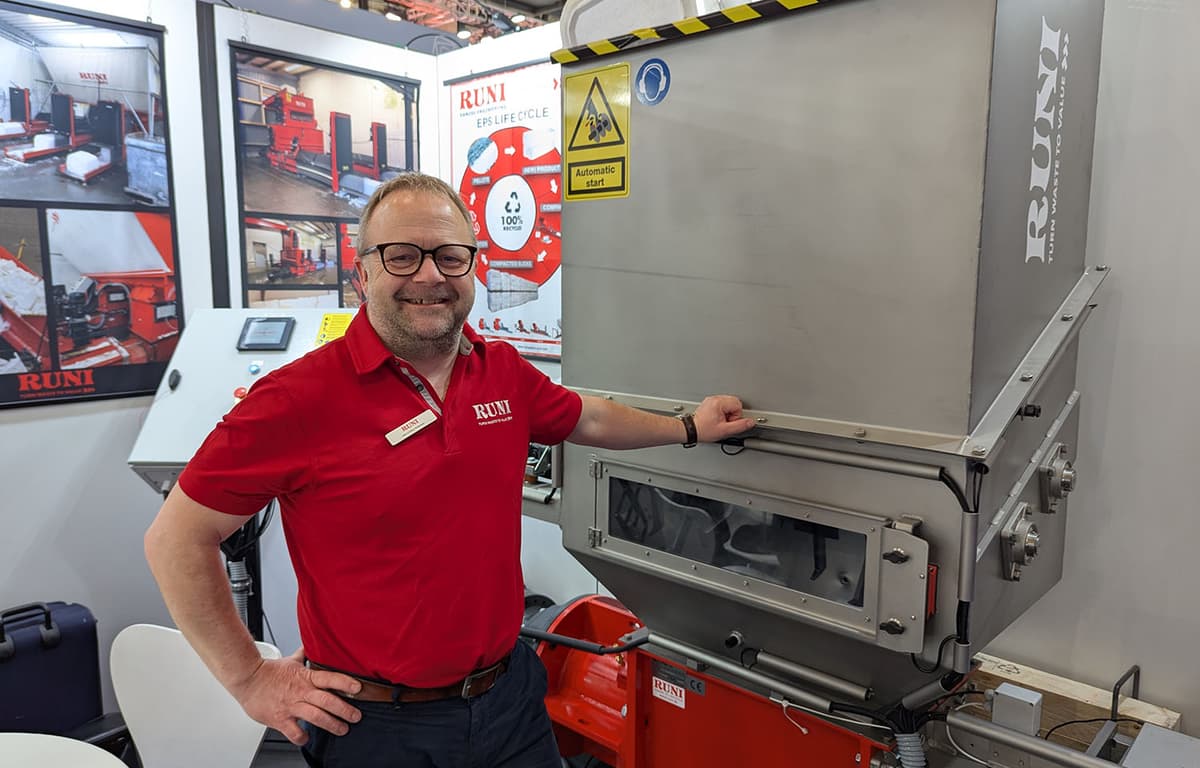
Runi Seeing Continued Demand in Seafood Industry for Its EPS Compaction Solutions
Why It Matters
Compacting EPS reduces disposal costs and environmental impact, directly boosting profitability for seafood firms facing packaging bans. The solution also supports broader circular‑economy goals in a sector under regulatory pressure.
Key Takeaways
- •Runi's EPS compactors cut disposal volume up to 50 truckloads
- •Customers recoup equipment cost within 6‑12 months
- •Machines scale from 18 kg/hr to 300‑box capacity
- •Seafood firms adopt compaction to meet sustainability bans
Pulse Analysis
The seafood industry relies on expanded polystyrene for its lightweight, water‑resistant insulation, but mounting bans and public scrutiny have turned EPS into a liability. Traditional disposal involves costly landfill fees and limited recycling options, prompting processors to seek alternatives that align with sustainability commitments. By compacting EPS into dense blocks, companies can dramatically reduce the volume of waste, lower transport expenses, and create a marketable by‑product that can be sold to recyclers or repurposed in other industries.
Runi’s compactors address this pain point with a modular portfolio that fits operations of any scale. Small‑batch fish markets can start with an 18‑kilogram‑per‑hour unit, while large‑scale processors deploy industrial machines capable of handling 300 boxes in a single run. The technology’s economics are compelling: users typically save the equivalent of 20 tons per truckload and achieve equipment payback within six to twelve months, directly improving the bottom line. Moreover, the compacted EPS becomes a revenue stream, turning a disposal cost into a profit center.
Looking ahead, the demand for EPS compaction is likely to accelerate as more jurisdictions enforce packaging restrictions and consumers demand greener supply chains. While competitors are entering the market, Runi’s early foothold and proven ROI give it a strategic advantage. The broader implication is a shift toward circular‑economy practices in food processing, where waste is systematically transformed into value, setting a template that could extend beyond seafood to other perishable goods sectors.
Runi seeing continued demand in seafood industry for its EPS compaction solutions
Comments
Want to join the conversation?
Loading comments...