Self-Healing Composite Could Make Aircraft and Cars Last Centuries
•February 24, 2026
0
Why It Matters
Extending composite lifetimes can dramatically reduce replacement costs, labor and waste in high‑value industries, while enabling maintenance‑free operation in remote environments.
Key Takeaways
- •3D‑printed healing agent boosts delamination resistance 2‑4×.
- •Embedded carbon heaters enable on‑demand thermal repair.
- •Material survived 1,000 crack‑heal cycles over 40 days.
- •Predicted lifespan 125‑500 years with periodic healing.
- •Startup Structeryx licenses technology for aerospace and wind markets.
Pulse Analysis
Fibre‑reinforced polymer composites have become the material of choice for aircraft, automobiles, wind turbines and spacecraft because of their high strength‑to‑weight ratio. Yet delamination—cracks that separate fibre layers from the polymer matrix—has plagued designers since the 1930s, limiting service life to roughly 15‑40 years and driving costly inspections and part replacements. Traditional repair methods require manual intervention, which is impractical for large structures or inaccessible assets such as satellites.
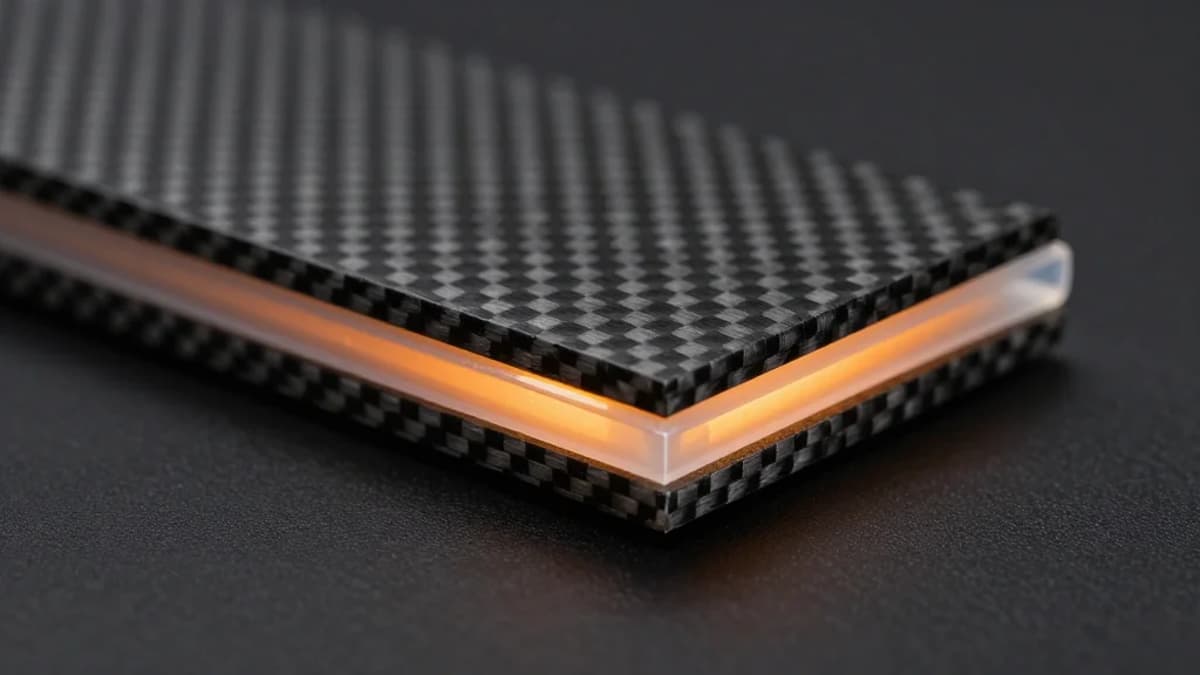
The NC State team tackled this challenge by integrating a 3D‑printed thermoplastic healing agent into the interlayer and wiring thin carbon‑based heater strips throughout the laminate. When an electrical current is applied, the heaters raise the temperature just enough to melt the agent, allowing it to flow into micro‑cracks and re‑bond the layers. In an automated test rig, the composite endured 1,000 repeated fracture‑and‑heal cycles across 40 days, maintaining interlaminar toughness well above that of conventional FRP. Modelling suggests that with quarterly or annual healing cycles, the material could remain functional for 125 to 500 years, effectively offering perpetual repair.
If adopted at scale, this self‑healing technology could reshape the economics of sectors reliant on high‑performance composites. Airlines and turbine manufacturers would see lower lifecycle costs and reduced downtime, while space missions could benefit from structures that autonomously mend damage from micrometeoroids or thermal cycling. The startup Structeryx is already licensing the process, positioning it for integration with existing composite manufacturing lines. Continued research will focus on optimizing the healing agent’s chemistry and extending the durability of the embedded heaters, ensuring the solution meets the rigorous certification standards of aerospace and defense markets.
Self-healing composite could make aircraft and cars last centuries
0
Comments
Want to join the conversation?
Loading comments...