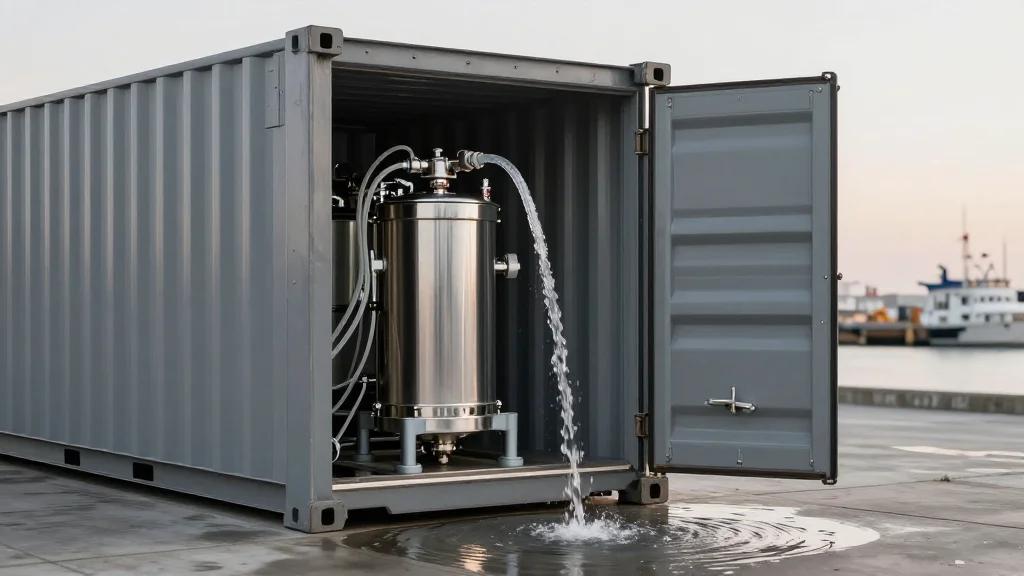
Shanghai QILEE Rolls Out Containerized Membrane Deamination System for Industrial Wastewater

Why It Matters
The launch of QILEE’s containerized membrane deamination system marks a shift toward modular, low‑footprint wastewater solutions that can be deployed quickly and at lower cost than conventional plants. For manufacturers facing stricter ammonia discharge limits, the technology offers a scalable path to compliance without the lengthy construction timelines that have traditionally hampered upgrades. Moreover, the system’s remote‑monitoring and anti‑fouling features reduce operational overhead, making it attractive to firms looking to improve sustainability metrics while controlling expenses. In regions where infrastructure delays are common—illustrated by QILEE’s emergency water‑treatment project in Malaysia—the ability to deliver functional treatment capacity within weeks can protect public health and maintain industrial productivity. As environmental regulations tighten globally, modular solutions like QILEE’s could become a standard component of industrial water‑management strategies, reshaping how manufacturers plan and finance wastewater treatment projects.
Key Takeaways
- •QILEE’s new system offers 100, 300 and 500 m³/d treatment capacities in 20‑ft or 40‑ft containers.
- •Fully automated, plug‑and‑play design reduces on‑site construction time to days.
- •Advanced membrane deamination provides strong anti‑fouling performance and stable ammonia‑nitrogen removal.
- •Recent emergency deployment in Malaysia delivered 5.01 MLD capacity in six weeks at a cost of ~MYR 5 million ($1.07 M).
- •Modular, multi‑container configurations enable scaling for larger industrial or municipal projects.
Pulse Analysis
QILEE’s entry into the containerized wastewater market arrives at a moment when manufacturers are under pressure to meet tighter effluent standards while contending with capital constraints. Traditional treatment plants often require months of civil engineering, permitting and commissioning—processes that can stall production lines and inflate costs. By contrast, QILEE’s skid‑mounted, pre‑commissioned units sidestep many of these bottlenecks, offering a "factory‑built" approach that mirrors trends seen in other heavy‑industry sectors such as power generation and data center construction.
Historically, membrane technologies have struggled with fouling and high maintenance demands, limiting their adoption in high‑throughput industrial settings. QILEE’s claim of enhanced anti‑fouling membranes could be a game‑changer if performance data holds up in real‑world deployments. Should the technology deliver on its promise of lower O&M expenses, it may force incumbent vendors to accelerate their own modular offerings or risk losing market share in mid‑size plant segments.
Looking forward, the scalability of QILEE’s platform—particularly the ability to link multiple containers for larger capacities—positions the company to serve not only steady‑state industrial users but also emergency response teams and temporary project sites. As climate‑related events increase the frequency of sudden water‑quality crises, modular solutions that can be air‑lifted or shipped quickly will likely see heightened demand. QILEE’s recent success in Malaysia demonstrates both technical feasibility and market appetite, suggesting that the firm could leverage this momentum to expand into other emerging economies where infrastructure gaps are acute. The next test will be securing long‑term contracts with major manufacturers and proving cost‑competitiveness against established, larger‑scale treatment plants.
Shanghai QILEE Rolls Out Containerized Membrane Deamination System for Industrial Wastewater
Comments
Want to join the conversation?
Loading comments...