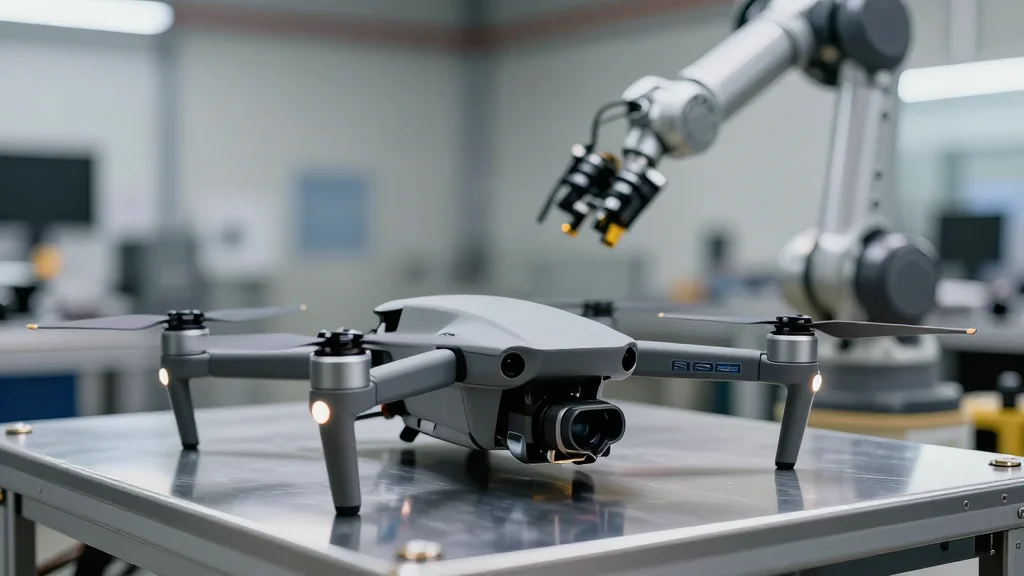
Skydio Commits $3.5 B to Build U.S. Drone Manufacturing Hub

Companies Mentioned
Why It Matters
The Skydio investment marks the largest single infusion of private capital into U.S. drone manufacturing in a decade, signaling a shift from offshore dependency to a home‑grown supply chain. By localizing production of critical components, the United States can mitigate risks of export restrictions, intellectual‑property theft, and geopolitical leverage that have long plagued the electronics sector. Beyond national security, the move could catalyze a broader resurgence in advanced manufacturing, encouraging other AI‑enabled hardware firms to follow suit. The creation of high‑skill jobs and the development of a domestic component ecosystem may also spur innovation in related fields such as autonomous vehicles, precision agriculture and infrastructure inspection.
Key Takeaways
- •Skydio pledges $3.5 billion to onshore drone parts production
- •Investment targets motors, batteries and microchips for a fully domestic supply chain
- •Creates an estimated 3,000‑5,000 new U.S. jobs
- •Follows a $52 million Department of War contract, the largest for a small‑drone maker
- •White House tech adviser Michael Kratsios calls it a ‘real turning point’ for industrial policy
Pulse Analysis
Skydio’s $3.5 billion commitment is more than a corporate expansion; it is a strategic inflection point for the U.S. defense‑industrial base. Historically, the United States has relied on Asian manufacturers for high‑volume electronics, a model that delivered cost efficiencies but left critical capabilities vulnerable to supply shocks and geopolitical coercion. By internalizing the production of drone subsystems, Skydio is attempting to rewrite that playbook, betting that the premium of domestic labor and material costs will be offset by the strategic value of supply‑chain resilience.
The timing aligns with a broader policy push from the Biden administration and lingering Trump‑era initiatives that prioritize “onshoring” of AI‑enabled hardware. While the $3.5 billion figure dwarfs typical venture‑capital rounds in the robotics space, it also reflects the capital intensity of semiconductor‑grade manufacturing. Success will depend on Skydio’s ability to secure a reliable domestic source of advanced microchips—a market still dominated by a handful of overseas fabs. Partnerships with U.S. chipmakers or government‑backed semiconductor subsidies could become essential.
If Skydio can demonstrate a scalable, cost‑competitive domestic production line, it may trigger a cascade effect, prompting competitors like DJI’s U.S. rivals and traditional aerospace firms to accelerate their own onshoring plans. Conversely, failure to achieve economies of scale could reinforce the entrenched advantage of Chinese manufacturers, keeping the U.S. dependent on foreign supply chains despite policy intent. The next 12‑18 months will be a litmus test for whether strategic capital can overcome structural market dynamics.
Skydio Commits $3.5 B to Build U.S. Drone Manufacturing Hub
Comments
Want to join the conversation?
Loading comments...