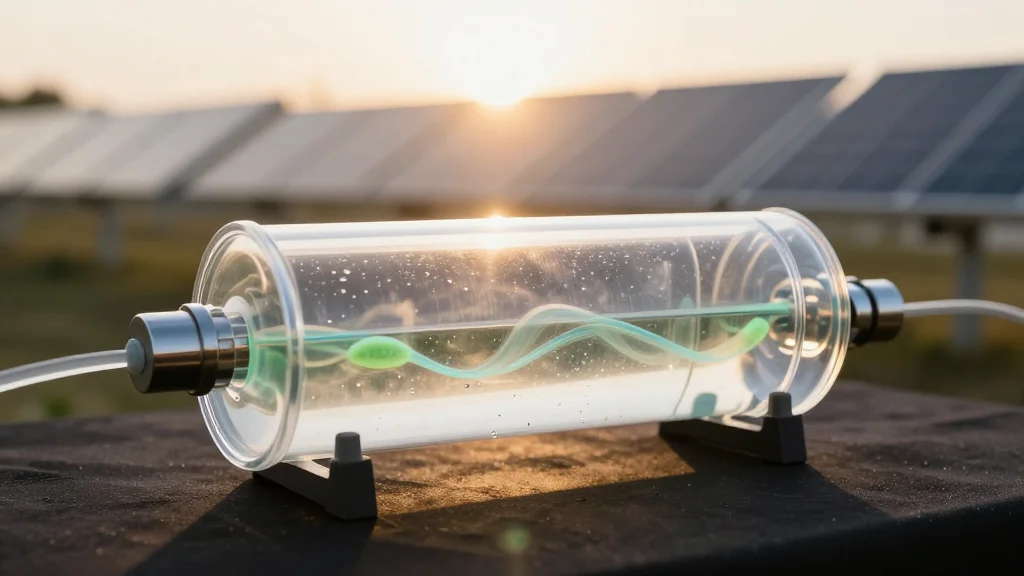
Solar Reactor Turns CO₂ and Sunlight Into Bacterial Biomass, Paving Way for Air‑Based Manufacturing

Why It Matters
Decarbonizing chemical manufacturing is a cornerstone of global climate goals, yet most industrial processes still rely on oil, coal or natural gas as carbon sources. The solar‑driven reactor offers a pathway to produce feedstock without extracting or burning fossil fuels, directly addressing the sector’s carbon intensity. By turning CO₂—a waste product—into bacterial biomass, the technology could create a circular carbon loop, reducing emissions while generating valuable materials such as biodegradable plastics, bio‑based chemicals, and high‑protein food ingredients. Moreover, the reliance on sunlight and electricity from renewable grids aligns the process with existing clean‑energy investments, potentially accelerating adoption in regions with abundant solar resources. Beyond emissions, the approach could diversify supply chains that are currently vulnerable to geopolitical shocks and raw‑material price volatility. If formate can be produced cheaply from intermittent renewables, manufacturers could secure a stable, domestically sourced carbon feedstock, lessening dependence on imported hydrocarbons. The ability to produce protein‑rich biomass also opens new avenues for sustainable food production, addressing rising demand for animal‑free protein while lowering land and water footprints.
Key Takeaways
- •Queen Mary University scientists built a solar reactor that converts CO₂ and sunlight into E. coli biomass in a single liquid vessel.
- •The reactor integrates water‑splitting, enzymatic CO₂ reduction to formate, and engineered bacteria that grow on the formate.
- •Researchers claim this is the first demonstration of a full photon‑to‑biomass chain without separate reactors.
- •Formate‑based bioeconomy could supply chemicals, plastics and protein without fossil feedstocks.
- •Scaling challenges include electrode durability, CO₂ mass transfer and economic competitiveness versus petrochemical routes.
Pulse Analysis
The solar‑reactor breakthrough arrives at a pivotal moment for the chemicals sector, which is under intense regulatory and investor pressure to slash its carbon footprint. Historically, CO₂ utilization has been split between catalytic conversion to fuels or chemicals and biological fermentation using sugars. Both pathways suffer from feedstock competition—catalysts need high‑purity CO₂ streams, while sugar‑based fermentations compete with food crops. By merging electrochemical CO₂ reduction to formate with microbial growth in a single vessel, the Queen Mary team sidesteps these bottlenecks, offering a modular platform that can be co‑located with renewable‑energy installations.
From a market perspective, the technology could disrupt the value chain for commodity chemicals such as methanol, acetic acid and polyols, which currently dominate petrochemical production. If formate can be produced at scale for under $1 per kilogram—a target many renewable‑electrolysis projects are chasing—the downstream bioprocess could become cost‑competitive with traditional routes, especially when carbon pricing or subsidies are factored in. However, the path to commercial viability is steep. Electrode materials that survive years of solar exposure, efficient CO₂ capture from dilute air, and high biomass yields are all engineering hurdles that will require multi‑billion‑dollar investments. Venture capital is already flowing into CO₂‑to‑fuel startups, but few have demonstrated integrated chemical‑biological systems at pilot scale.
Policy will likely be the catalyst that determines whether this technology moves from lab bench to factory floor. The EU’s Green Deal and the US Inflation Reduction Act both allocate billions toward low‑carbon manufacturing and renewable electricity. If funding streams earmark support for integrated CO₂ utilization platforms, the solar reactor could attract the capital needed for scale‑up. In the meantime, the research underscores a broader trend: the convergence of electrochemistry, synthetic biology and renewable energy is reshaping how raw materials are sourced. Companies that can harness this convergence early may secure a strategic advantage in a market that is rapidly moving away from fossil‑based inputs toward air‑derived feedstocks.
Solar Reactor Turns CO₂ and Sunlight into Bacterial Biomass, Paving Way for Air‑Based Manufacturing
Comments
Want to join the conversation?
Loading comments...