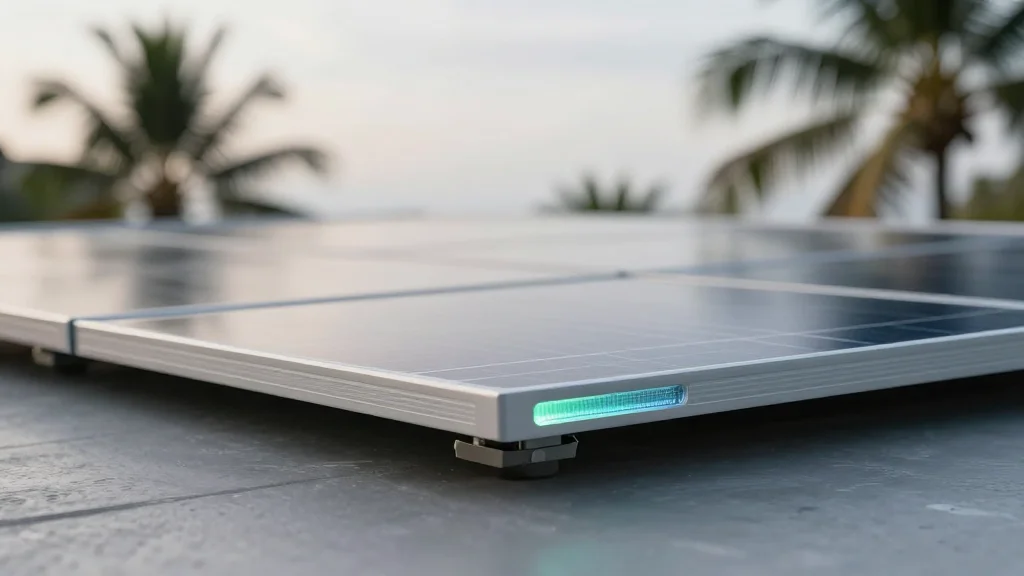
Solx and Caelux Seal $3 GW Perovskite Solar Deal, Making Puerto Rico a New Manufacturing Hub

Why It Matters
The Solx‑Caelux deal could reshape the U.S. solar supply chain by bringing high‑efficiency tandem technology home, reducing dependence on imported silicon wafers and mitigating tariff exposure. For Puerto Rico, the project offers a pathway to economic diversification, job creation, and energy resilience in a region still recovering from frequent hurricanes and grid instability. Successful commercialization of perovskite‑silicon tandems would also accelerate the broader transition to renewable energy by lowering the levelized cost of electricity for utilities and large‑scale developers. Beyond the immediate economic impact, the venture serves as a test case for how public policy—tax incentives, workforce development, and Made‑in‑USA mandates—can attract advanced manufacturing to territories with strategic advantages. If the partnership meets its performance and volume goals, it may inspire similar initiatives in other U.S. jurisdictions seeking to capture a share of the next wave of clean‑tech manufacturing.
Key Takeaways
- •Solx and Caelux sign a five‑year, 3‑GW strategic partnership to produce Aurora™ tandem perovskite‑silicon modules in Puerto Rico.
- •Target conversion efficiency of 28% for the new modules, with high‑throughput roll‑to‑roll manufacturing.
- •First production batch earmarked for a U.S. developer; full 3‑GW capacity expected by 2027.
- •Puerto Rico offers tariff‑free U.S. manufacturing, tax incentives, and a push for grid resilience.
- •The venture could reduce U.S. reliance on imported silicon and accelerate domestic clean‑energy supply chains.
Pulse Analysis
Solx’s gamble on perovskite‑silicon tandems arrives at a moment when silicon‑only panels are approaching their practical efficiency ceiling. By pairing a thin perovskite layer with a conventional silicon cell, the tandem architecture can capture a broader spectrum of sunlight, delivering the 28% efficiency cited in the partnership. Historically, perovskite’s Achilles’ heel has been long‑term stability; however, recent advances in encapsulation and glass‑based barrier layers—exemplified by Caelux’s “energy amplifying glass”—have narrowed that gap. If Solx can translate lab‑scale durability into a commercial roll‑to‑roll line, the cost per watt could drop dramatically, reshaping utility procurement models that currently favor silicon‑only panels.
From a geopolitical standpoint, locating the plant in Puerto Rico leverages the island’s unique status: it is part of the United States customs territory, allowing manufacturers to sidestep the 25% tariffs that have hampered other U.S. solar supply‑chain initiatives. The move also aligns with the Biden administration’s Made‑in‑USA push for clean‑energy equipment, potentially unlocking federal procurement contracts for Solx’s modules. Moreover, the project could act as a catalyst for a broader manufacturing renaissance on the island, attracting ancillary firms in glass coating, precision optics, and logistics, thereby creating a localized ecosystem that mirrors the vertically integrated models seen in East Asian solar hubs.
Looking ahead, the partnership’s success will be measured not just by capacity milestones but by the ability to deliver modules that meet durability warranties of 25‑30 years—standard for silicon panels. Early field data from the first batch will be scrutinized by investors and policymakers alike. Should Solx achieve its performance targets, the 3‑GW output could supply roughly 10% of the U.S. utility‑scale solar market by 2030, positioning Puerto Rico as a critical node in the nation’s clean‑energy transition.
Solx and Caelux Seal $3 GW Perovskite Solar Deal, Making Puerto Rico a New Manufacturing Hub
Comments
Want to join the conversation?
Loading comments...