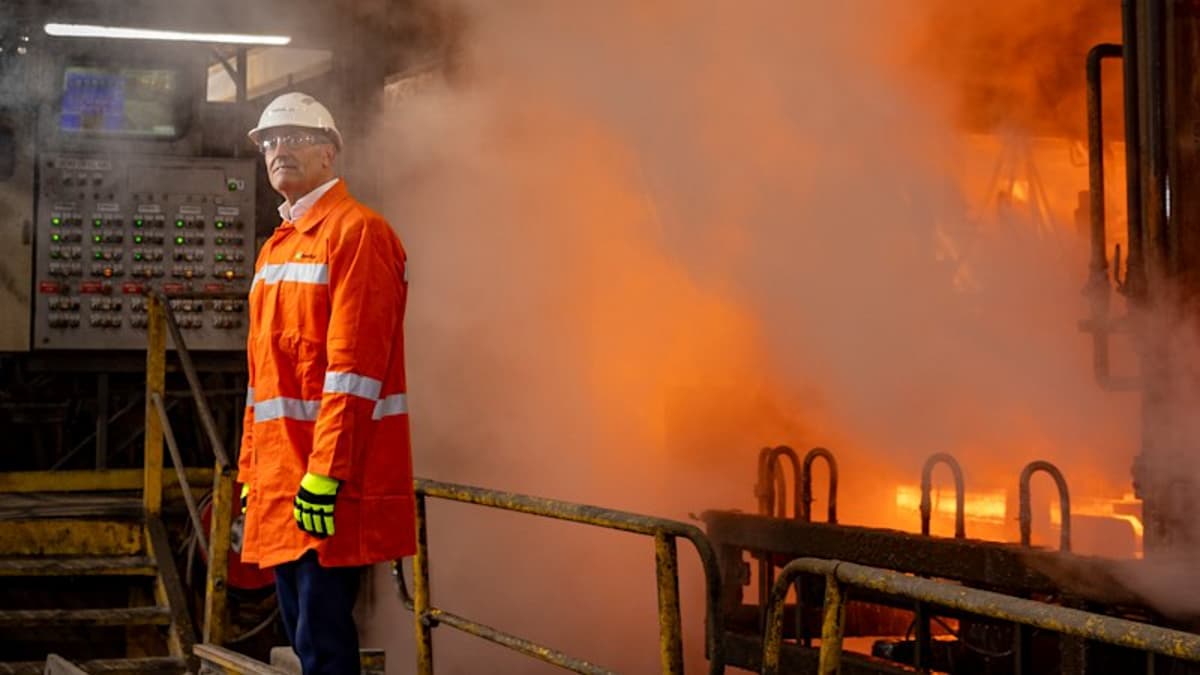
Steel Mill Becomes Nation’s First to Switch on Mostly Green Power
Companies Mentioned
Why It Matters
Achieving majority renewable power cuts steel‑related carbon emissions, meeting rising demand for low‑carbon materials and setting a benchmark for heavy industry’s energy transition.
Key Takeaways
- •Laverton mill sources >50% power from wind farm
- •Goal 100% renewable power by 2030
- •Production to rise to 1M tonnes by 2028
- •InfraBuild plans biomethane for reheating by 2025
- •Steelmaking emissions: 75% electricity, 25% natural gas
Pulse Analysis
The steel sector accounts for up to 8% of global greenhouse‑gas emissions, largely because traditional blast furnaces burn coal‑derived coke. Electric arc furnaces, which melt scrap metal with high‑voltage electricity, offer a pathway to dramatically lower emissions when powered by clean energy. By securing wind‑generated electricity for more than half of its load, InfraBuild demonstrates that renewable‑powered arc furnaces can move the industry toward its climate goals, especially as grids worldwide continue to decarbonise.
InfraBuild’s strategy goes beyond a single contract. The company, the second‑largest Australian steelmaker, has ring‑fenced its finances from the troubled GFG Alliance and is investing in a major capacity expansion, targeting 1 million tonnes at Laverton and a modest increase at its Rooty Hill site. The firm’s renewable procurement, combined with plans to lock in biomethane for processes that still rely on heat, reflects a holistic approach to cutting both electricity‑related and gas‑related emissions. These steps aim to satisfy customers increasingly demanding low‑carbon steel for construction and manufacturing.
The broader market impact is significant. Builders and developers are tightening sustainability criteria, with embodied‑carbon standards like Green Star gaining traction. As low‑carbon steel becomes a differentiator, manufacturers that can certify renewable‑powered production will capture premium pricing and new contracts. However, challenges remain: limited high‑quality scrap supplies and the high cost of emerging green‑hydrogen direct‑reduced‑iron technology could slow full industry adoption. InfraBuild’s progress thus serves as both a proof point and a catalyst for further innovation across the global steel value chain.
Steel mill becomes nation’s first to switch on mostly green power
Comments
Want to join the conversation?
Loading comments...