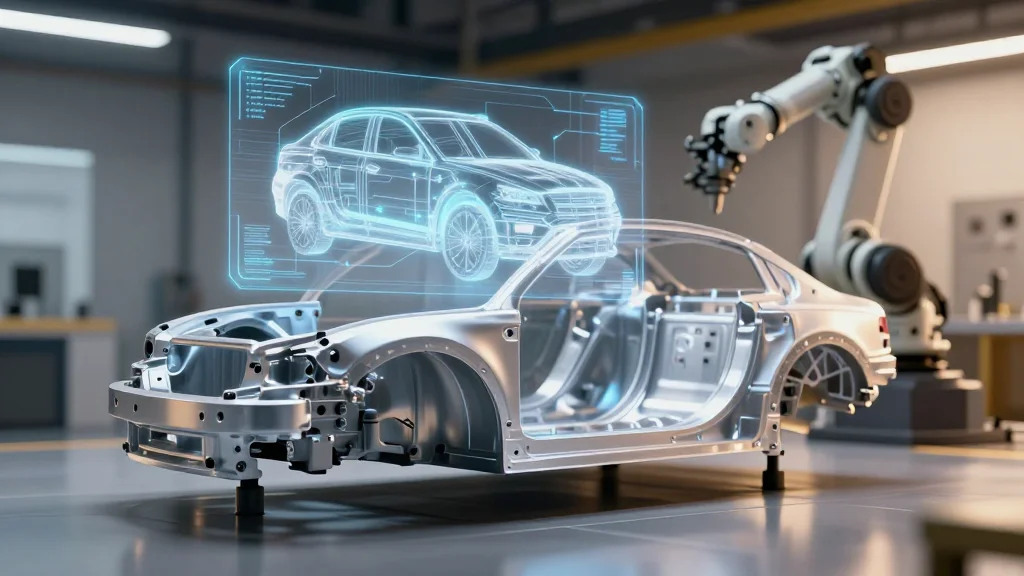
Stellantis Teams with Accenture and NVIDIA to Accelerate AI-Driven Manufacturing

Companies Mentioned
Why It Matters
The Stellantis alliance signals a decisive move by legacy automakers to embed advanced AI into the physical core of their operations, a shift that could redefine cost structures and competitive dynamics across the manufacturing sector. By adopting digital twins and real‑time analytics, manufacturers can anticipate bottlenecks, reduce scrap, and respond faster to supply‑chain disruptions, thereby enhancing resilience. If the partnership delivers on its promises, it may accelerate a broader industry transition from siloed automation tools to integrated, data‑centric factories. This could spur a wave of investment in AI hardware, edge‑computing infrastructure and specialized consulting services, reshaping the vendor landscape and creating new opportunities for technology providers.
Key Takeaways
- •Stellantis, Accenture and NVIDIA announced a joint AI‑manufacturing initiative on May 19, 2026.
- •The program will use NVIDIA’s Omniverse platform to build digital twins of Stellantis’s 14 global plants.
- •Accenture will handle integration and change‑management across the pilot sites.
- •No financial terms were disclosed, but the effort targets reductions in downtime and defect rates.
- •The partnership follows similar AI‑factory pilots by Volkswagen and Tesla, indicating industry‑wide momentum.
Pulse Analysis
Stellantis’s decision to partner with both a consulting heavyweight and a GPU specialist reflects a recognition that AI adoption in manufacturing is no longer a pure technology project—it requires orchestration across process redesign, data pipelines and workforce upskilling. Historically, OEMs have struggled to translate AI pilots into scalable outcomes because of fragmented IT landscapes and legacy control systems. By bringing Accenture’s systems‑integration muscle and NVIDIA’s compute platform together, Stellantis is attempting to overcome those integration barriers in one fell swoop.
The timing aligns with a broader macro trend: tightening supply chains and rising labor costs are forcing manufacturers to extract more efficiency from existing assets. AI‑driven digital twins can simulate production changes without interrupting line output, offering a low‑risk path to continuous improvement. However, the partnership also raises questions about data ownership and cybersecurity, especially as sensitive operational data flows across multiple corporate boundaries. Success will hinge on robust governance frameworks and clear accountability for AI‑generated recommendations.
Looking ahead, the Stellantis model could become a template for other capital‑intensive industries. If the pilot delivers quantifiable gains—say, a 5% lift in equipment uptime or a 10% reduction in scrap—investors may accelerate funding toward AI‑centric factory upgrades. Conversely, any setbacks could temper enthusiasm and reinforce the view that AI’s promise in heavy manufacturing remains unproven at scale. The next twelve months will be a litmus test for whether AI can move from buzzword to bottom‑line driver in the automotive world.
Stellantis Teams with Accenture and NVIDIA to Accelerate AI-Driven Manufacturing
Comments
Want to join the conversation?
Loading comments...