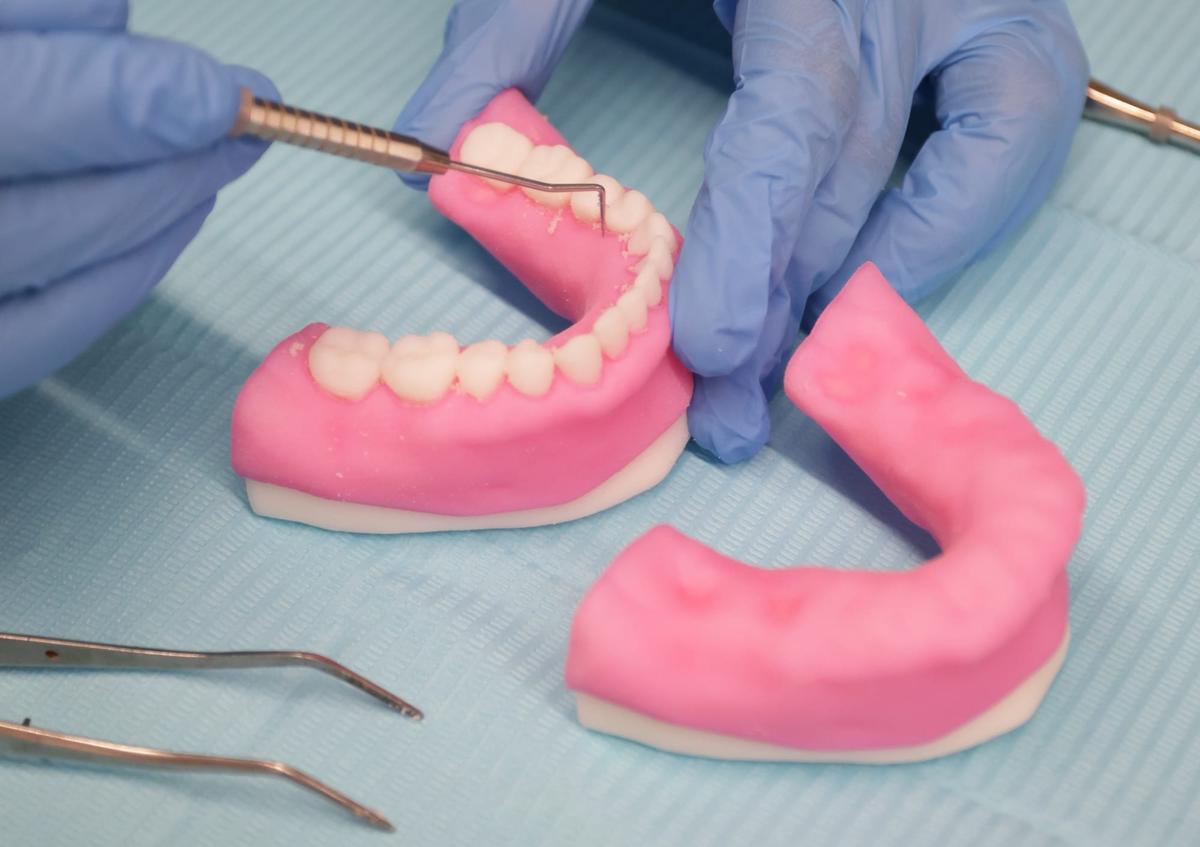
Stratasys Introduces Multi-Material 3D Printed Anatomical Model Preset for Dental Training
Companies Mentioned
Why It Matters
The preset offers a cost‑effective, scalable way to standardize dental education and accelerate clinical adoption, reshaping training and product development in the industry.
Key Takeaways
- •PolyJet preset mimics bone, teeth, nerves, soft tissue
- •Customizable via patient CBCT scans for specific pathologies
- •Supports extraction, implant, periodontal, endodontic, sinus procedures
- •Enables repeatable, standardized dental education worldwide
- •Accelerates OEM device testing and clinician adoption
Pulse Analysis
The dental education landscape has long depended on stone casts, cadaver heads and animal tissue to teach anatomy and procedural skills. While effective, those methods are costly, limited in supply, and often lack the tactile fidelity required for precise work. Recent advances in additive manufacturing have begun to address these gaps, offering reproducible, patient‑specific replicas that can be produced on demand. As curricula shift toward competency‑based learning, institutions are seeking tools that combine visual realism with biomechanical feedback, allowing students to practice repeatedly without the logistical constraints of traditional models. These digital replicas also enable objective assessment through integrated sensors.
Stratasys’ new multi‑material anatomical model preset leverages PolyJet technology to layer photopolymers that simulate enamel hardness, periodontal ligament elasticity, and gingival softness in a single print. Pre‑defined material ratios and distribution patterns guarantee consistent mechanical properties across batches, while integration with CBCT data lets educators generate models reflecting individual pathology or complex cases. The workflow requires only a digital file and the preset parameters, reducing setup time and eliminating trial‑and‑error adjustments that have hampered earlier 3D‑printed training aids. Users can fine‑tune material gradients to match specific biomechanical targets.
The rollout of these presets promises lower training costs, greater accessibility for remote programs, and shorter development cycles for dental OEMs. By offering a repeatable platform for procedures—from extractions to sinus augmentation—clinicians can build confidence before treating patients, potentially improving outcomes and reducing malpractice risk. Rapid prototyping of new instruments on anatomically accurate replicas also accelerates innovation, cementing additive manufacturing as a core component of the evolving dental ecosystem. Institutions adopting the technology report higher student satisfaction and faster skill acquisition.
Stratasys introduces multi-material 3D printed anatomical model preset for dental training


Comments
Want to join the conversation?
Loading comments...