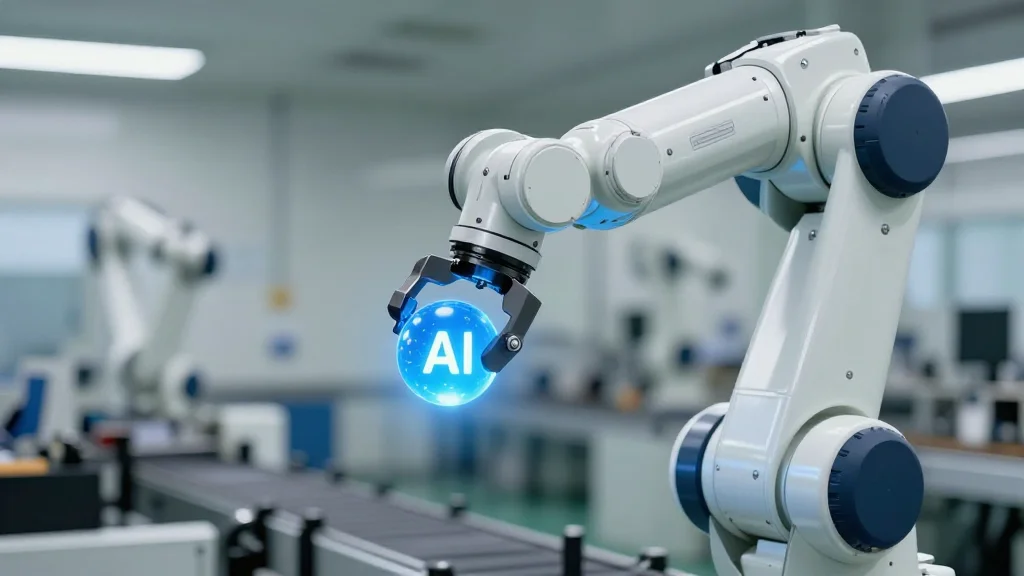
Survey Finds AI Shifting From Cost‑Cutting to Growth Driver in Manufacturing

Companies Mentioned
Why It Matters
The survey signals a fundamental re‑orientation of AI strategy in manufacturing, from a back‑office cost‑reduction tool to a front‑office growth lever. This shift will reshape capital allocation, with firms directing more spend toward AI‑driven product innovation, customer‑centric analytics, and sustainability initiatives. As manufacturers chase higher productivity and faster decision‑making, AI will become a core competency that differentiates market leaders from laggards. Moreover, the emphasis on real‑time data connectivity and talent acquisition highlights emerging bottlenecks. Companies that fail to secure skilled AI talent or to build robust data pipelines risk missing out on the productivity gains and revenue opportunities that peers are already capturing. The trend also raises the stakes for technology vendors, who must deliver integrated, secure, and scalable AI platforms that meet the evolving needs of the manufacturing sector.
Key Takeaways
- •Survey of 70 manufacturing CXOs shows AI now drives growth, with 49% citing customer expectations as a primary driver.
- •Real‑time machine connectivity rated top prerequisite for AI adoption by 36% of respondents.
- •Cost‑reduction drops to 23% as a reason for AI adoption, down from its historic prominence.
- •AI‑enabled production lines deliver 15‑20% higher productivity, according to Danfoss India.
- •30% of manufacturers identify hiring AI and data talent as a critical challenge.
Pulse Analysis
The transition from cost‑cutting to growth‑oriented AI reflects a maturation of digital transformation in manufacturing. Early adopters initially focused on automating repetitive tasks to shave margins, but as AI models become more sophisticated and data ecosystems mature, the technology is now unlocking new revenue streams. Predictive analytics can anticipate demand spikes, enabling manufacturers to adjust production schedules proactively, while AI‑driven design tools accelerate product development cycles. This evolution mirrors the broader shift seen in other sectors where AI moves from operational efficiency to strategic differentiation.
Historically, manufacturers have been cautious about technology investments due to capital intensity and long asset lifecycles. The survey’s emphasis on real‑time data and integrated intelligence suggests that firms are finally comfortable with the ROI calculus of AI, buoyed by tangible productivity gains of 15‑20% reported by industry leaders. This confidence is likely to spur a wave of M&A activity as larger players acquire niche AI startups to accelerate capability building.
Looking forward, the competitive advantage will hinge on three pillars: data infrastructure, talent, and ecosystem partnerships. Companies that can seamlessly connect legacy equipment to cloud‑based AI platforms will extract the most value, while those that invest in upskilling their workforce or forging alliances with AI specialists will avoid the talent bottleneck highlighted by the survey. In the next 12‑18 months, we can expect to see a surge in AI‑centric capital projects, joint ventures with tech firms, and a re‑definition of manufacturing KPIs to include AI‑generated insights as a core performance metric.
Survey Finds AI Shifting from Cost‑Cutting to Growth Driver in Manufacturing
Comments
Want to join the conversation?
Loading comments...