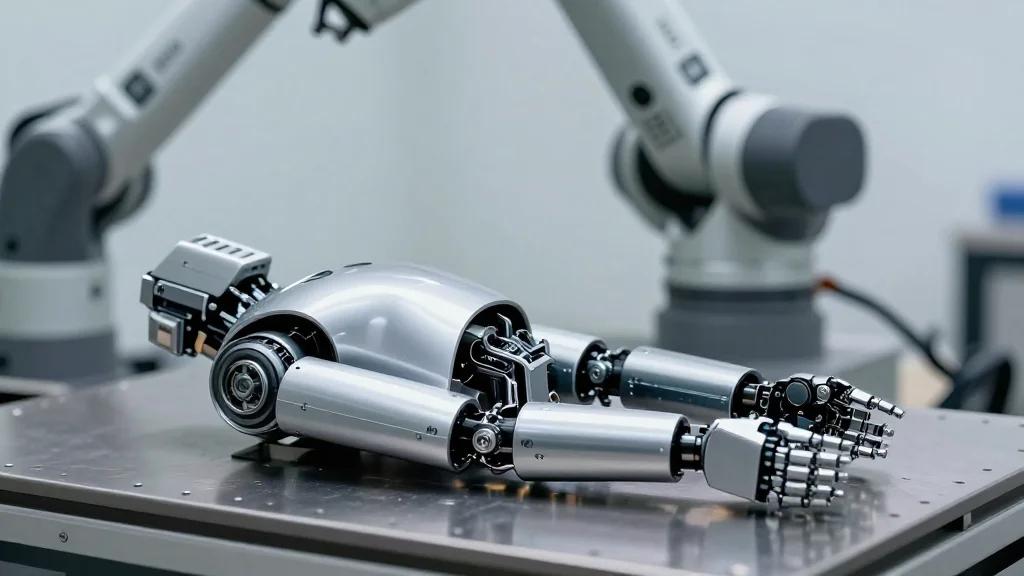
Tesla Taps Shanghai Gigafactory as ‘Golden Key’ for Optimus Robot Production

Companies Mentioned

Why It Matters
Tesla’s decision to repurpose its Shanghai Gigafactory for Optimus production could reshape the industrial robotics supply chain. By applying automotive‑grade automation to robot assembly, Tesla may achieve cost structures that make humanoid robots viable for mass‑market applications such as warehouse picking, last‑mile delivery, and on‑site manufacturing assistance. The shift also diversifies Tesla’s earnings, reducing reliance on vehicle sales and providing a new growth engine that could attract capital to the broader robotics sector. For China, the move underscores the country’s role as a manufacturing hub for next‑generation technologies. If the Shanghai plant succeeds, it could spur local component suppliers to develop specialized robotics parts, strengthening China’s position in the global robotics ecosystem and potentially influencing trade dynamics around high‑tech manufacturing equipment.
Key Takeaways
- •Allan Wang Hao called Shanghai Gigafactory a “golden key” for Optimus robot production
- •Shanghai produced 851,000 EVs in 2025, over half of Tesla’s global output
- •In Q1 2026 the plant handled about 60% of worldwide Tesla deliveries
- •Elon Musk announced the conversion of Fremont’s Model S/X lines to robot manufacturing
- •Polymarket odds show a 6% chance of consumer‑ready Optimus by June 30, 2026
Pulse Analysis
Tesla’s strategy to embed humanoid robot production within its existing automotive megafactories is a calculated gamble that leverages scale, supply‑chain depth, and a culture of rapid iteration. Historically, robot manufacturers have operated on thin margins, constrained by bespoke component costs and low volumes. By contrast, Tesla’s Gigafactory model thrives on high‑volume, low‑cost production, a formula that could dramatically lower the price point of a functional humanoid. If the Shanghai pilot achieves target yields, it would validate a new manufacturing paradigm where robots are built as efficiently as cars, potentially unlocking use‑cases that were previously cost‑prohibitive.
The timing aligns with a broader industry pivot toward service‑oriented automation. Companies across logistics, retail, and construction are signaling intent to adopt humanoid platforms, but they lack a reliable supplier capable of delivering at scale. Tesla’s brand equity and its vertically integrated battery and AI stack give it a unique advantage. However, the venture also carries risk: robot assembly demands precision tolerances and safety certifications that differ from vehicle standards. Any delay or quality issue could erode confidence, especially given the modest market expectations reflected in current betting odds.
Looking ahead, the success of the Shanghai rollout will likely dictate whether Tesla expands Optimus production to other Gigafactories, such as Berlin or Texas. A phased approach would allow the company to refine its robot‑specific tooling while preserving vehicle output. Competitors will watch closely; a proven low‑cost, high‑volume robot could force incumbents to either partner with Tesla’s supply chain or accelerate their own capacity investments. In either scenario, Tesla’s move could accelerate the commercialization timeline for humanoid robotics by several years, reshaping the competitive landscape and setting new benchmarks for manufacturing efficiency in the sector.
Tesla Taps Shanghai Gigafactory as ‘Golden Key’ for Optimus Robot Production
Comments
Want to join the conversation?
Loading comments...