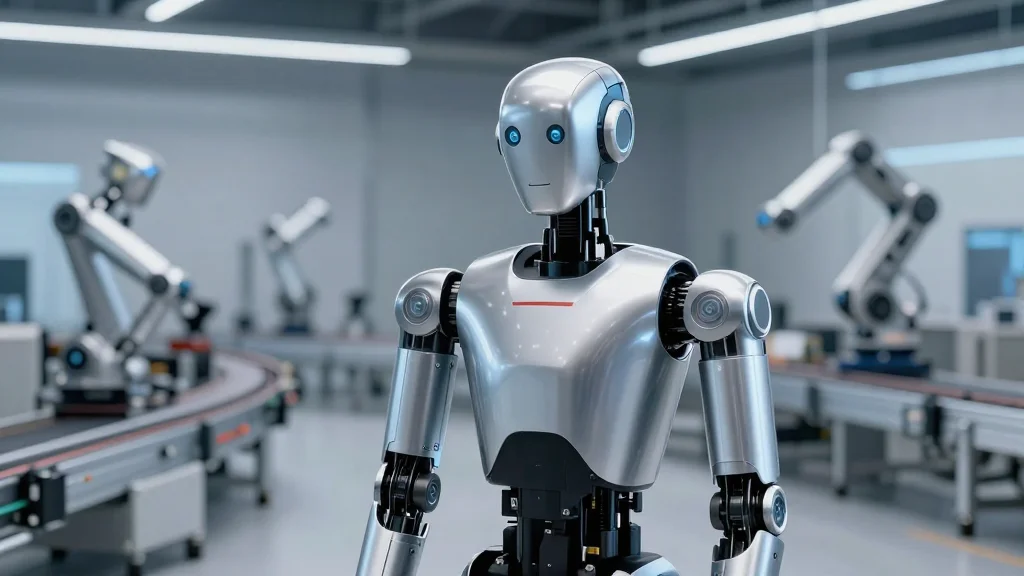
Tesla to Open 1 Million‑Unit Humanoid Robot Factory in Fremont, Targeting Mass Production

Companies Mentioned
Why It Matters
Tesla’s shift from electric‑vehicle to humanoid‑robot production marks the first time a major automaker is committing to mass‑manufacture human‑like machines at a scale previously limited to industrial robots. By targeting one million units per year from day one, Tesla aims to drive down costs and accelerate adoption across logistics, warehousing, and consumer services, potentially redefining labor dynamics in factories worldwide. The parallel Texas plan for ten million units underscores the company’s belief that humanoid robots will become a staple of future production lines, prompting a re‑evaluation of supply‑chain strategies among component manufacturers and investors. For investors, the announcement has already translated into heightened activity in robotics‑focused funds, as evidenced by the $65 million turnover in the Robot ETF. The move signals a new asset class tied directly to the commercialization of advanced robotics, offering both risk and upside for those betting on the next wave of automation.
Key Takeaways
- •Tesla will convert its Fremont Model S/X line into a humanoid robot factory with a design capacity of 1 million units per year.
- •A second‑generation line at the Texas Gigafactory targets a long‑term output of 10 million robots annually.
- •Optimus V3 production is scheduled for July‑August 2026, with external deployments planned for 2027.
- •Robot ETF (华夏机器人ETF, 562500) saw a turnover of 4.64 billion yuan (~$65 million) following the news.
- •Analysts expect the rollout to boost demand for high‑precision, low‑cost robot components and reshape the global robotics supply chain.
Pulse Analysis
Tesla’s entry into mass‑produced humanoid robots is less about a new product line and more about a strategic bet on the future of factory labor. By leveraging its existing high‑volume manufacturing expertise, Tesla can apply automotive economies of scale to robotics, potentially slashing the cost per unit by an order of magnitude. This could make humanoid robots financially viable for tasks that have traditionally been the domain of human workers, such as complex assembly, material handling, and even customer‑facing roles.
Historically, robotics adoption has been incremental, driven by incremental improvements in sensor fidelity and AI. Tesla’s aggressive timeline—moving from prototype to a million‑unit production line within months—compresses that trajectory dramatically. If successful, the company could set a new benchmark for speed‑to‑market that forces incumbents like ABB, Fanuc, and KUKA to accelerate their own mass‑production capabilities or risk obsolescence. The ripple effect will likely be felt most strongly among component suppliers, who must scale precision manufacturing while keeping costs low to meet Tesla’s price targets.
Looking ahead, the real test will be whether the robots can achieve the reliability and safety standards required for widespread deployment. Early internal use cases will provide critical data, but broader commercial acceptance will hinge on demonstrable ROI for end users. Investors should monitor the performance of the Robot ETF and related supply‑chain stocks as leading indicators of market confidence. In the meantime, Tesla’s Fremont plant serves as a live laboratory for the next industrial revolution—one where silicon and steel converge to replace human labor at scale.
Tesla to Open 1 Million‑Unit Humanoid Robot Factory in Fremont, Targeting Mass Production
Comments
Want to join the conversation?
Loading comments...