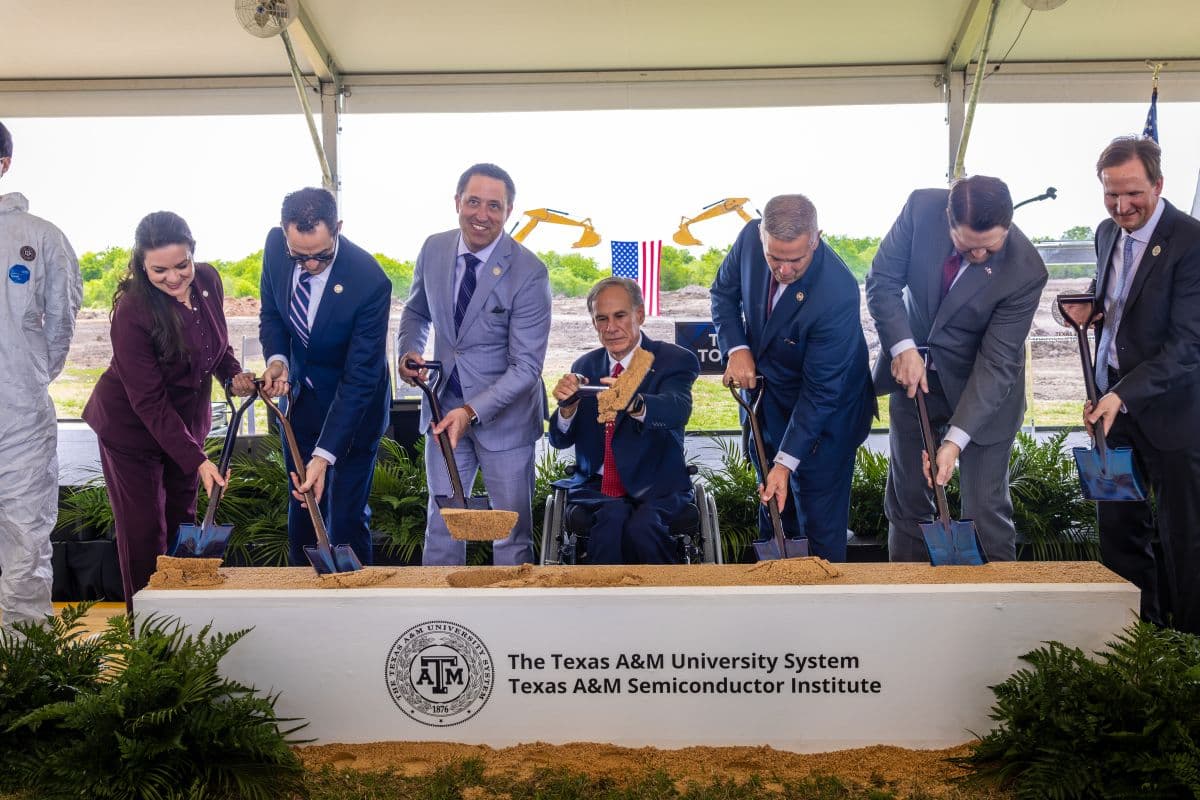
Texas A&M Begins $226M Semiconductor Institute Work
Why It Matters
The institute accelerates Texas’s strategic push for semiconductor self‑sufficiency, drawing private investment and bolstering the U.S. supply chain. It also creates a pipeline of skilled talent essential for national security and economic growth.
Key Takeaways
- •Texas A&M's new institute adds 80,000 sq ft for semiconductor research
- •$113.7 M from TSI fund and $48.1 M PUF debt finance construction
- •Project supports Texas CHIPS Act goals for microchip independence
- •Institute aims to boost workforce development and national security
- •Expected to attract private chip firms and expand state’s tech ecosystem
Pulse Analysis
The United States is still grappling with a global chip shortage that has exposed vulnerabilities in its supply chain. Texas, long recognized as a cradle of microchip innovation, doubled down on that legacy by passing the Texas CHIPS Act in 2023, a state‑level complement to the federal CHIPS and Science Act. Governor Greg Abbott’s announcement of the Texas A&M Semiconductor Institute underscores a broader strategy to localize design, fabrication, and testing capabilities, reducing reliance on overseas manufacturers and aligning with national security priorities.
The institute’s 80,000 sq ft campus on the RELLIS research park will host advanced lithography labs, AI‑driven design studios, and collaborative workspaces for industry partners. Funding blends $113.7 million from the Texas Semiconductor Innovation Building and Equipment account with $48.1 million sourced through Permanent University Fund debt, reflecting a public‑private financing model that mirrors successful tech clusters elsewhere. By integrating hands‑on training programs with cutting‑edge research, the center aims to produce a steady stream of engineers and technicians, addressing the talent gap that has hampered U.S. chip makers for years.
For the broader semiconductor ecosystem, the institute signals a competitive edge for Texas firms seeking to expand capacity or launch new fabs. Its emphasis on next‑generation materials, such as silicon‑carbide and gallium‑nitride, positions the state to capture emerging markets in automotive, 5G, and defense applications. Moreover, the collaboration framework—linking Texas A&M, the Texas Semiconductor Innovation Consortium, and private chip manufacturers—creates a virtuous cycle of innovation, investment, and job creation that could reshape the national tech landscape. As other states vie for similar projects, Texas’s early commitment may translate into a decisive market share advantage.
Texas A&M Begins $226M Semiconductor Institute Work
Comments
Want to join the conversation?
Loading comments...