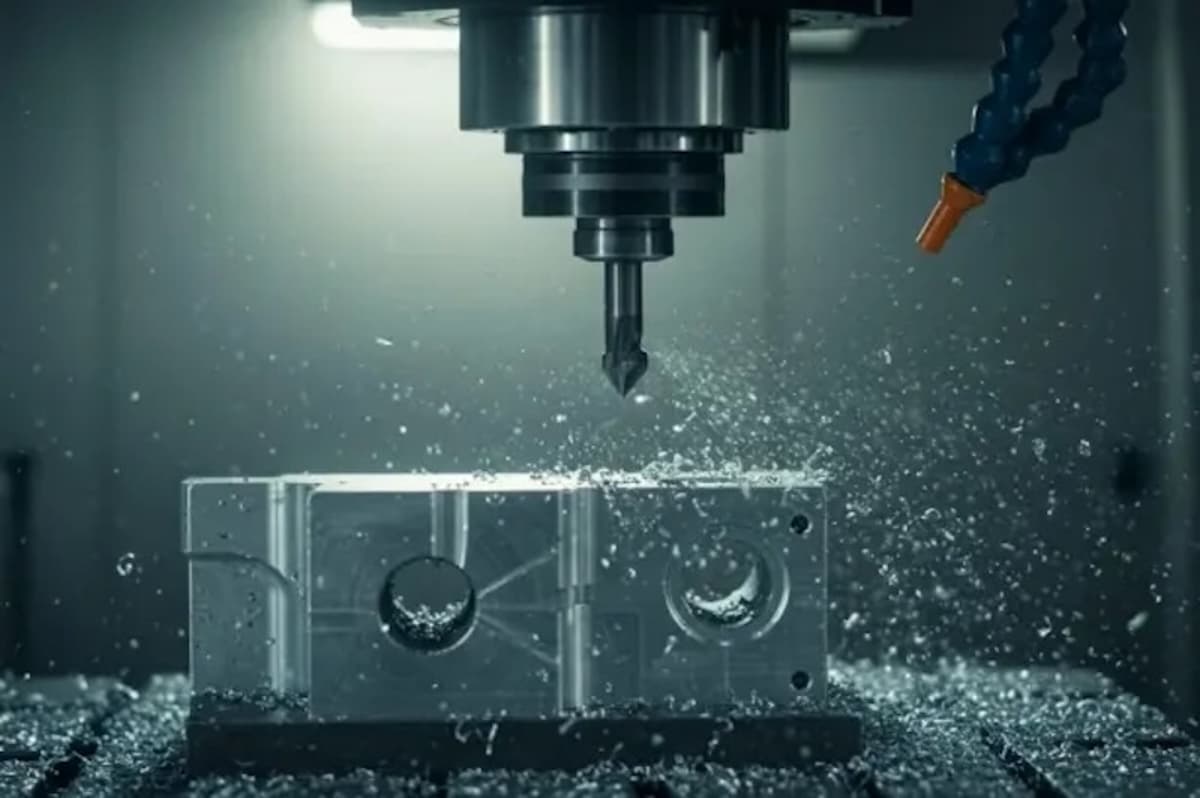
The Growing Demand for Aluminum CNC Machining in Modern Industries
Why It Matters
The surge in aluminum CNC machining accelerates product innovation while reducing costs and environmental impact, positioning manufacturers that adopt these technologies for a decisive market advantage.
Key Takeaways
- •Aluminum CNC market projected over $100 billion globally by 2026
- •Yijin Solution leverages AI‑driven CNC for faster, consistent production
- •Strength‑to‑weight ratio of alloys 6061/7075 cuts vehicle weight, boosts fuel efficiency
- •Aluminum’s recyclability supports sustainable manufacturing goals across sectors
- •Smart tooling and adaptive machining reduce waste and extend tool life
Pulse Analysis
The CNC machining sector is on a rapid ascent, with forecasts indicating a global market size exceeding $100 billion by 2026. Aluminum has become the material of choice because its high machinability, excellent strength‑to‑weight ratios, and innate corrosion resistance enable manufacturers to meet tight tolerances while keeping cycle times short. Alloys such as 6061 and 7075 are especially popular in aerospace and automotive applications where every gram saved translates into fuel savings or payload gains. This convergence of demand and material properties is reshaping supply chains across multiple industries.
Modern CNC platforms now embed artificial intelligence that continuously monitors spindle load, feed rates, and tool wear, automatically adjusting parameters to maintain optimal surface finish. Adaptive machining, powered by sensor‑rich smart tooling, cuts scrap by up to 15 percent and prolongs cutter life, a critical advantage for low‑volume, high‑precision runs. Integration with Industry 4.0 ecosystems links machines to cloud‑based analytics, enabling predictive maintenance and real‑time quality dashboards. For manufacturers such as Yijin Solution, these capabilities translate into shorter lead times, lower operating costs, and the ability to accommodate last‑minute design changes without re‑tooling.
Beyond performance, aluminum’s near‑perfect recyclability aligns with growing corporate sustainability mandates. Scrap generated during CNC runs can be re‑melted and reused without degrading alloy properties, allowing manufacturers to claim closed‑loop material usage and reduce carbon footprints. Companies that pair this intrinsic advantage with AI‑driven efficiency gain a competitive edge, offering clients faster prototyping, lower total cost of ownership, and compliance with environmental regulations. As sectors from aerospace to consumer electronics tighten ESG criteria, aluminum CNC machining is poised to become a cornerstone of responsible, high‑mix production.
The Growing Demand for Aluminum CNC Machining in Modern Industries
Comments
Want to join the conversation?
Loading comments...