The State of Composites: CW's JEC 2026 Recap
Why It Matters
The innovations showcased accelerate the shift toward greener, faster composite manufacturing, directly supporting aerospace’s need for high‑volume, low‑cost parts. Industry players that adopt these digital and energy‑efficient tools will gain a competitive edge in a market projected to grow double‑digit percentages annually.
Key Takeaways
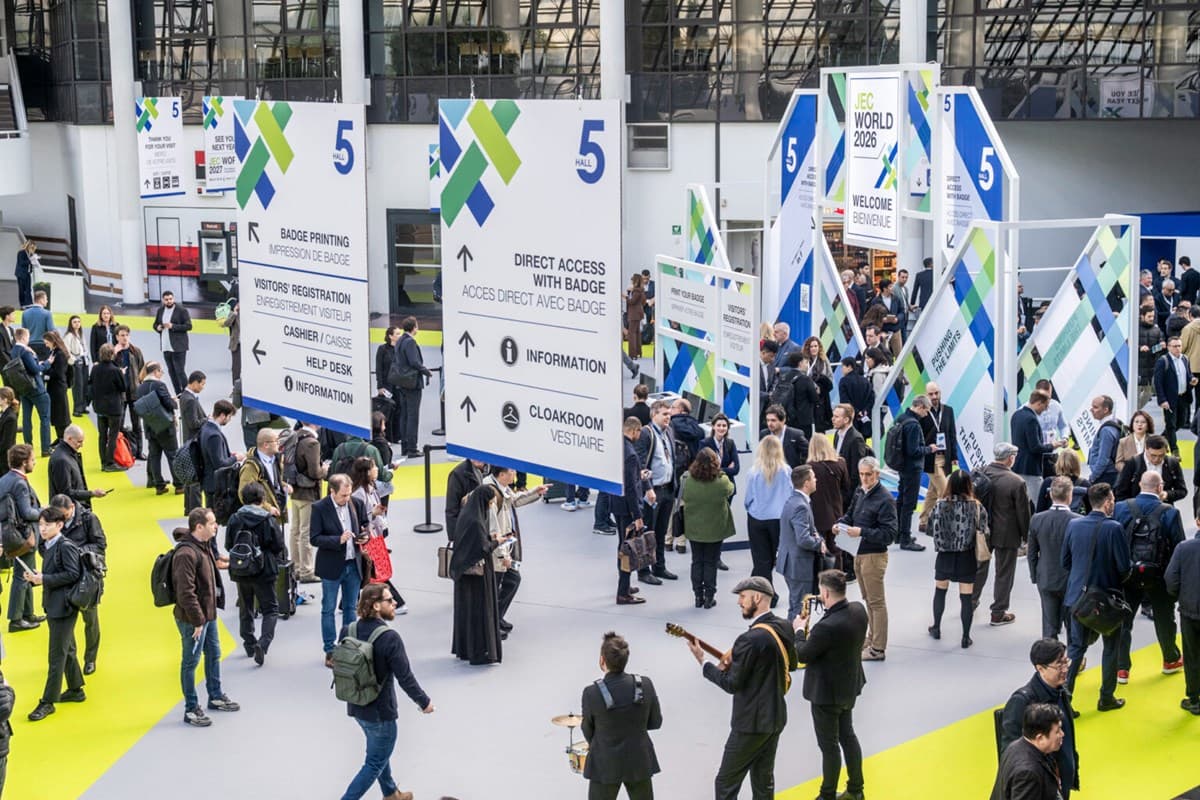
- •JEC World 2026 attracted 45,000 visitors from 94 countries.
- •Over 1,400 exhibitors, including 150 first‑time participants, showcased composites.
- •Digitalized end‑to‑end CFRP production demonstrated real‑time tool monitoring.
- •New induction heating and 2K epoxy processes cut tooling energy use.
- •SAUBER 4.0 aims to scale sustainable RTM for next‑gen aircraft.
Pulse Analysis
JEC World 2026 served as a barometer for the global composites sector, gathering a record‑size audience and a diverse exhibitor base. Beyond the sheer numbers, the event underscored a strategic pivot toward circularity and biomaterials, with startups unveiling recycling pathways and partnerships aimed at closing the carbon loop. Simultaneously, high‑rate manufacturing concepts—such as AFP‑RTM integration and vitrimer prepregs—were positioned to meet the soaring demand from aerospace programs and defense contracts, signaling a broader industry shift from low‑volume, high‑cost production to scalable, cost‑effective processes.
A standout theme was the deepening of digitalization across the CFRP value chain. Consortiums led by Airbus Operations and German research institutes demonstrated sensor‑rich tooling that captures resin flow, temperature, and dielectric properties in real time. The adoption of induction coils and mats for rapid, uniform heating, coupled with 2K epoxy systems that eliminate cold‑storage logistics, translates into measurable energy savings and tighter process control. By feeding live data into simulation models, manufacturers can validate designs on the shop floor, reducing trial‑and‑error cycles and accelerating time‑to‑market for complex composite parts.
The implications for aviation are profound. The SAUBER 4.0 platform, built on these digital and thermal innovations, promises to deliver large, integral structures with a lower carbon footprint, aligning with airlines’ sustainability mandates. Its four pillars—scalability, sustainability, digital thread, and next‑gen capability—position it as a foundational technology for upcoming single‑aisle aircraft programs. As OEMs and Tier‑1 suppliers adopt SAUBER 4.0, the industry can expect a cascade of cost reductions, faster production rates, and a stronger competitive stance in a market projected to exceed $150 billion by 2030.
The state of composites: CW's JEC 2026 recap
Comments
Want to join the conversation?
Loading comments...