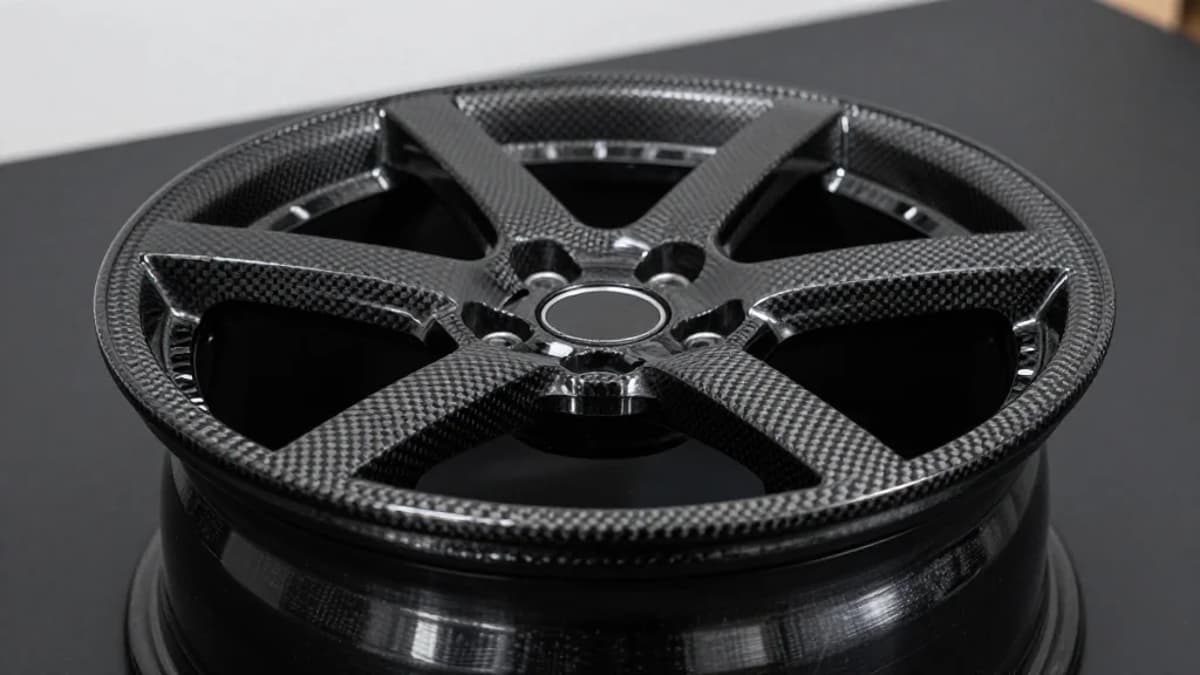
The Technical Edge Behind One-Piece Carbon Fiber Wheels
•March 4, 2026
0
Why It Matters
The technology reshapes high‑performance and electric vehicle platforms by boosting efficiency and driving dynamics, while its high cost and limited supply keep it confined to premium segments.
Key Takeaways
- •One-piece carbon wheels cut weight ~40% vs aluminum.
- •High lateral stiffness improves cornering precision.
- •Reduced gyroscopic torque enhances steering agility.
- •Natural carbon damping lowers NVH and road noise.
- •Only few firms master proprietary mass‑production molding.
Pulse Analysis
The rarity of true one‑piece carbon‑fiber wheels stems from the intricate manufacturing process that blends advanced resin infusion, high‑temperature curing, and precision mandrel design. Companies like Dymag, Bucci Composites, and Carbon Revolution have invested heavily in proprietary tooling and automated lay‑up systems, enabling them to produce wheels at scale while preserving the material’s structural integrity. This expertise creates a high barrier to entry, limiting the market to a select group of specialists capable of delivering consistent quality and performance.
From a performance perspective, the weight savings of carbon wheels dramatically affect vehicle dynamics. Reducing unsprung mass improves the suspension’s ability to maintain tire contact, enhancing grip and ride comfort. Lower rotational inertia means less energy is required to spin the wheel, delivering faster throttle response and more efficient regenerative braking in electric vehicles. Additionally, carbon’s natural vibration‑absorbing characteristics diminish road noise, contributing to a premium cabin experience that aligns with the expectations of hyper‑car and luxury EV buyers.
Despite these advantages, cost remains the primary obstacle to broader adoption. The specialized tooling, labor‑intensive processes, and low production volumes drive prices well above those of aluminum alloys. However, as composite manufacturing technologies mature—through automation, faster cure cycles, and recycled carbon fibers—economies of scale could lower entry barriers. Industry analysts anticipate that as electric drivetrains become mainstream, the demand for lightweight, high‑efficiency components like one‑piece carbon wheels will expand beyond niche markets, prompting new entrants to invest in the requisite expertise.
The technical edge behind one-piece carbon fiber wheels
0
Comments
Want to join the conversation?
Loading comments...